
Meet Fred. Fred is the name I give to all my pet spiders, regardless of their sex. I have had countless pet spiders over the years. They are the spiders living in my house, the ones I notice and try not to disturb. And many of my pet spiders have been Egyptian Pink Velvet Spiders, aka Desert Velvet Spiders (Stegodyphus dufouri).
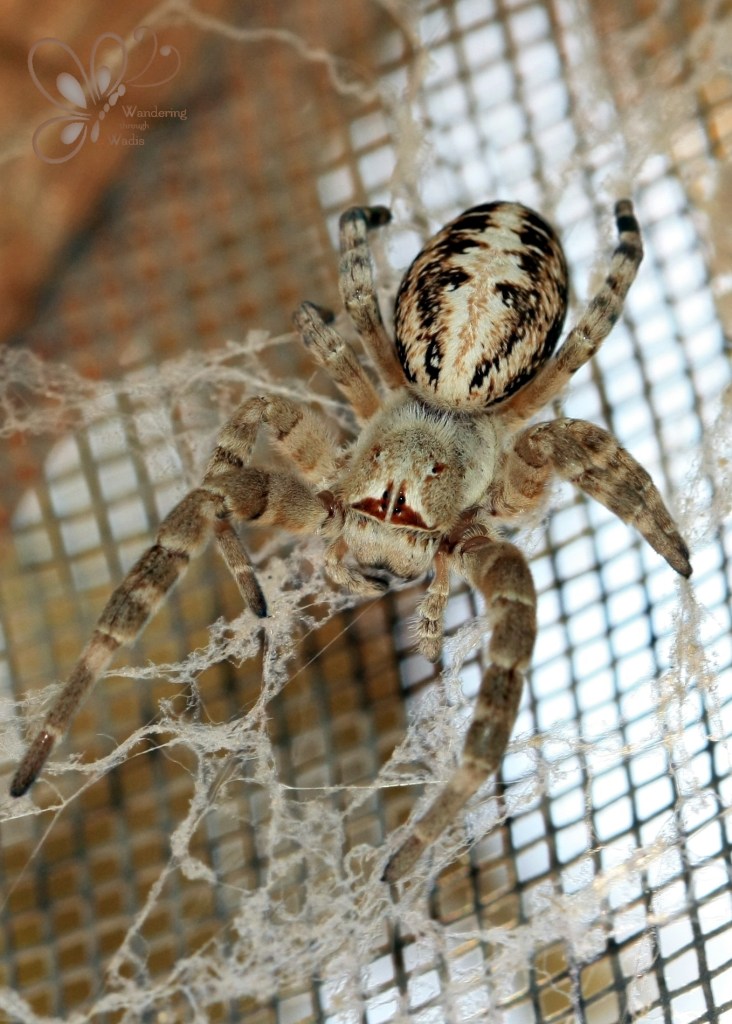
Velvet Spiders is the common name given to all spiders in the Eresidae family. There are nearly 100 different species in nine genera. Six of those species can be found in Egypt and three of those belong to the Stegodyphus genus. Their name is derived from the Ancient Greek word stegos, meaning “covered”. Velvet Spiders are covered in thick, glossy hair.

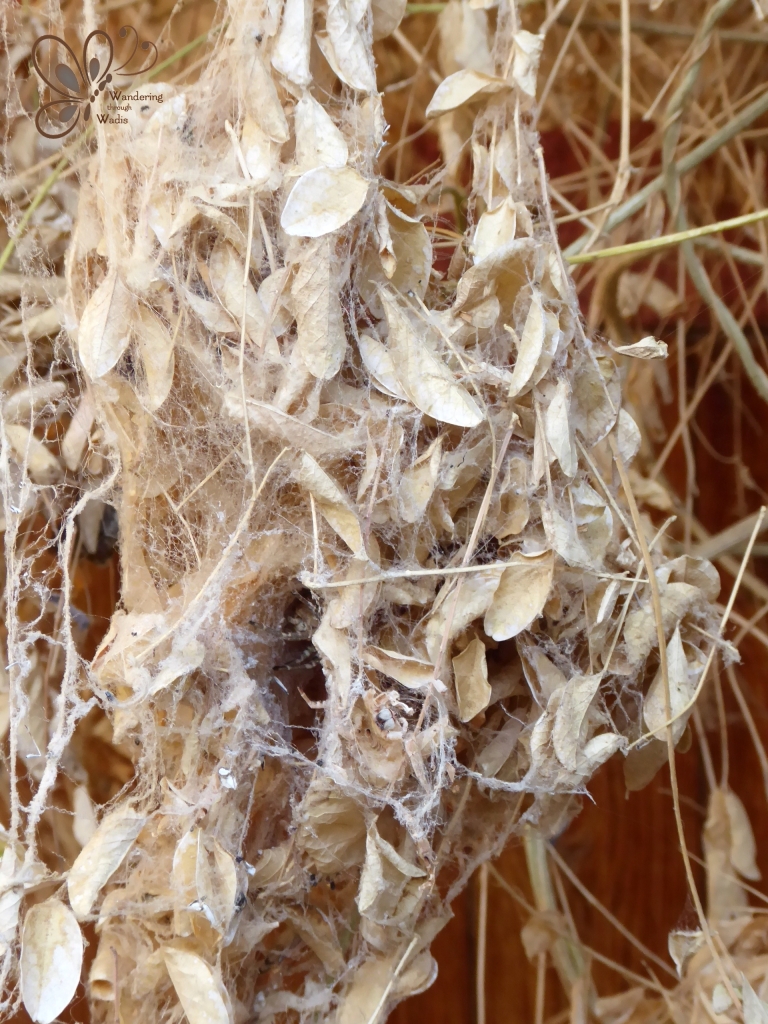
Egyptian Pink Velvet Spiders are typically solitary critters, living alone in separate nests. They build their silken nests in vegetation and prefer higher places in the wind and sun. The webs are cluttered with plant debris. Can you spot the spiders in the nests below?


The spiders feed mostly on flies (which is one reason they are welcome in my house), but will also eat wasps, ants, butterflies, moths, lacewings, antlions, and beetles.

The Velvet Spiders in my garden eat a lot of African Caper White Butterflies (Belenois aurota). The Velvet Spiders use the stickiness of their webs and their venom to subdue their prey.
Female Egyptian Pink Velvet Spiders create a round, light yellow-colored egg sac that they keep under their back legs. Spiderlings cannot emerge from this sac on their own; the mother uses her fangs to open the sac.

The mother feeds her young spiderlings by regurgitation for several days. Then she uses her silk to close the entrance to the nest, feeds herself to her spiderlings and they suck her body dry, a behavior known as matriphagy.
Before feeding themselves to their young, Egyptian Pink Velvet Spiders may also be preyed upon by Oriental Hornets (Vespa orientalis) and Mole Crickets (Gryllotalpa gryllotalpa). The spiders can also be killed by pompilid wasps. These wasps, in the Pompilidae family, are also known as spider wasps or spider-hunting wasps because they capture spiders for their larvae to feed on. When the wasp finds a spider, they attack, paralyze it and carry it back to their larvae. Some pompilid wasps, however, after paralyzing the spider, lay their egg inside the spider’s body. When the larva hatches, it emerges from the spider’s body and eats it. Then the larva will spin itself a cocoon in which to complete its metamorphosis into an adult wasp. Many years ago, one of my Freds was a victim of a spider wasp.
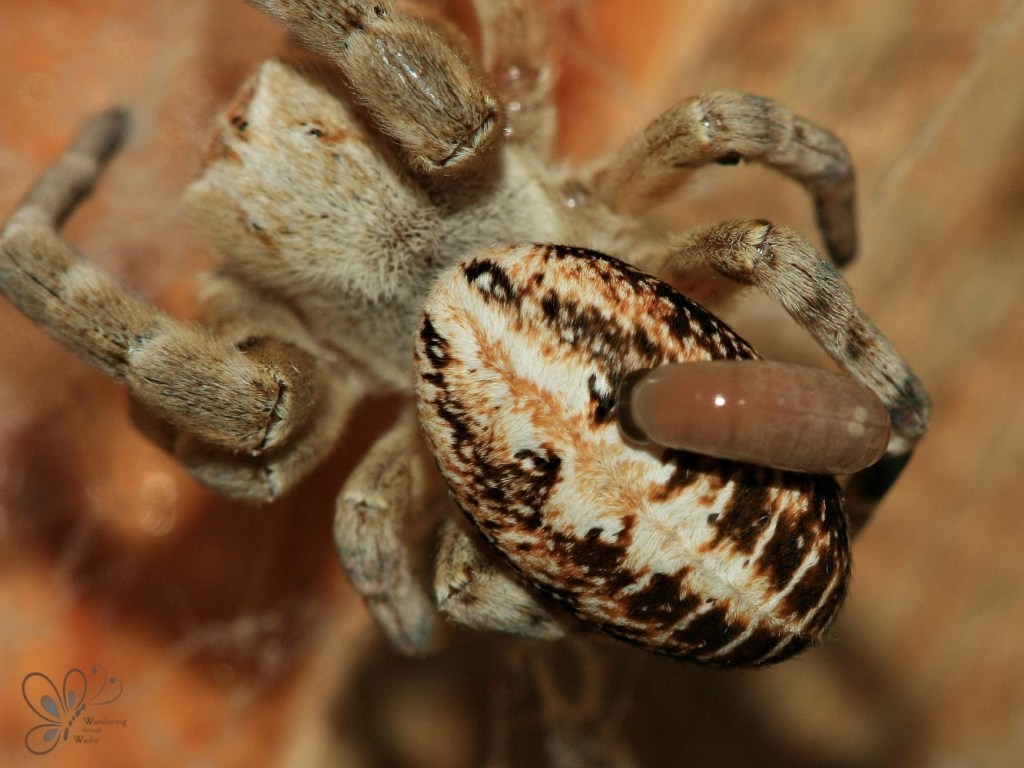

Sad, but fascinating!
Do you have any pet spiders?
References:
El-Hennawy, H. & Mohafez, M. (2003). Life history of Stegodyphus dufouri (Audouin, 1825) (Arachnida: Araneida: Eresidae) in Egypt, A step on the way from asocial to social. Serket vol. 8(3): 113-124.
 Wandering through Wadis
Well Bernie I am so sorry about the loss of your pet spider Fred. though I think there will be another along soon. I must confess I have never had a pet spider but I know they are around. I find their webs quite often in the corners of my home and I find ‘bizillions’ of them in my garage.
Hugs dear and hope all is well for you.
Nancy Ann
nancyawbrey@sbcglobal.net
LikeLike
Thanks, Nancy. Sounds you like you’ve hosted a lot of pet spiders. 🙂
LikeLike
😁
Sent from AT&T Yahoo Mail on Android
LikeLike