
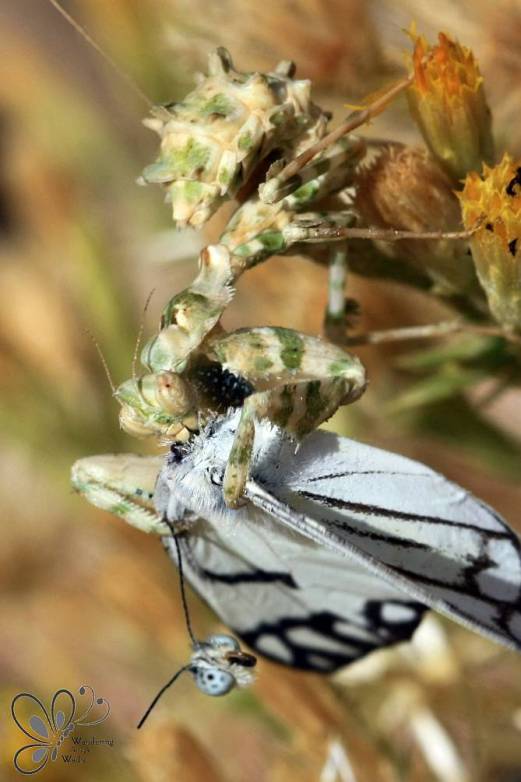
Unlike the Egyptian Flower Mantis, the Black Cone-headed Grasshopper (Poekilocerus bufonius), with its large black body and slow movement, is easy to spot! Especially when they are resting on the rocks.
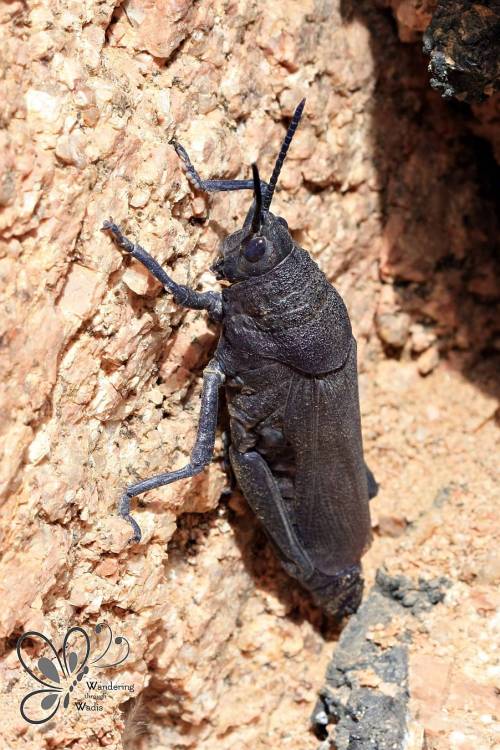
But these grasshoppers feed on plants in the milkweed family, which produce toxic chemicals. Ingesting these plants make the grasshoppers poisonous and distasteful to predators. When they are attacked, Black Cone-headed Grasshoppers spray a toxic fluid in defense. In Arabic, they are called zagat, meaning “the one who sprays toxins onto girls’ faces”.
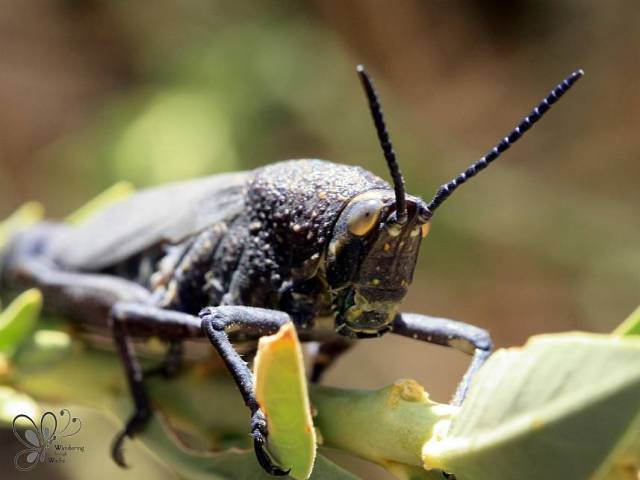
You’ll most often find these grasshoppers on Pergularia tomentosa plants. Many Bedouin, before sitting down near one of these plants, will throw stones at the bush to scare off any grasshoppers. Sometimes these plants will be home to many grasshoppers. How many can you count in the picture below?

I’ve also spotted Black Cone-headed Grasshoppers on ajram (Anabasis sp.), harjal (Solenostemma arghel), reseda (Reseda sp.), broom (Retama raetam) and other plants.
The adults that I’ve seen have been between 6 – 10 cm in length. They are black or dark-colored, sometimes with yellow spots. I’ve noticed orange underwings on several.

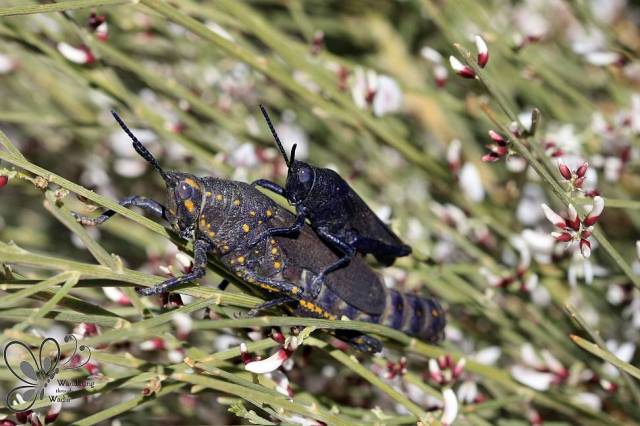
Females are substantially larger the males, as you can see in the photo of the mating pair below.
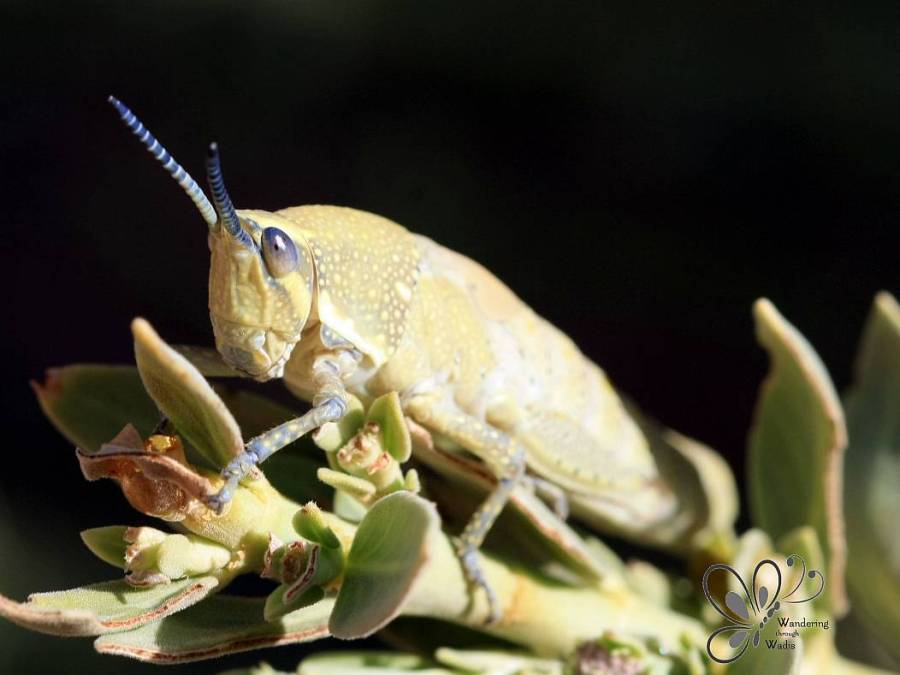
As is typical of this order of insects (Orthoptera), the grasshoppers go through incomplete metamorphosis. The young nymphs resemble the adults but have no wings and can have extremely different colors. Look at these beautiful yellow ones!

As they age, they will shed their exoskeletons several times, growing wings until their final molt into a mature adult with fully-developed wings.
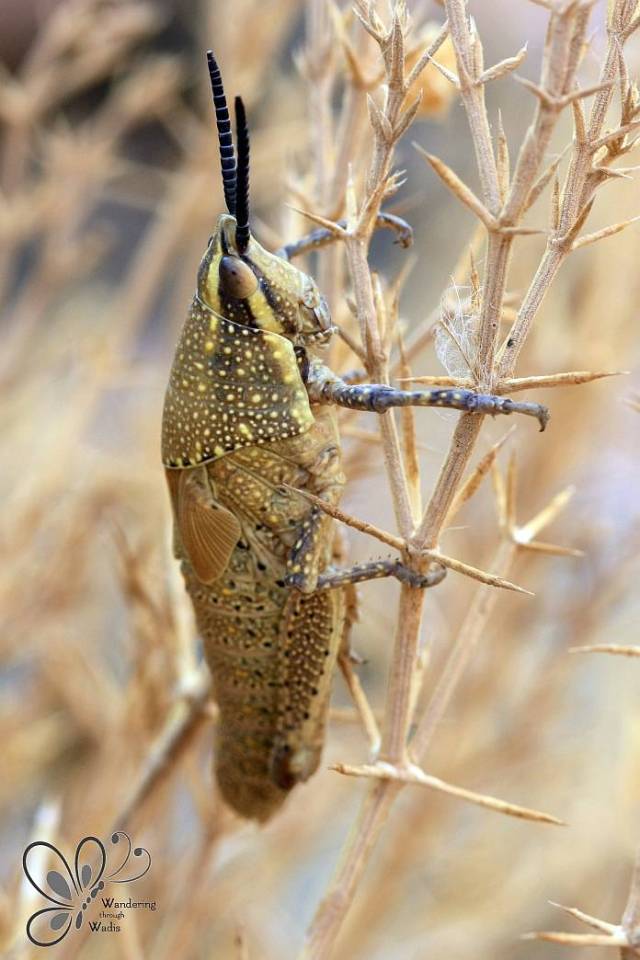
I’ve spotted Black Cone-headed Grasshoppers from late fall through spring in many of the wadis around Dahab, as well as higher up near Wadi Arada (on the way to St. Katherine’s). They are one of the first critters we came across on our early wadi wanderings and I always enjoy seeing them. And photographing them! They stay so still for so long, making excellent models. 🙂
References:
Aly, D. & Khalil, R. (2011). Wildlife in South Sinai. Cairo.Funded by the E.U. in cooperation with G.O.S.S.
Zalat, S. & Gilbert, F. (2008). Gardens of a Sacred Landscape: Bedouin Heritage and Natural History in the High Mountains of Sinai. Cairo: The American University in Cairo Press.



 Wandering through Wadis