
Considering how much time I have spent with these beauties over the years, I’m surprised that I haven’t featured them on the blog before now!
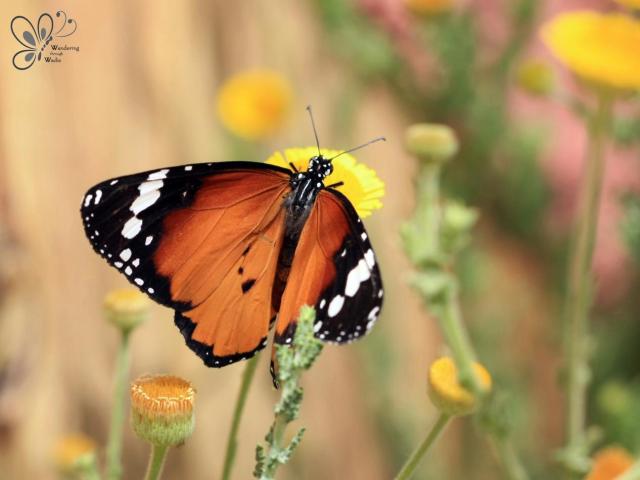
African Monarch butterflies (Danaus chrysippus), also called African Queen or Plain Tiger butterflies, are widespread and abundant in Egypt. In fact, the oldest representation of a butterfly in the world is of an African Monarch and it’s on a pharaonic wall painting in Luxor.
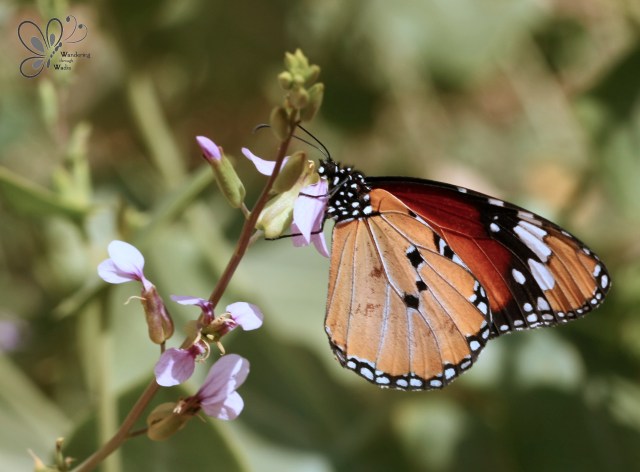
African Monarchs are members of the family Nymphalidae, often called brush-footed butterflies or four-footed butterflies because their first pair of legs are small or reduced. The caterpillars of this family of butterflies all have spiky projections on their heads and their chrysalids have shiny spots.
Larvae of African Monarchs prefer to feed on the leaves of Dead Sea Apple Trees (Calotropis procera) but will feed on any Asclepiadaceae, or milkweed plant, so this is where the adult butterflies will lay their eggs. The eggs are dome-shaped and ridged and typically hatch in 3 – 5 days.
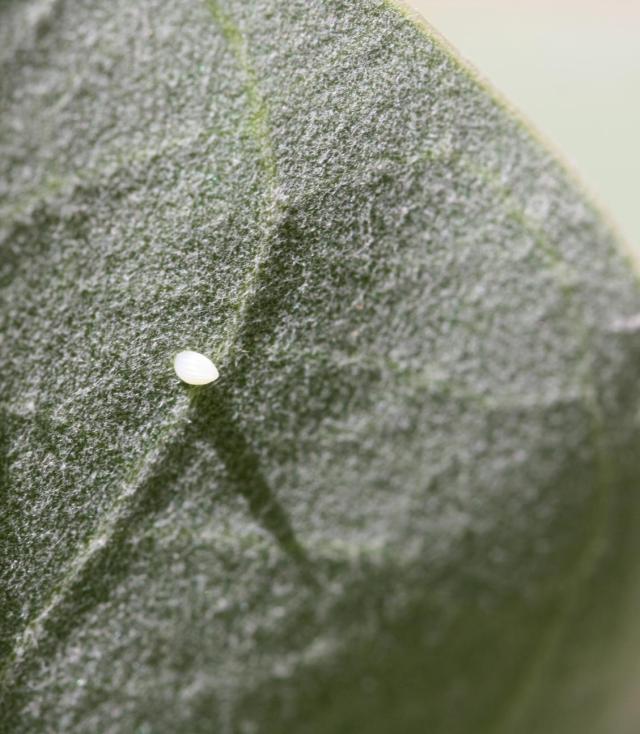
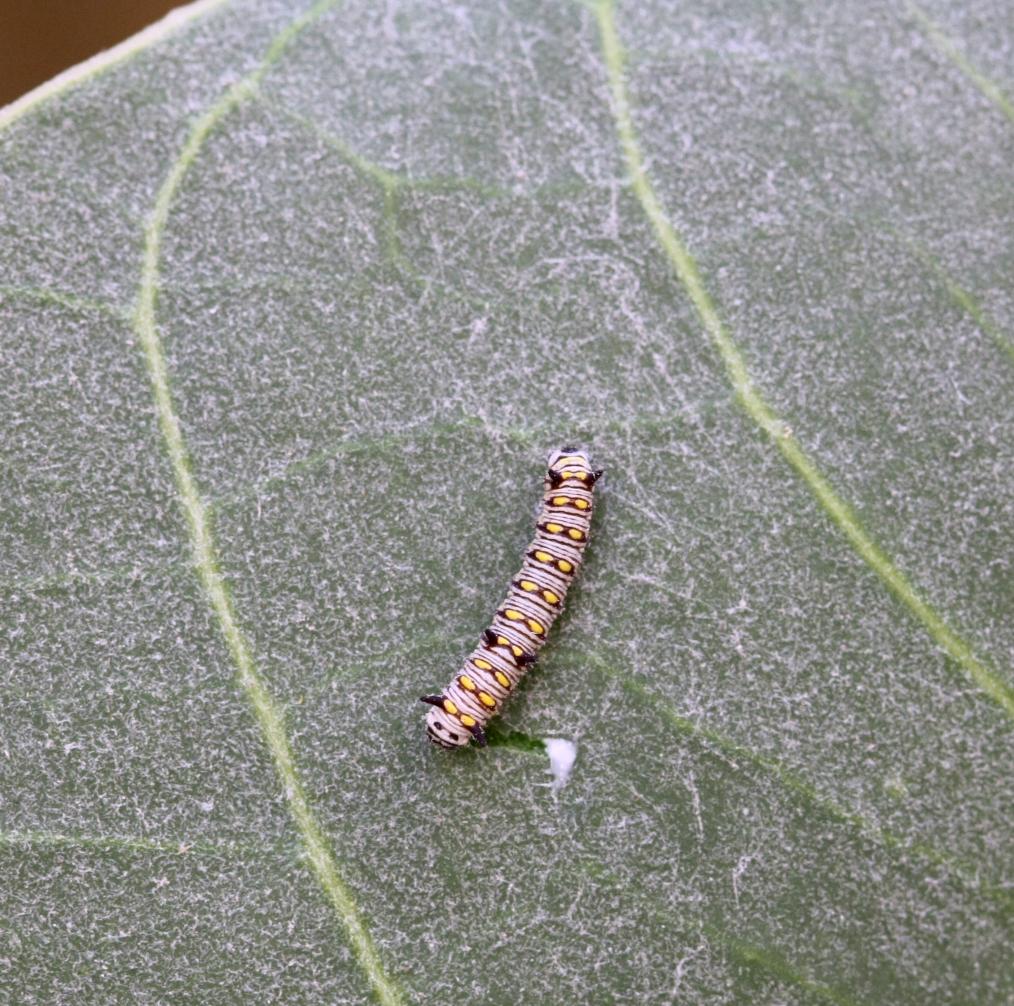
The caterpillars are striped white, yellow, and black and have black spines protruding from their bodies. As you may know, milkweed plants contain toxic compounds. These do not harm the caterpillars. Rather, the larva sequester these toxins, making the adult butterflies inedible/poisonous or distasteful to predators and acting as part of their defense system.
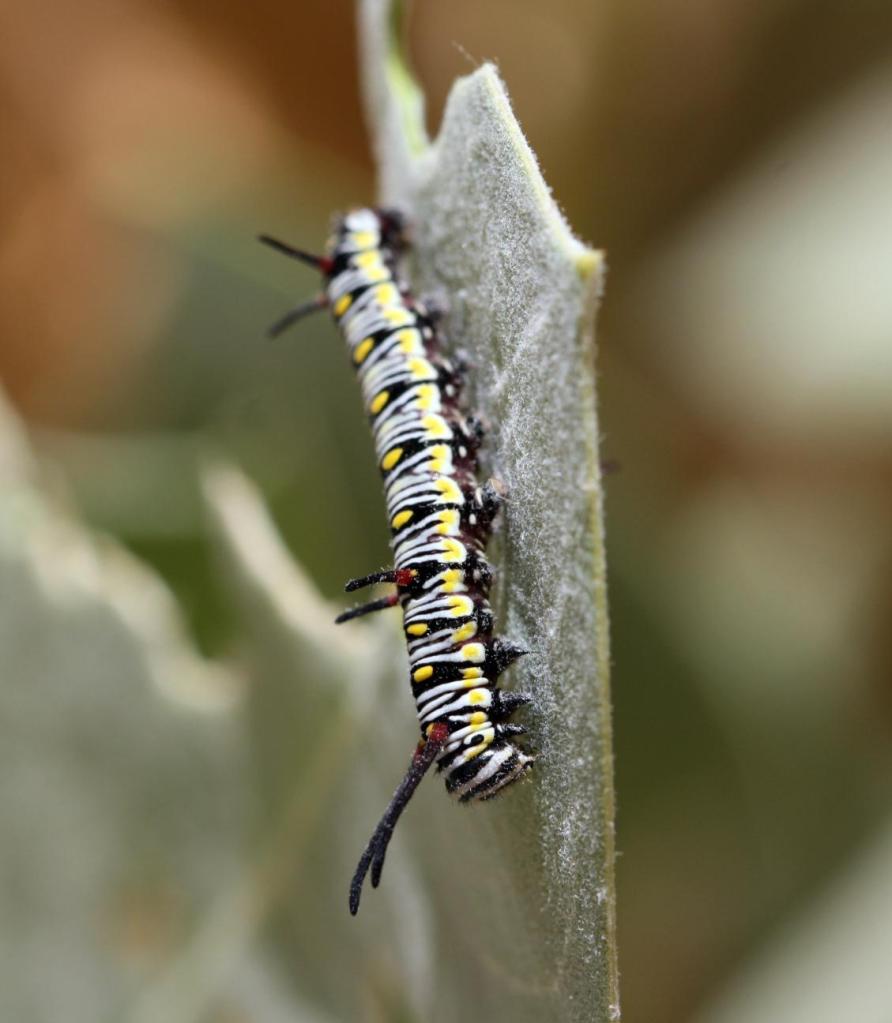
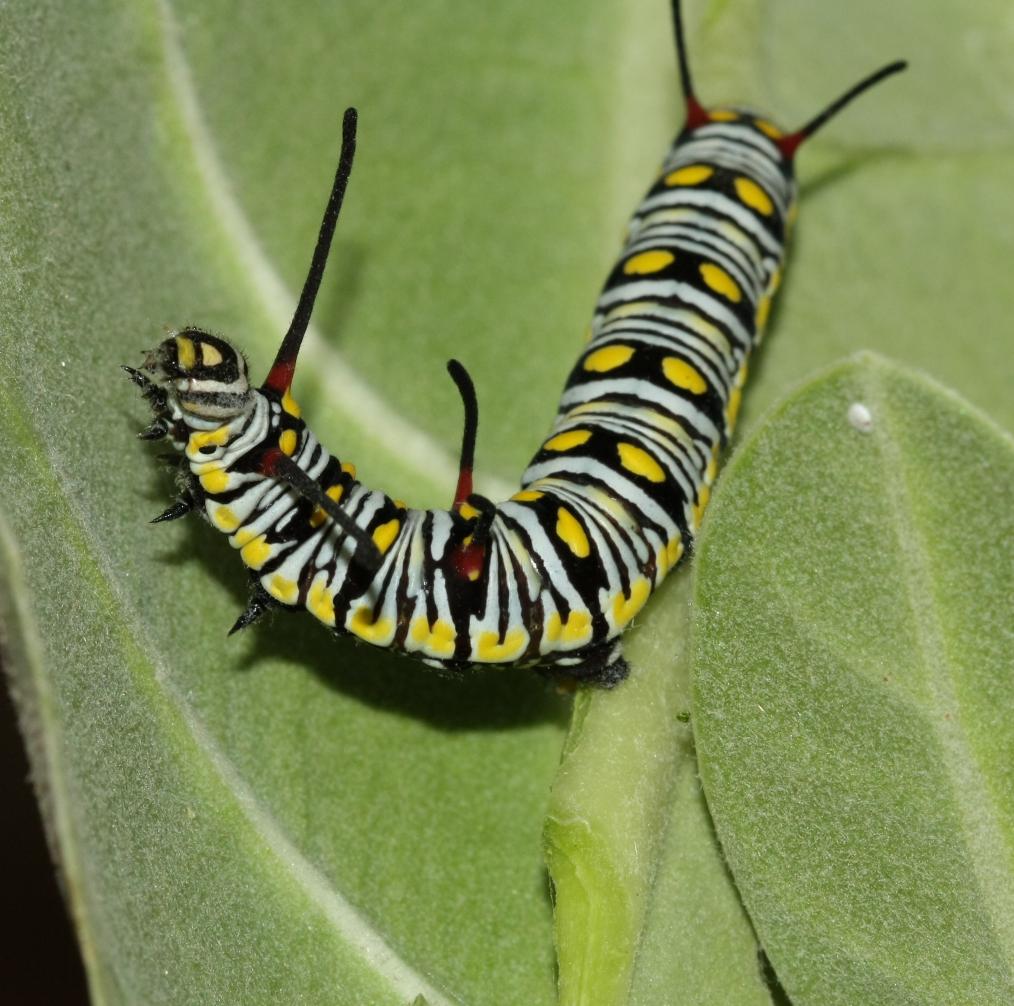
Because these butterflies, and their host plants, are common in Dahab, I have reared many of them indoors with my students. When indoors among inanimate objects, the pupa, or chrysalis, is white or pale colored. Outside in the wild, these chrysalids are bright green. In either situation, the chyrsalis has shiny gold spots, including along a black line near the top which I like to think of as a necklace.

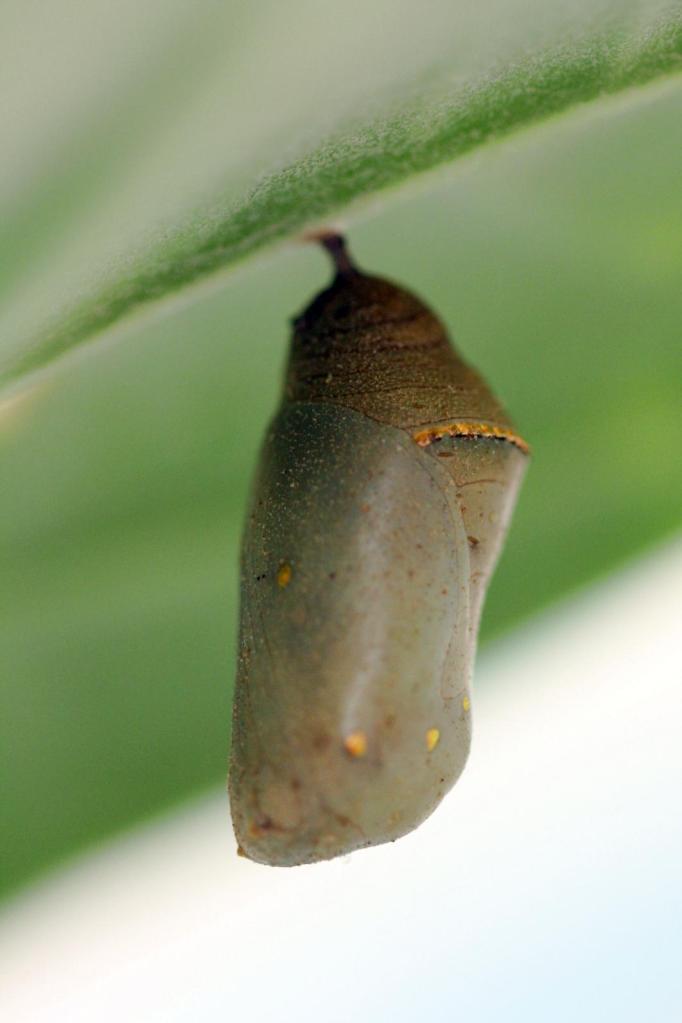
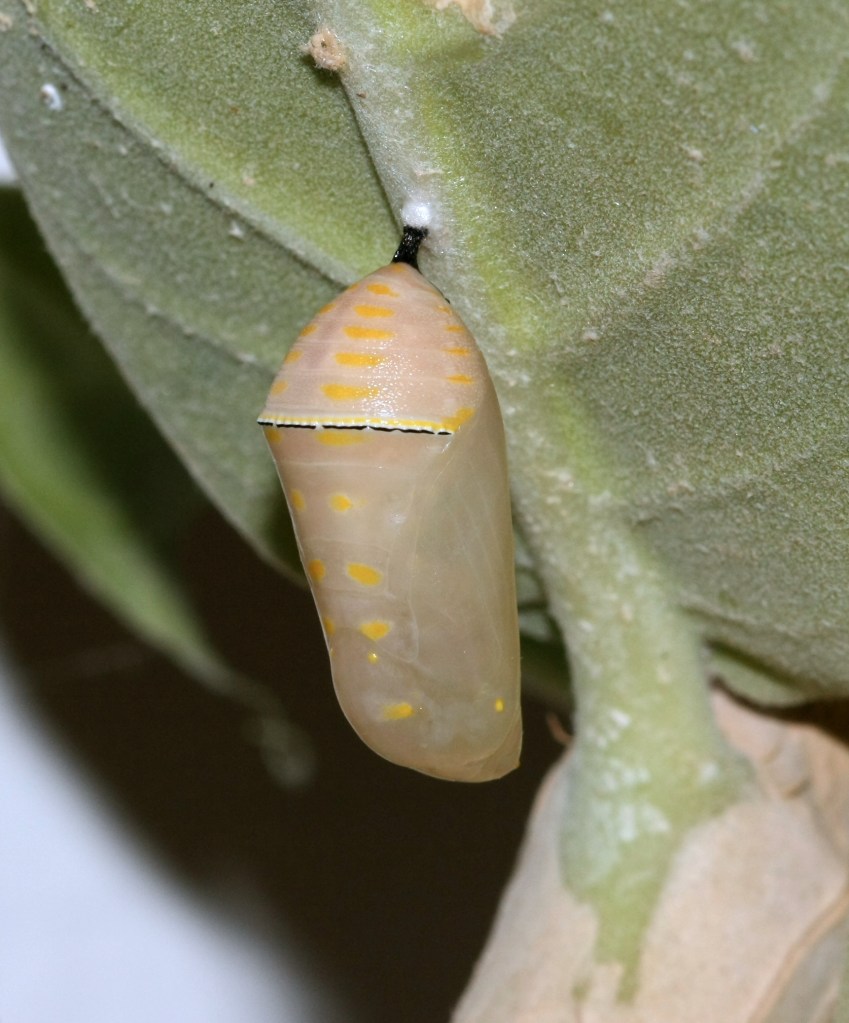
Pupation lasts between 9 and 15 days and then the adults eclose, the verb used to describe when a butterfly emerges or hatches from their chrysalis.
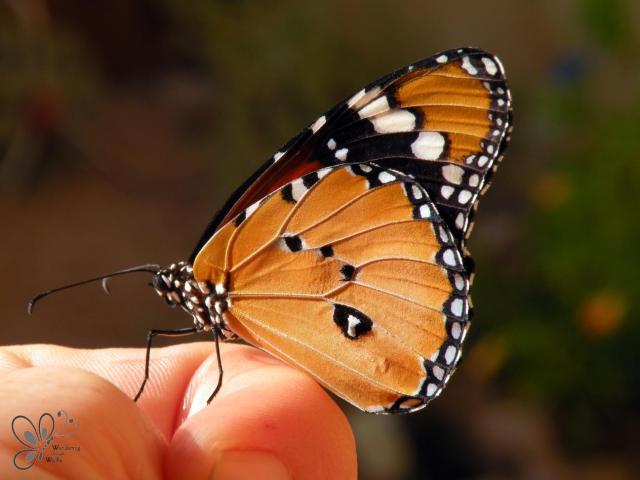
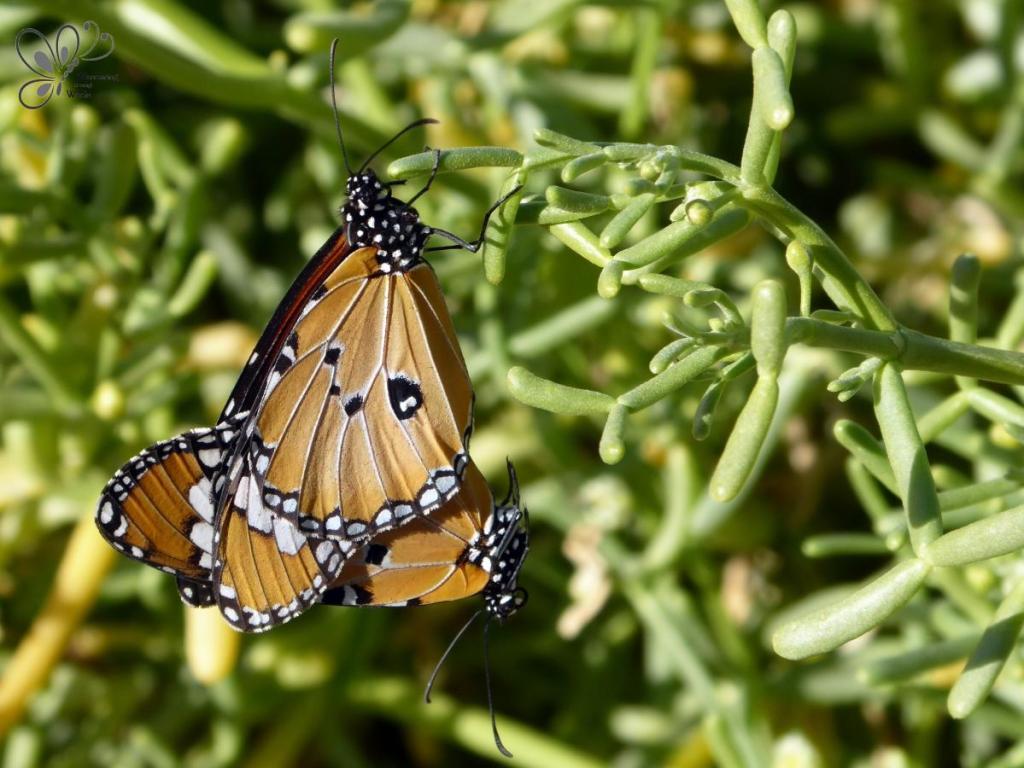
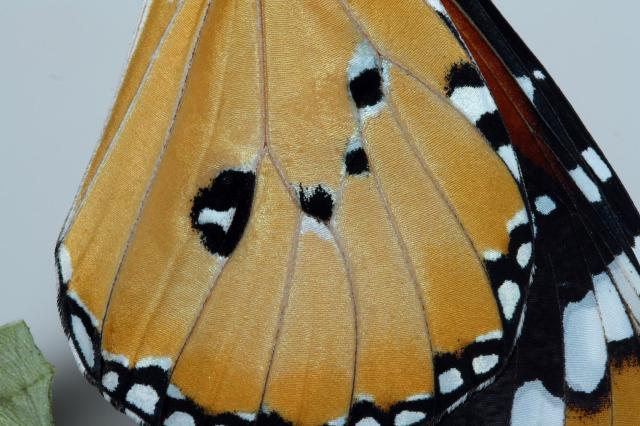
The vibrant coloring of the adult butterflies acts as a warning sign to predators, alerting them to their toxicity. The upperwings are a burnt orange color with black edges and white spots. The underwings are a dull yellow, edged with a fine black line and white dots.
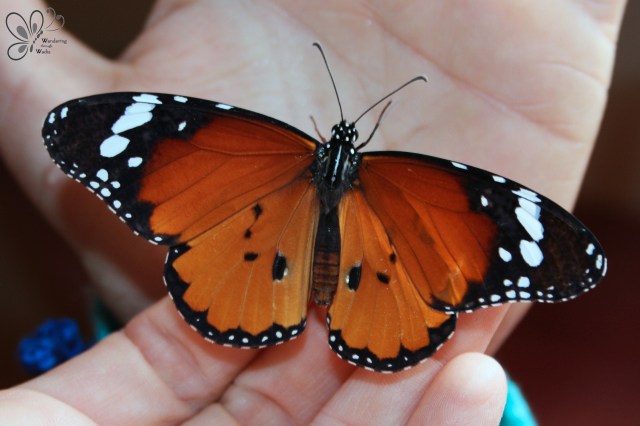
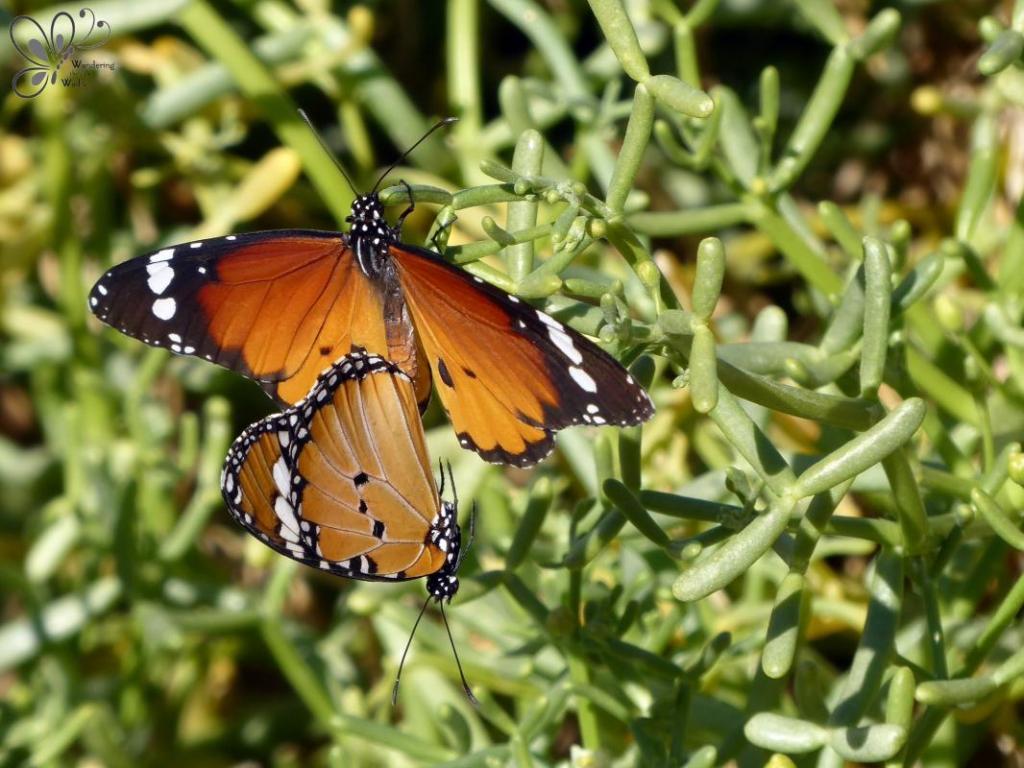
The body of the butterflies are black with many white spots. Females have three black spots on their hindwings, but males have a fourth black spot with a white center, a scent gland. Now that you know that, look back at the pictures in this post and see if you can tell the males from the females.
Adult African Monarchs feed on nectar from a variety of flowering plants and are easy to spot around Dahab. Have you spotted these beauties in town or on your wadi wanders?
 Wandering through Wadis