Egyptian Pink Velvet Spider

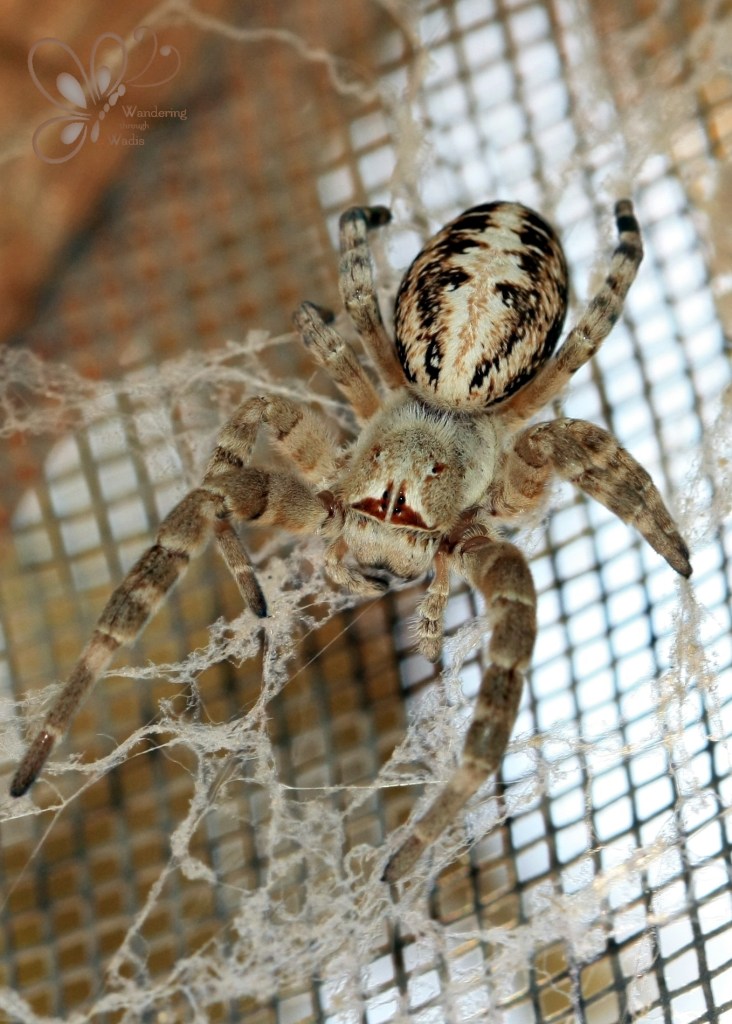
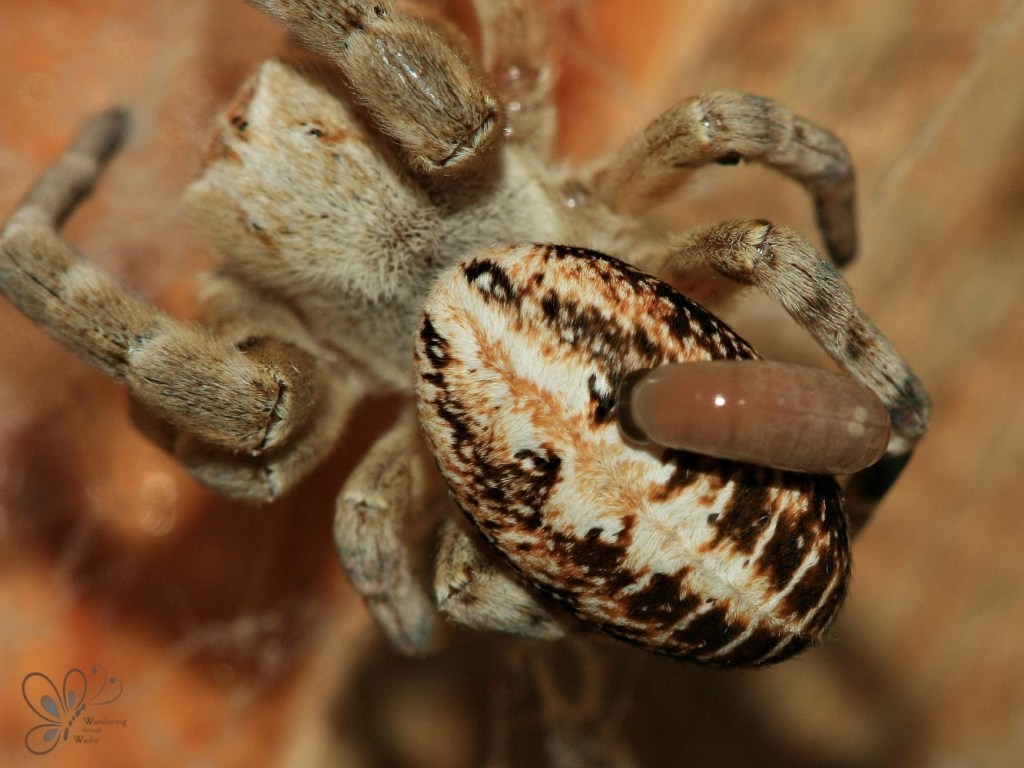
Meet Fred. Fred is the name I give to all my pet spiders, regardless of their sex. I have had countless pet spiders over the years. They are the spiders living in my house, the ones I notice and try not to disturb. And many of my pet spiders have been Egyptian Pink Velvet Spiders, aka Desert Velvet Spiders (Stegodyphus dufouri).

Velvet Spiders is the common name given to all spiders in the Eresidae family. There are nearly 100 different species in nine genera. Six of those species can be found in Egypt and three of those belong to the Stegodyphus genus. Their name is derived from the Ancient Greek word stegos, meaning “covered”. Velvet Spiders are covered in thick, glossy hair.

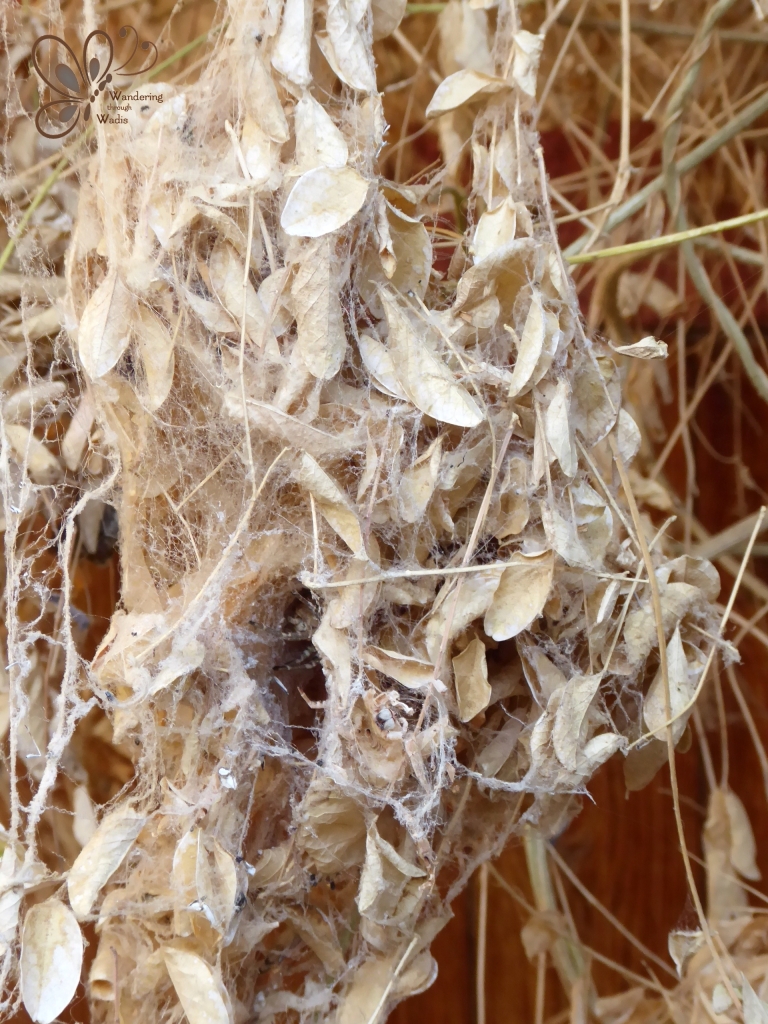
Egyptian Pink Velvet Spiders are typically solitary critters, living alone in separate nests. They build their silken nests in vegetation and prefer higher places in the wind and sun. The webs are cluttered with plant debris. Can you spot the spiders in the nests below?

The spiders feed mostly on flies (which is one reason they are welcome in my house), but will also eat wasps, ants, butterflies, moths, lacewings, antlions, and beetles.

The Velvet Spiders in my garden eat a lot of African Caper White Butterflies (Belenois aurota). The Velvet Spiders use the stickiness of their webs and their venom to subdue their prey.

Female Egyptian Pink Velvet Spiders create a round, light yellow-colored egg sac that they keep under their back legs. Spiderlings cannot emerge from this sac on their own; the mother uses her fangs to open the sac.

The mother feeds her young spiderlings by regurgitation for several days. Then she uses her silk to close the entrance to the nest, feeds herself to her spiderlings and they suck her body dry, a behavior known as matriphagy.

Before feeding themselves to their young, Egyptian Pink Velvet Spiders may also be preyed upon by Oriental Hornets (Vespa orientalis) and Mole Crickets (Gryllotalpa gryllotalpa). The spiders can also be killed by pompilid wasps. These wasps, in the Pompilidae family, are also known as spider wasps or spider-hunting wasps because they capture spiders for their larvae to feed on. When the wasp finds a spider, they attack, paralyze it and carry it back to their larvae. Some pompilid wasps, however, after paralyzing the spider, lay their egg inside the spider’s body. When the larva hatches, it emerges from the spider’s body and eats it. Then the larva will spin itself a cocoon in which to complete its metamorphosis into an adult wasp. Many years ago, one of my Freds was a victim of a spider wasp.

Sad, but fascinating!

Do you have any pet spiders?

References:

El-Hennawy, H. & Mohafez, M. (2003). Life history of Stegodyphus dufouri (Audouin, 1825) (Arachnida: Araneida: Eresidae) in Egypt, A step on the way from asocial to social. Serket vol. 8(3): 113-124.

Two-spotted Cricket

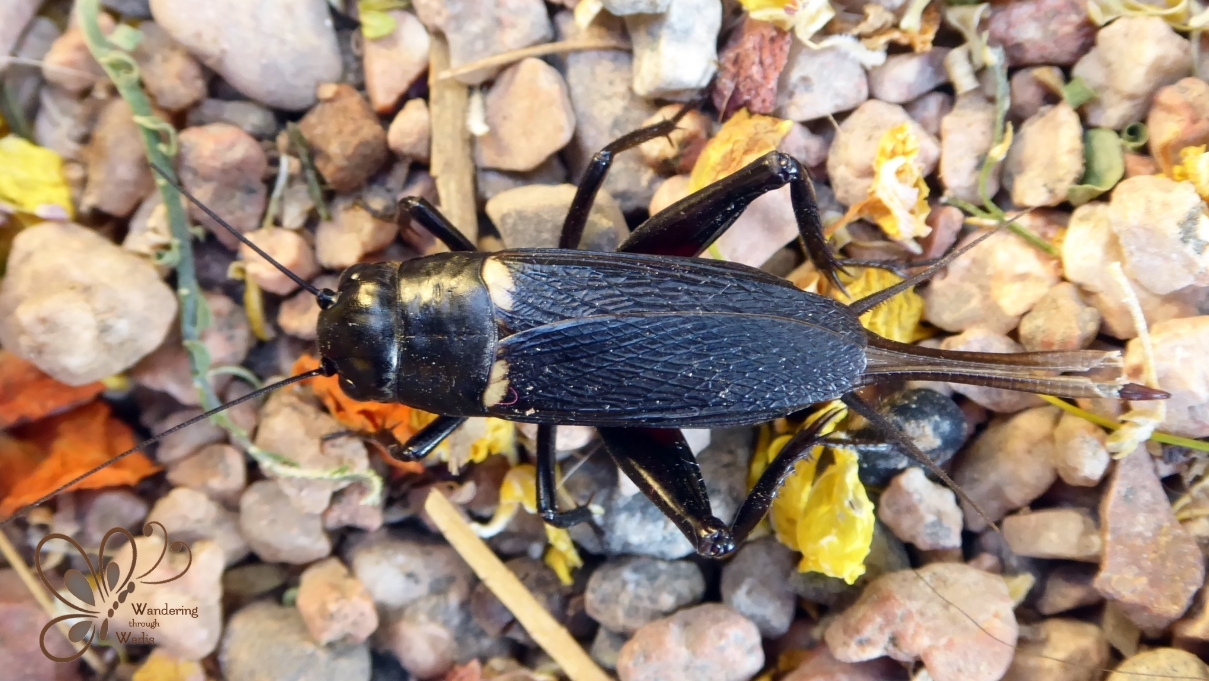
For a few weeks this past spring, we were treated, as we lay in bed at night, to the lovely sound of chirping. I woke up one morning to find a cricket hanging on my front screen door and so my curiosity about who exactly had been chirping was satisfied. Our serenaders were Two-spotted Crickets (Gryllus bimaculatus) – large, stout, blackish crickets with two dot-like marks on the base of their wings.

But while this critter helped me solve the mystery, she was not actually part of the chorus of chirping crickets. It’s the male crickets who chirp – by rubbing their two outer wings together. They do this as part of their mating behavior – to attract females – or to warn off other males.

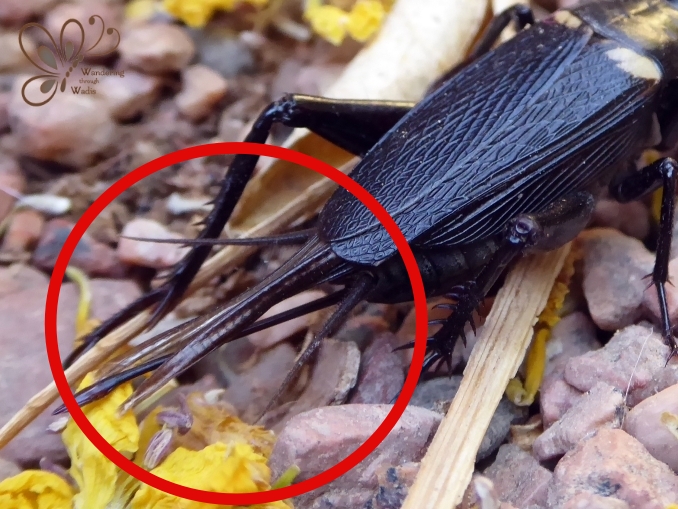
The cricket on my screen door is female, identified by the ovipositor, or tube-like organ that she uses to lay eggs. Eggs are typically laid into moist ground, sand, or soil and hatch in two weeks.

Two-spotted Crickets, also known as African or Mediterranean Field Crickets, are the most widely, naturally distributed Gryllus species. They consume living and dead plant parts and live under logs or grasses and in crevices. They might also dig holes in the ground or hide in holes made by other animals.

Two-spotted Crickets are often used as a food source for spiders and reptiles that are kept as pets or in zoos. And in Northeast Thailand, these critters are considered a delicacy – they are fried in oil and seasoned with soy sauce and pepper. Something to think about if these crickets ever keep you up at night. 😉

Oleander Hawkmoth

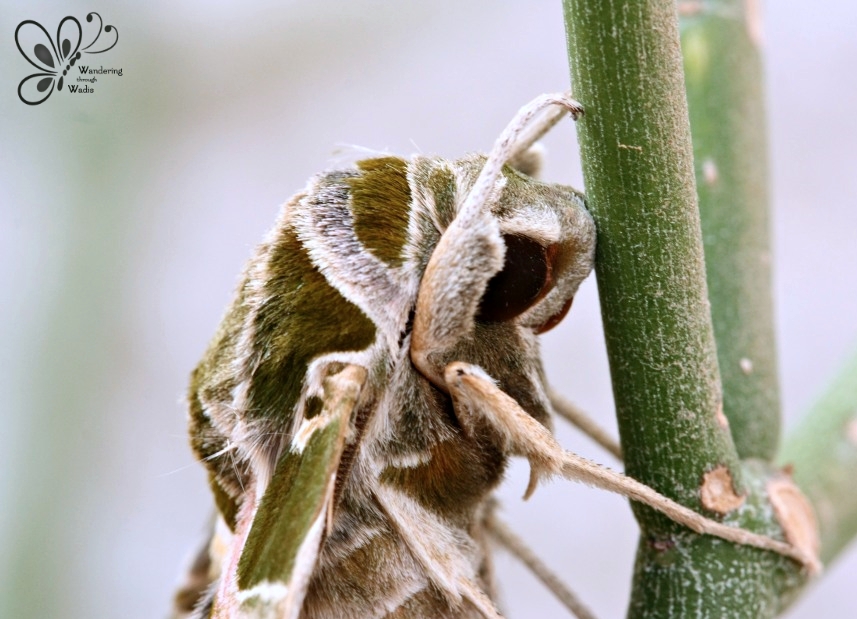
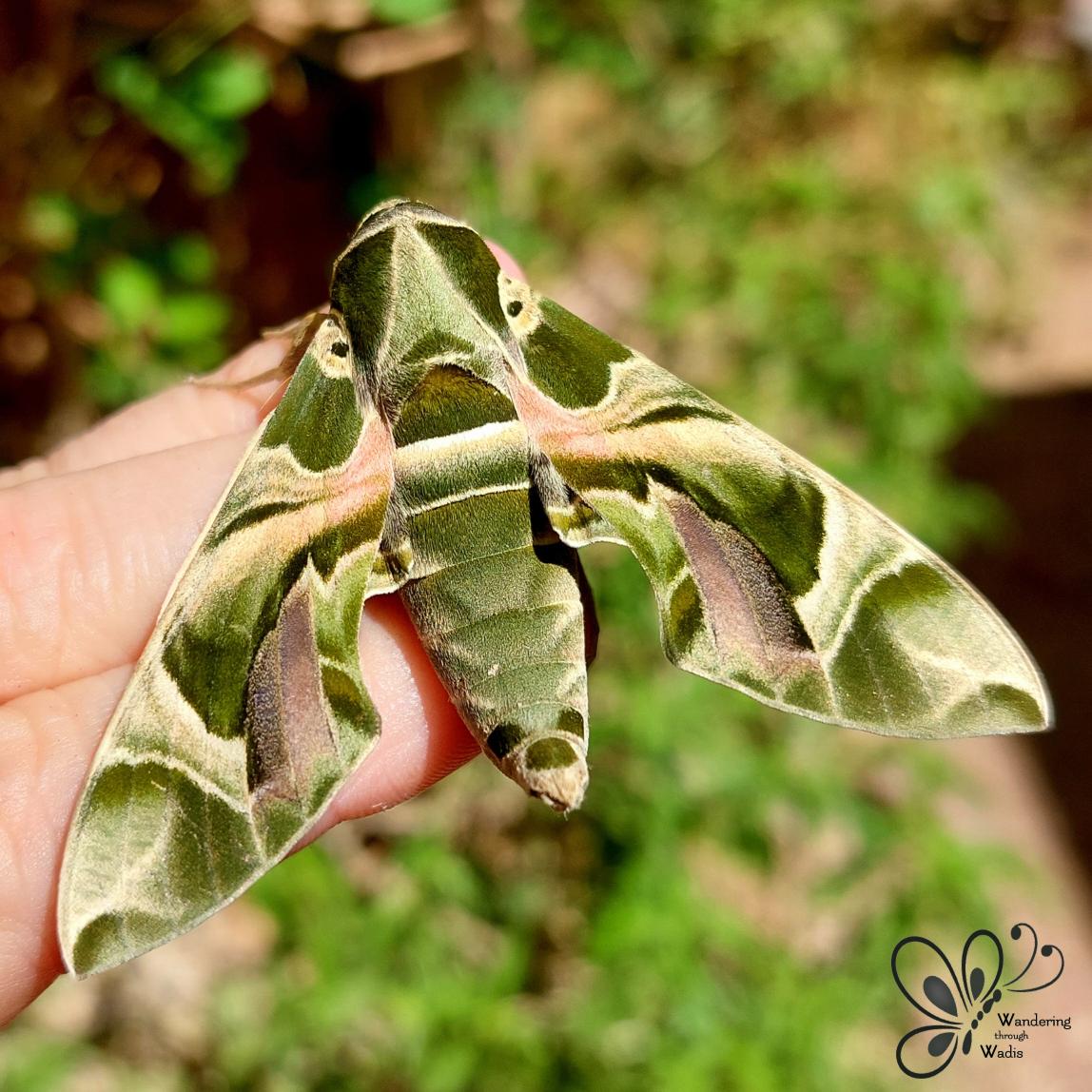
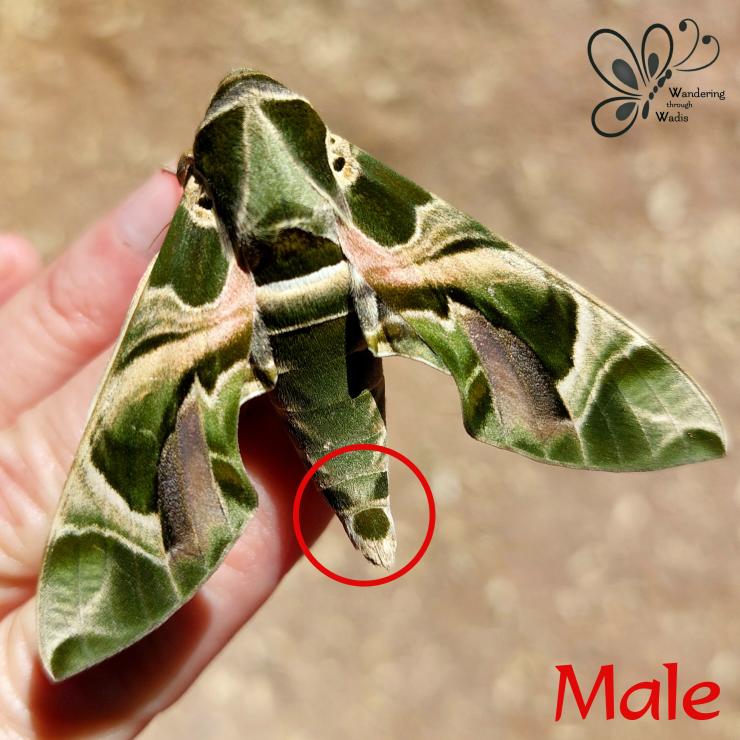
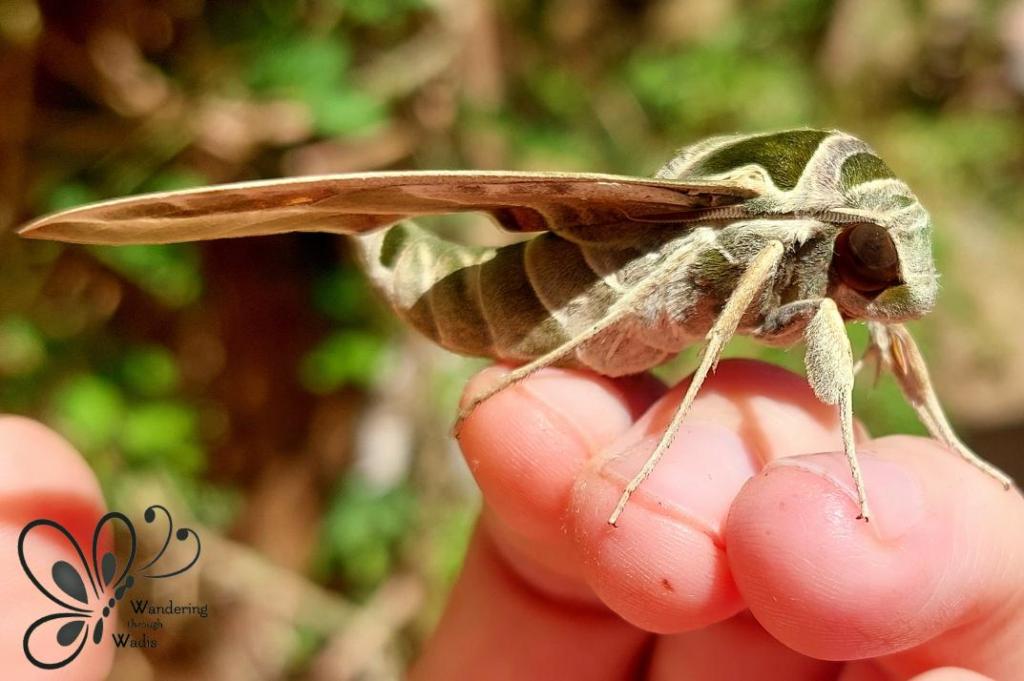
The Oleander Hawkmoth (Daphnis nerii), aka the Army Green Hawkmoth, is the most magnificent moth I have seen in the wild. Look at those wings! The colors and designs are truly stunning. That’s why I was so excited last week when my husband called me over to point out the one he had spotted in our desert garden.

This species of hawkmoth is native to areas of Africa and Asia. They are a migratory species, however, and fly to parts of eastern and southern Europe during the summer months. Oleander Hawkmoths have also been introduced in many places around the world.

The larvae, or caterpillars, feed mainly on oleander bushes (Nerium oleander), which of course explains their common English name, as well as other plants in the dogbane family. These plants are highly toxic, but the caterpillars are immune. Oleander, which is not native to Sinai, is the most popular bush to plant along the streets in Dahab because of it’s toxicity. The goats and sheep roaming the streets of Assala typically won’t eat these bushes, so they one of the few that can survive in this part of town. And so there is plenty of food around in my neighborhood for these caterpillars to munch.

MMB_6870” by mmariomm is licensed under CC BY-NC-SA 2.0.

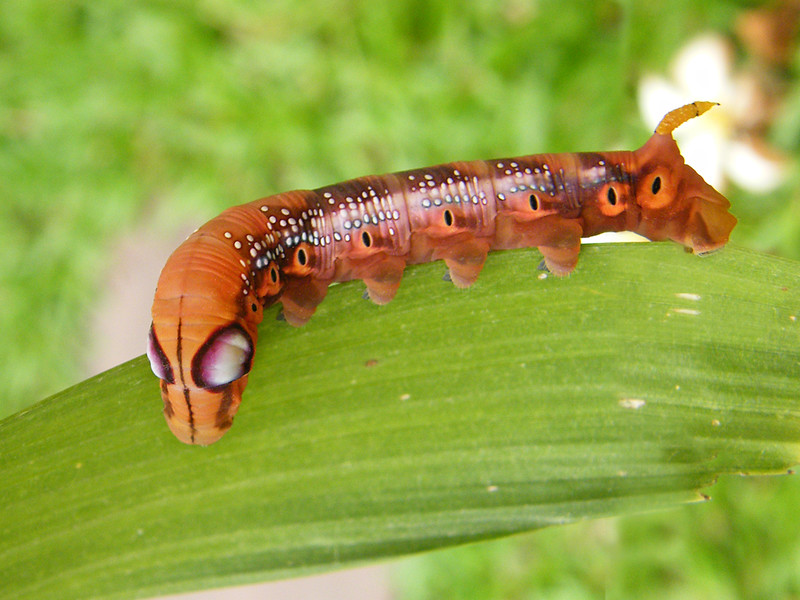
And if you thought the were amazing – check out these larvae! They are yellow when they hatch and turn green as they grow older. Like all hawkmoths, there is a “horn” protruding from the rear end of their body. There are large blue and white eyespots near the head (which are used as part of their defense system), a white band along the side of the body, and white and bluish dots. The caterpillar can grow up to 8.5 cm in length and turns brown shortly before it is ready to pupate.

Daphnis nerii” by acherontyus is licensed under CC BY-NC-ND 2.0.
Hawk moth caterpillar” by DocJ96 is licensed under CC BY-NC 2.0.

Fresh pupa are cream-colored but turn reddish-brown in color and will lie directly on the ground or under leaf litter.

Adult moths have a greenish head with a gray band at the vertex and a green thorax with a black/tan belt across the center. The forewings are patterned with green, whitish, and rosy-colored curved bands. At the base of these wings is a white patch with a black spot.

Adults drink the nectar from a variety of flowers and are especially active at twilight, just after sunset. Oleander Hawkmoths may be important pollinators, and can find themselves prey to birds, lizards, and bats.

Their life cycle, from egg-laying to adulthood, takes between 28 – 30 days.

Read about other hawkmoths in Sinai:

Convolvulus Hawkmoth (Agrius convolvuli)

Eastern Death’s Head Hawkmoth (Acherontia styx)

Striped Hawkmoth (Hyles livornica)

Eastern Death’s Head Hawkmoth

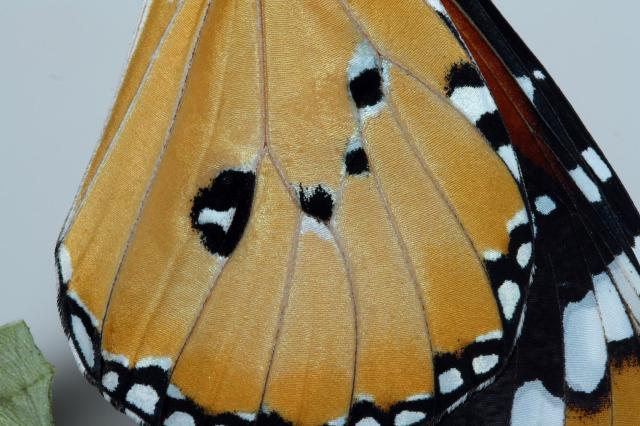
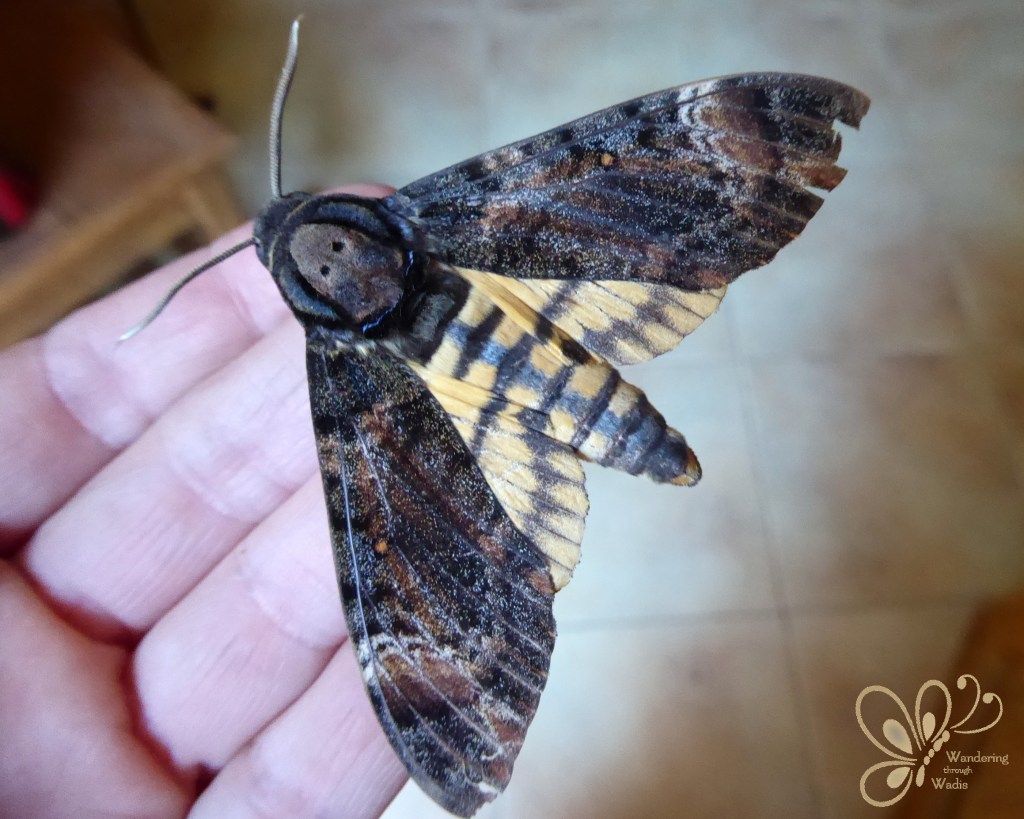
These beautiful wings above belong to a hawkmoth – specifically, to an Eastern Death’s Head Hawkmoth (Acherontia styx). Hawkmoths (family Sphingidae) are known for their sustained and agile flying abilities, reminiscent of a hummingbird’s flight and giving rise to another common name, hummingbird moths. There are 12 species of hawkmoths in Egypt. (You can read about two others on the blog – the Convolvulus Hawkmoth and the Striped Hawkmoth). Like all hawkmoths, the Eastern Death’s Head Hawkmoth has narrow wings and a streamlined abdomen, aiding their fast flying.

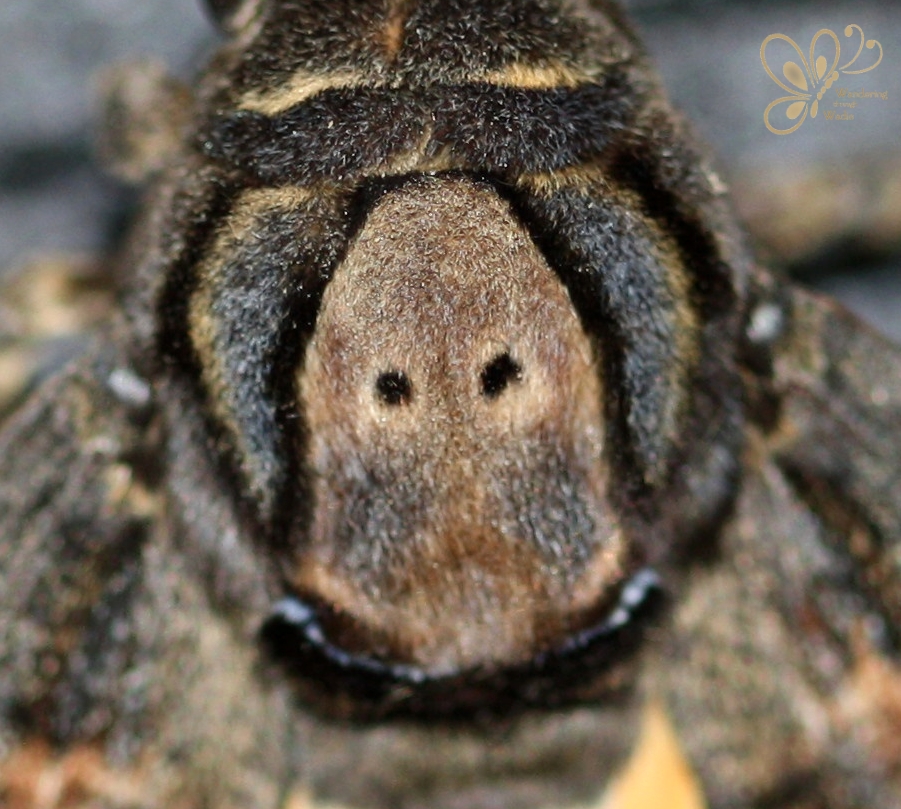
Acherontia styx is also known as the Small or Lesser Death’s Head Hawkmoth. Globally, there are three species of Death’s Head Hawkmoths (Acherontia spp.), all named in reference to Greek myths of death. A. styx is named after one of the rivers that divides Earth from the underworld. The moths were given this name in reference to the skull-like markings, with two black spots for eyes, on the back of the thoraxes, in addition to their somewhat-gloomy coloring.

Adults have brown heads, dark thoraxes, and a yellow-striped abdomen. Their forewings are mottled brown, grey, and a reddish color. The hind wings are yellow with two black bands. Eastern Death’s Head Hawkmoths have a wingspan of 80 – 120 mm.

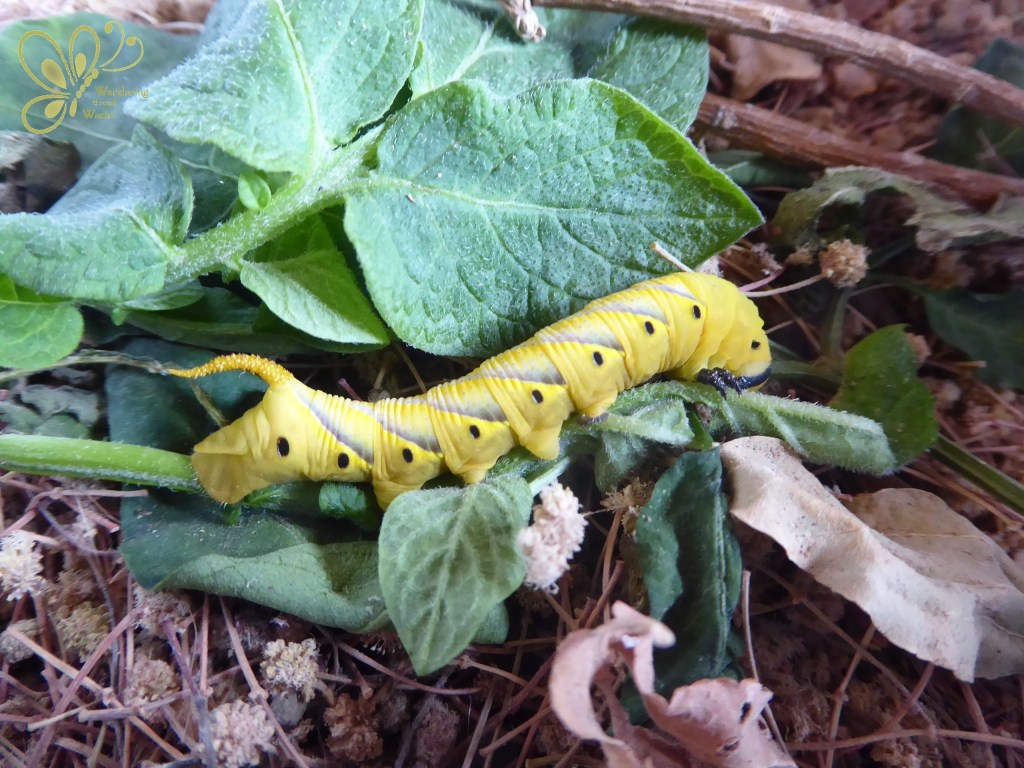
Eggs are laid, and the larvae (caterpillars) feed, on a range of plants – potato, aubergine, tomato, tobacco, olive, as well as Capsicum, Solanum, Datura, and Nicotiana species. The larvae are yellow/green with yellow lateral stripes and go through several instars. When mature, they dig under the soil to pupate.

And these critters get more interesting!

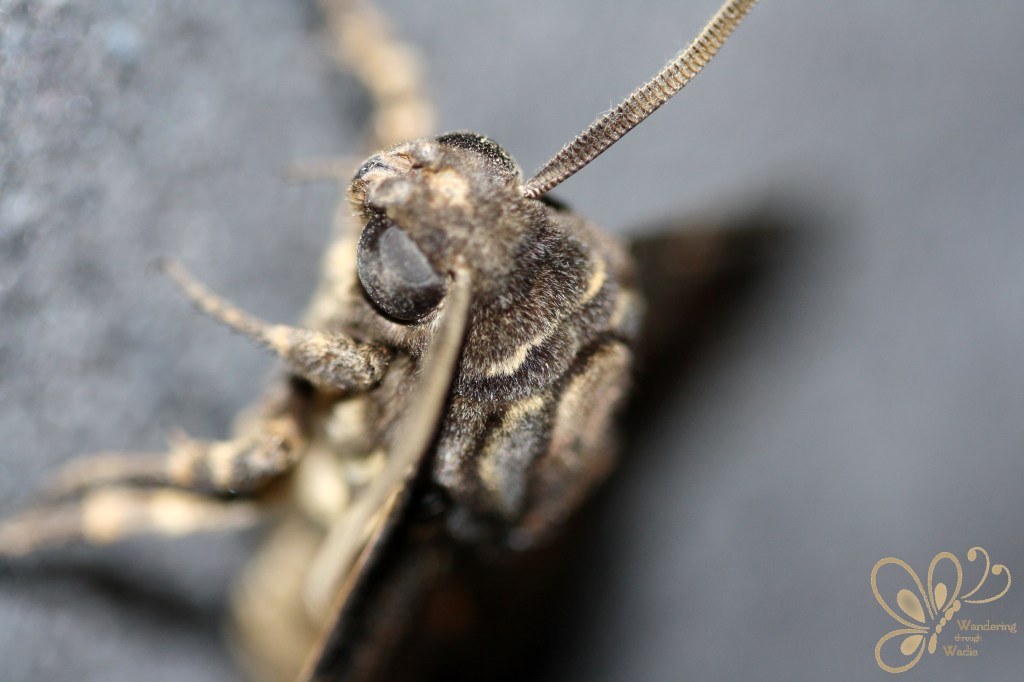
Death’s Head Hawkmoths can, if disturbed, rapidly expel air to emit a loud squeak, similar to that of an agitated mouse. And these hawkmoths are also known as bee moths because of their ability to safely enter bee hives and drink the honey. They do this with the use of a chemical camouflage; they mimic the scent of bees.

Another fun fact: A. styx was featured in the film The Silence of the Lambs. (A victim was found with a pupa of this moth in her windpipe and there is a scene with entomologists determining the species.)

Interestingly, Acherontia styx was, in a study published in 2022, a new record in Egypt. The previous study on Sphingidae moths in Egypt was completed in 2005.

References:

Abdelfattah Mabrouk Amer Salem. Lepidoptera of Egypt Part III: Revision of Family Sphingidae (Bombycoidea). American Journal of Entomology. Vol. 6, No. 1, 2022, pp. 7-13. doi: 10.11648/j.aje.20220601.12

Specimen of the Week 194: The Death’s-Head Hawkmoth

Desert Skimmer

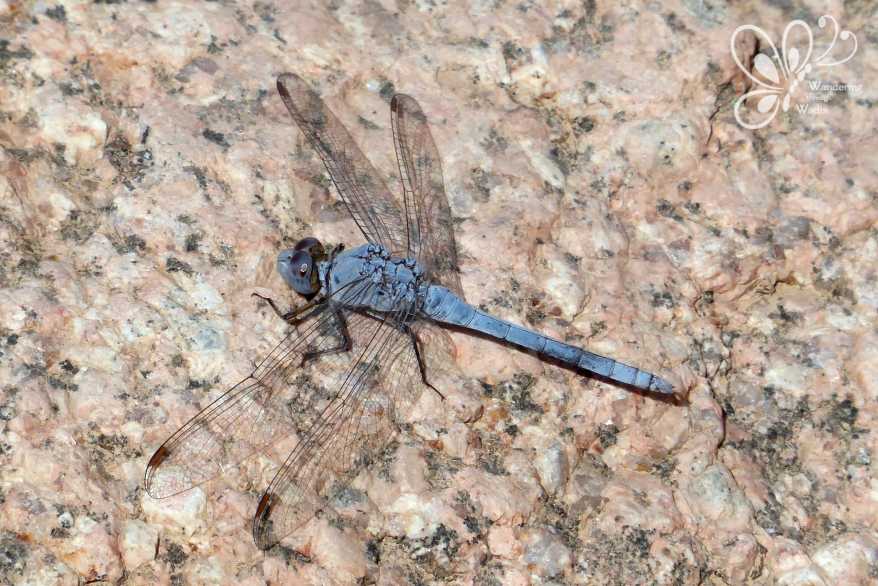
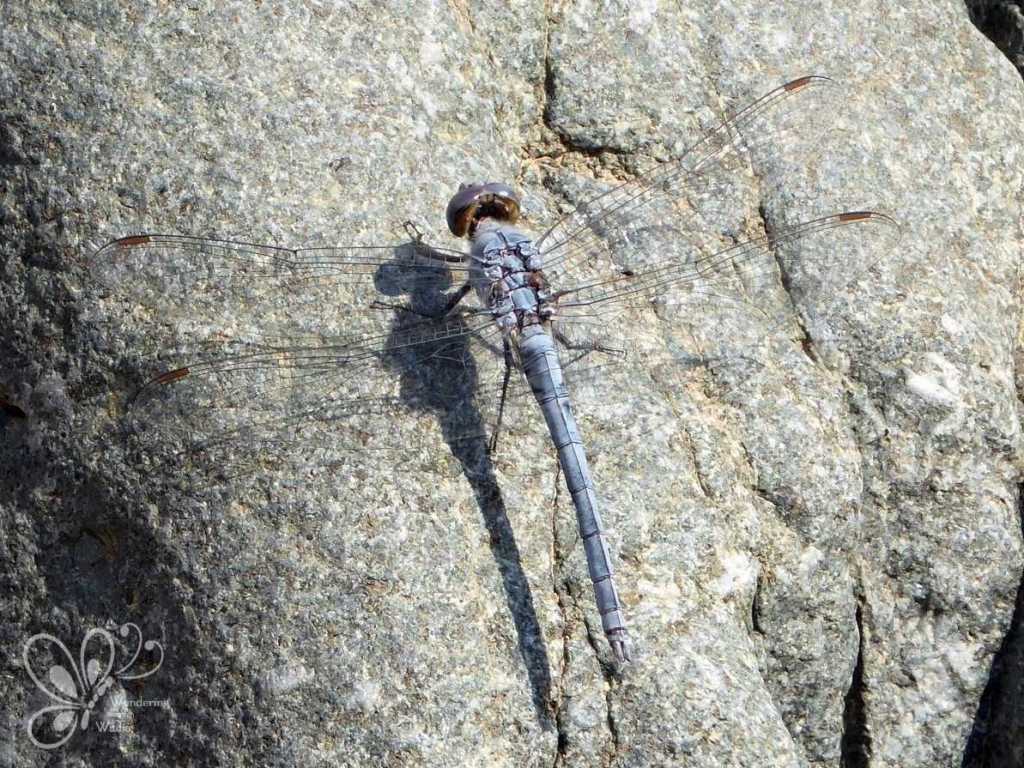
Widespread in Africa and the Middle East, the Desert Skimmer (Orthetrum ransonnetii) is mostly found in hot, arid, rocky environments, like Sinai’s desert mountain region.

These dragonflies have almost completely black venation and completely transparent wings. (There is no amber color on the hind wings like in other species.) The males are blue, with an unwaisted body, and females are brown.

Because their larvae and nymphs are aquatic, Desert Skimmers are common at small flowing and standing pools of water, and particularly areas without a lot of vegetation.

Desert Skimmers are known to hang from vertical or sub-vertical rocks and walls. And if the weather is hot, they especially like to hang in shaded places.

Dragonflies are carnivorous, predatory insects, hunting on the wing for other flying insects, including mosquitoes, flies, butterflies and moths, and even smaller dragonflies. Their acute eyesight and strong, agile flight help make them some of the world’s most efficient hunters. Dragonflies catch up to 95% of the prey they pursue. And that’s good, because a dragonfly eats up to 1/5 of its weight every day.

Bedouin in Sinai, at least of the Jebeleya tribe, call a dragonfly a ghizlan غِزْلان

What do you call them in your native language?
Be sure to read the post about the Violet Dropwing where you can learn more about dragonflies’ amazing wings!

Blackstart

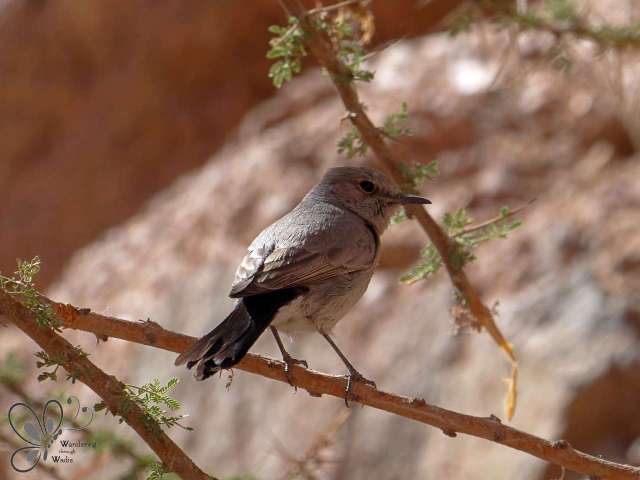
It’s been awhile since I’ve featured a bird on the blog, so today let’s meet the Blackstart (Oenanthe melanura), called bal’ala by the Jebeliya Bedouin.

Blackstarts are common resident birds in South Sinai and are relatively unafraid of humans so there’s a good chance you’ll come across one in your wanders and maybe even get a chance to spend some time in their company. You might be serenaded by their song:

David Marques, XC82635. Accessible at http://www.xeno-canto.org/82635

These birds have bluish-grey to grey-brown plumage with darker colored wings. They are named (Oenanthe melanura) for their black tails, which they tend to have fanned out. In classical Greek, mela means black and oura, tail. Their bodies can be up to 14 cm long.

Blackstarts live in rocky wadis, deserts, and mountain slopes, where they can often be seen hopping around on the ground, feeding on insects.

Blackstarts are monogamous and pairs remain together in their breeding territory throughout the year. The female builds the nest, a shallow cup made of grass and leaves, in rock crevices and lines it with hair and fine plant material. She will lay 3 – 4 eggs, which are blue with reddish brown speckles. The eggs, if they aren’t preyed upon by a Golden Spiny Mouse, hatch after about 13 days. Both parents feed the chicks, which fledge, or grow flight feathers and are ready to learn to fly, after 14 days.

Scarce Marsh Helleborine

If you follow the Wandering through Wadis Facebook page, you might recall the photographs of orchids that I shared a few weeks ago. I had no idea that there were orchids growing in the desert, but after my friend sent me photos of the blooms she had seen, I obviously had no choice but to go see them for myself.

I had identified the orchids in my friend’s photos as Scarce (or Eastern) Marsh Helliborine (Epipactis veratrifolia) but, admittedly, I knew nothing about orchids. So I’ve been reading up on them. And I’ve learned a lot of fascinating things about orchids in general, but also about these rare beauties that are native to Sinai. (They are not found in mainland Egypt.)

Most orchids (more than 99% of all species) are epiphytic and use their roots to attach themselves to and grow on trees. The Scarce Marsh Helleborine, however, is a terrestrial, or ground, orchid and grows its roots firmly in soil.

This helleborine is a perennial herb and grows, from a fleshy rhizome, to be between 25 – 150 cm tall. The leaves are ovate (egg-shaped) and pointed at both ends. They grow along the stem and can be 8 – 25 cm long. The inflorescence, or cluster of flowers, grows atop an erect stem. The flowers are fairly open and are green to yellowish-green in color with purplish or reddish radial stripes. The lip, or bottom middle petal, is tipped in white. The upper part of the stems, bracts, ovaries, and sepals are covered in short, fine hairs. In Dahab, the orchids were found growing among native grasses in a wet area.

Like all orchids, this helleborine is dependent on a mycorrhizal symbiosis, a mutually beneficial relationship between a plant and a fungus, to complete its life cycle. The plant’s fruit capsule is full of microscopic seeds (in some species, over a million), but these seeds all lack endosperm. Endosperm is the tissue usually found inside seeds that provides nutrition to the plant as it sprouts. Because an orchid’s seeds don’t have this inborn nutrition, they rely on fungi to provide them with the nutrients they need to germinate. The chance of germination is so small that only a minute fraction of the released seeds grow into adult plants.

But before a plant can even produce any of these seeds, it must first be pollinated. And to help ensure that, the Scarce Marsh Helleborine employs a trick, a special mimicry, to lure pollinating hoverflies to its flowers. The flowers emit three chemical substances that are usually released as alarm pheromones among aphids. Aphids are the preferred diet of hoverfly larvae. So female hoverflies smell these chemicals, interpret this to mean that aphids are nearby, and proceed to lay their eggs near the source of the scent – the flowers. The hoverflies are rewarded with a small sip of nectar, but their larvae are doomed to starve because, when they hatch, there will be no aphids around to consume. (This is a strange contradiction from an evolutionary perspective because since the larvae die, the number of potential pollinators decreases.) The orchids are mimicking the aphids, taking advantage of the female hoverflies and deceiving them into pollinating the flowers.

As you can see, these rare orchid blooms are not only beautiful but also full of amazing natural wonder!

Resources:

Plants of the World Online (Epipactis veratrifolia)

Orchid tricks hoverflies (Max Planck Society)

The Third Edition is Here!

I’ve had many requests over the last couple of years for print copies of the guidebook. I decided that if I was going to print more, the book should be the best, most up-to-date version possible. So that’s what I’ve been working on, updating the book. It’s been four years since the printing of the second edition, and eight years since the first. I continue to discover and learn about the desert plants and so, to this third edition of the book, I have added 13 new plants (for a total of 155) and 90 new or additional photographs for the plants previously included.

And now I finally have a limited number of print copies available of the third edition of Wandering through Wadis: A nature-lover’s guide to the flora of South Sinai!!

The book is printed on thick quality paper bound with spiral wire 2 cm round. The book is 21 cm x 14.5 cm, about A5 paper size. It weighs 518 grams. Something to consider when deciding if you would want to carry it with you on hikes.
A bonus to reading the eBook version, especially on a tablet, is that you can easily zoom in on the photographs of the plants.

Also, depending on your device, it may weigh less than the print copy. My tablet, in a case, weighs 400 grams (100 less than the print copy).
One useful feature of the PDF version, especially when read on a laptop or PC, are the bookmarks that help you easily navigate through the book.

You can download a sample of the book as a PDF file for free here . This requires an email address. If you’d rather not enter an address, click the ‘Preview’ button on the top of this page to view the file online.

Print copies cost LE 400, including free delivery in Dahab. Shipping is possible within Egypt. Send me a message to arrange purchase and delivery of your copy.

The eBook version has also been updated and can be purchased online for $8 here. Contact me if you would like to arrange alternative payment and delivery options. Enter code WADIBLOG for a 10% discount.

Happy Wandering!

~Bernadette

Stagshorn Lavender

Many people are surprised to learn that lavender grows in the desert wadis of South Sinai.

Stagshorn Lavender (Lavandula coronopifolia) is one of 47 lavender species in the Lavandula genus and one of two that are native to Sinai. While not as fragrant as its cousins, the leaves of Stagshorn Lavender do have a pleasant scent and are edible, grazed by the local herds of goats, sheep, and camels.

And I can attest to their tastiness! When I had a plant growing in my desert garden, we often added the leaves to our salads.

It is in fact their distinctively branched stems that gave this species its common name – stagshorn. In Arabic, this plant is known as zeiti, diktae, or netash.

Stagshorn Lavender is a small shrub in the mint family and can grow up to one meter in height. Lavandula coronopifolia grows in open rocky habitats, desert plains, and foothills and is the most widespread species of lavender across northern Africa.

The flowers are sky blue to lilac in color and bloom between January and April.

Which means you can seem them in bloom right now! When I was wandering through wadis last weekend, the lavender plants were one of the few plants with flowers. There would be more if the area had received more rain this season, so my fingers are crossed that the small chance of rain forecast for tomorrow comes through!

You can find Stagshorn Lavender – and over 140 other plants – in my book, Wandering through Wadis: A nature-lover’s guide to the flora of South Sinai. Purchase a PDF copy online here.