African Monarch Butterfly

Considering how much time I have spent with these beauties over the years, I’m surprised that I haven’t featured them on the blog before now!
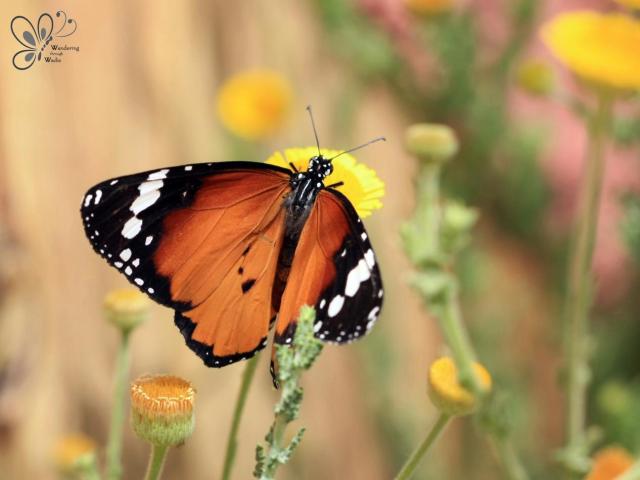
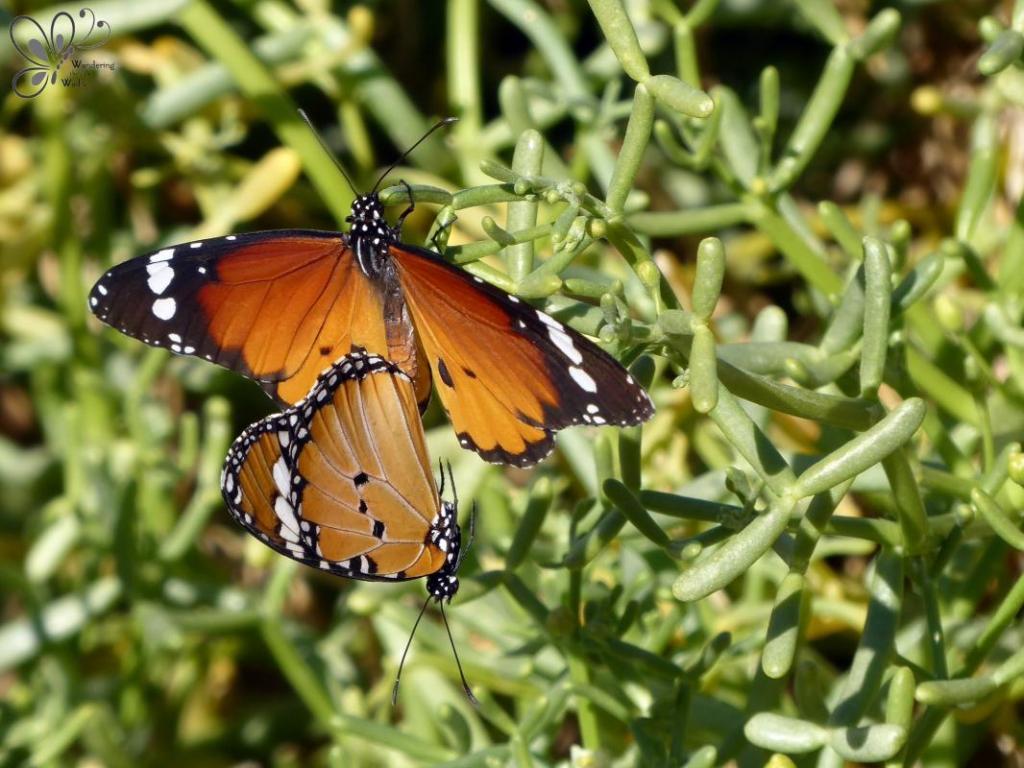
African Monarch butterflies (Danaus chrysippus), also called African Queen or Plain Tiger butterflies, are widespread and abundant in Egypt. In fact, the oldest representation of a butterfly in the world is of an African Monarch and it’s on a pharaonic wall painting in Luxor.
African Monarchs are members of the family Nymphalidae, often called brush-footed butterflies or four-footed butterflies because their first pair of legs are small or reduced. The caterpillars of this family of butterflies all have spiky projections on their heads and their chrysalids have shiny spots.
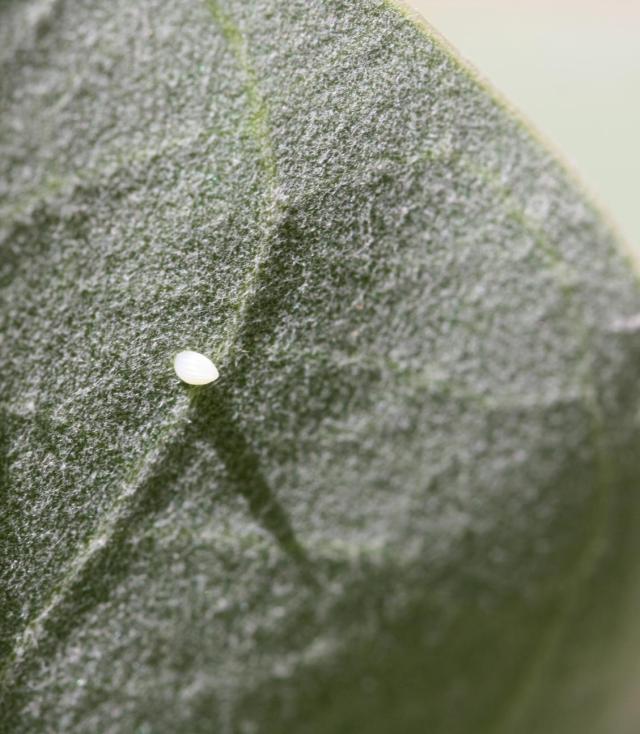
Larvae of African Monarchs prefer to feed on the leaves of Dead Sea Apple Trees (Calotropis procera) but will feed on any Asclepiadaceae, or milkweed plant, so this is where the adult butterflies will lay their eggs. The eggs are dome-shaped and ridged and typically hatch in 3 – 5 days.
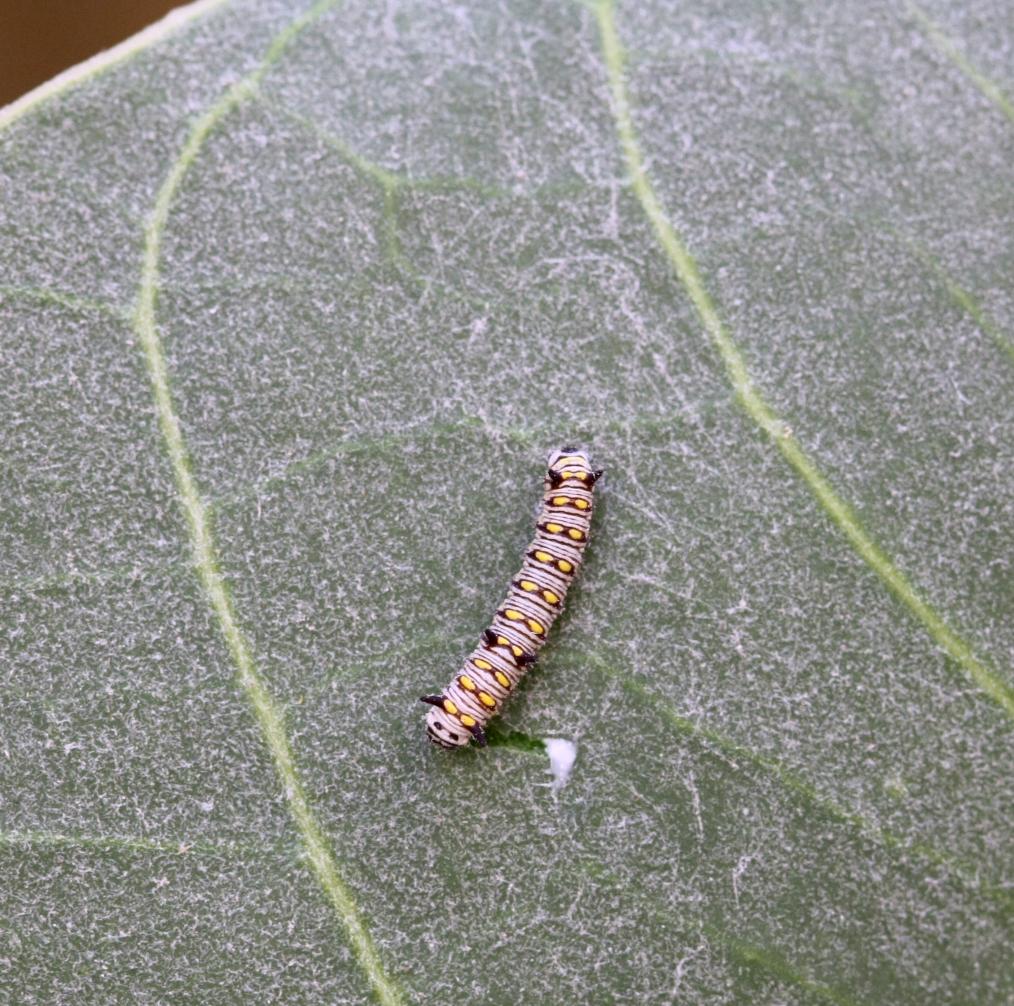
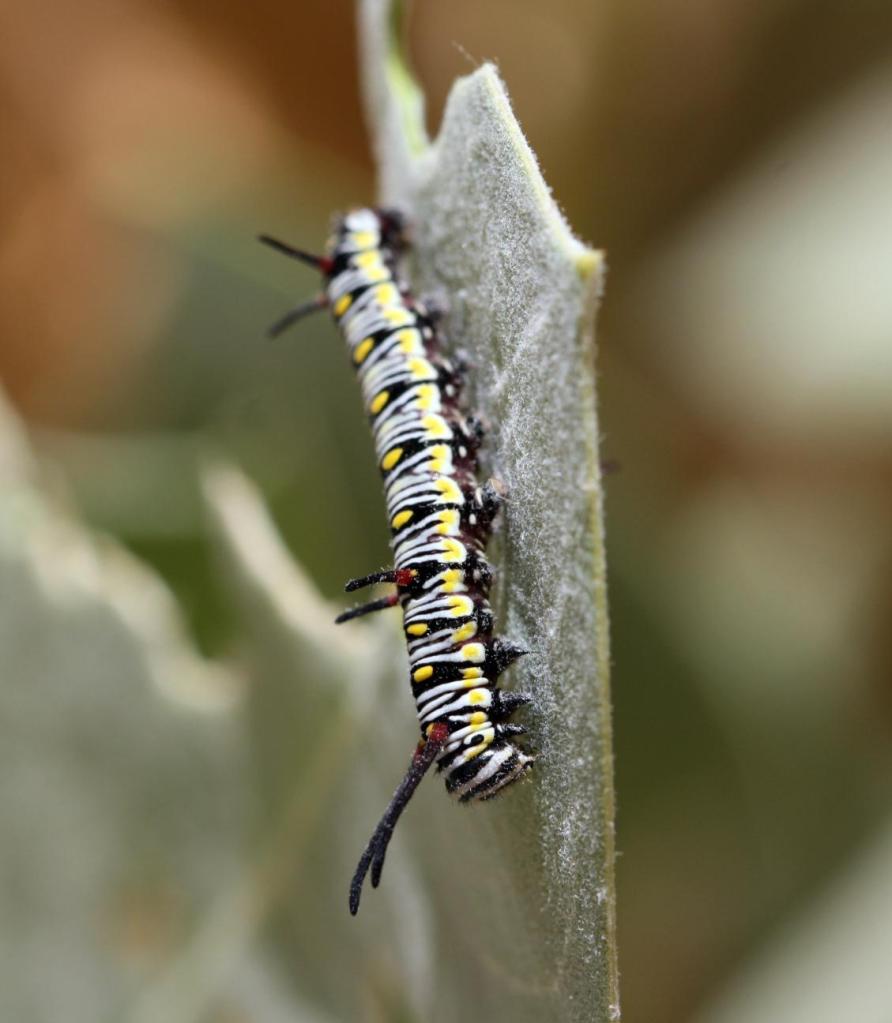
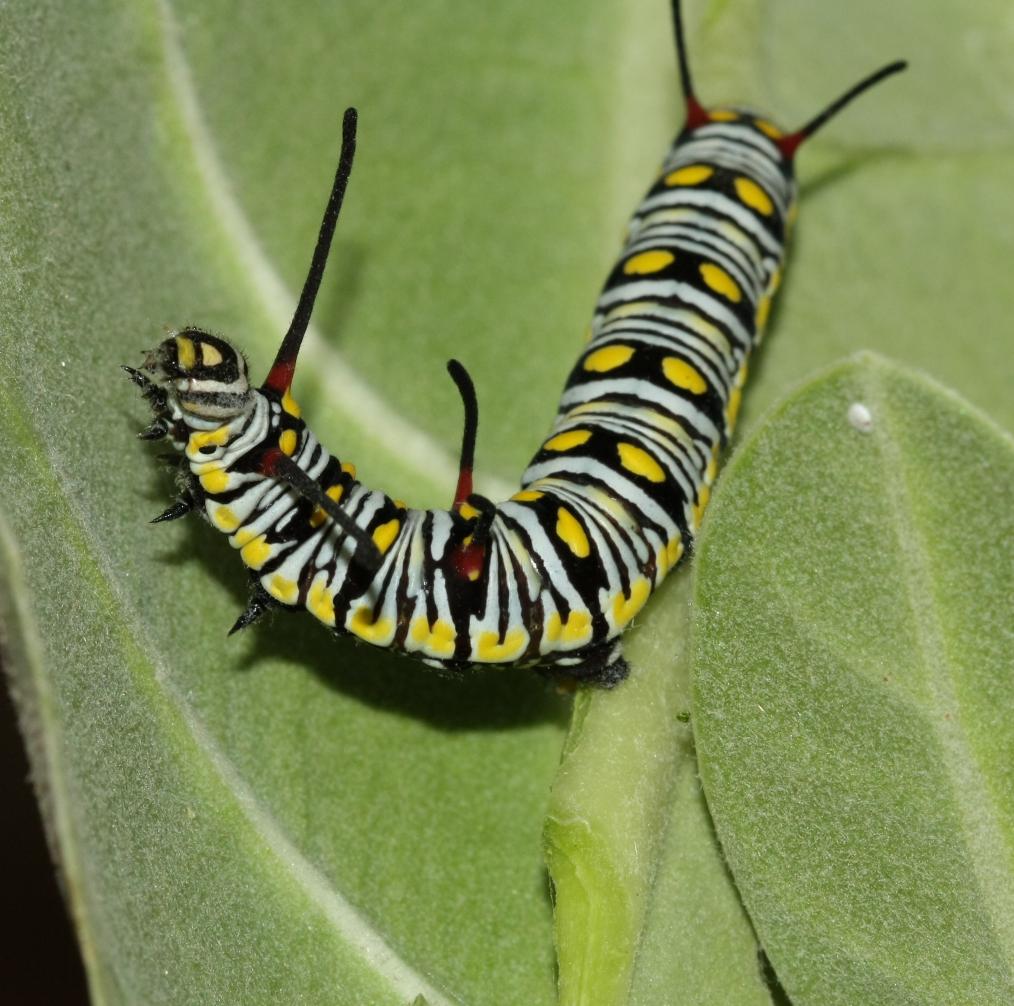
The caterpillars are striped white, yellow, and black and have black spines protruding from their bodies. As you may know, milkweed plants contain toxic compounds. These do not harm the caterpillars. Rather, the larva sequester these toxins, making the adult butterflies inedible/poisonous or distasteful to predators and acting as part of their defense system.
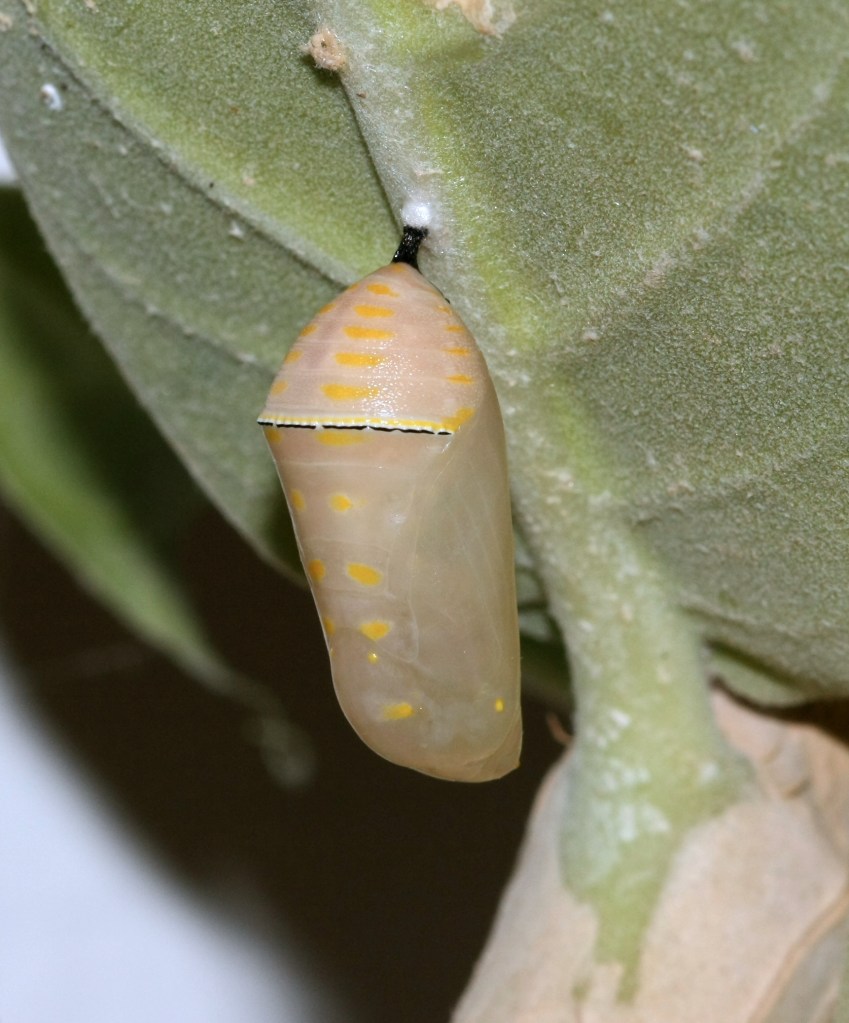
Because these butterflies, and their host plants, are common in Dahab, I have reared many of them indoors with my students. When indoors among inanimate objects, the pupa, or chrysalis, is white or pale colored. Outside in the wild, these chrysalids are bright green. In either situation, the chyrsalis has shiny gold spots, including along a black line near the top which I like to think of as a necklace.

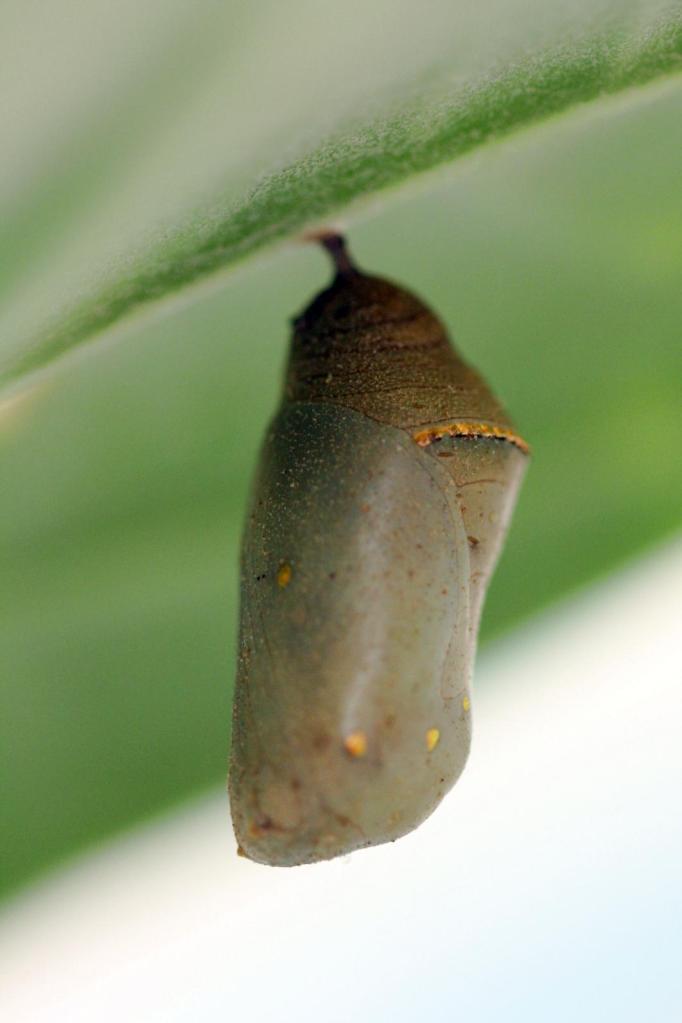
Pupation lasts between 9 and 15 days and then the adults eclose, the verb used to describe when a butterfly emerges or hatches from their chrysalis.

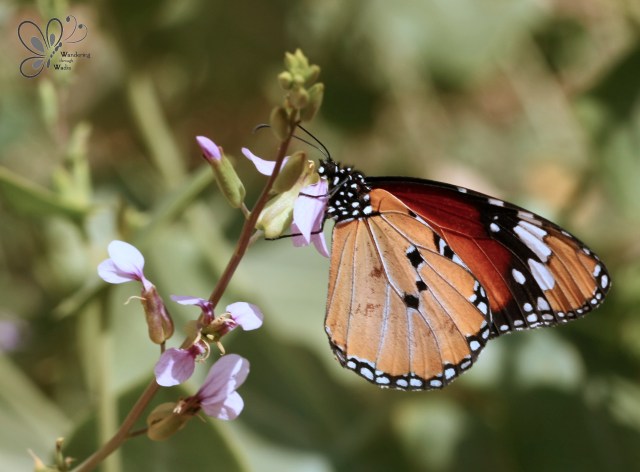
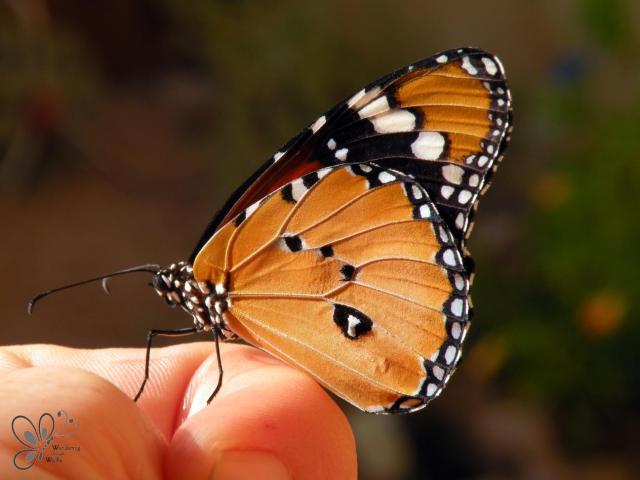
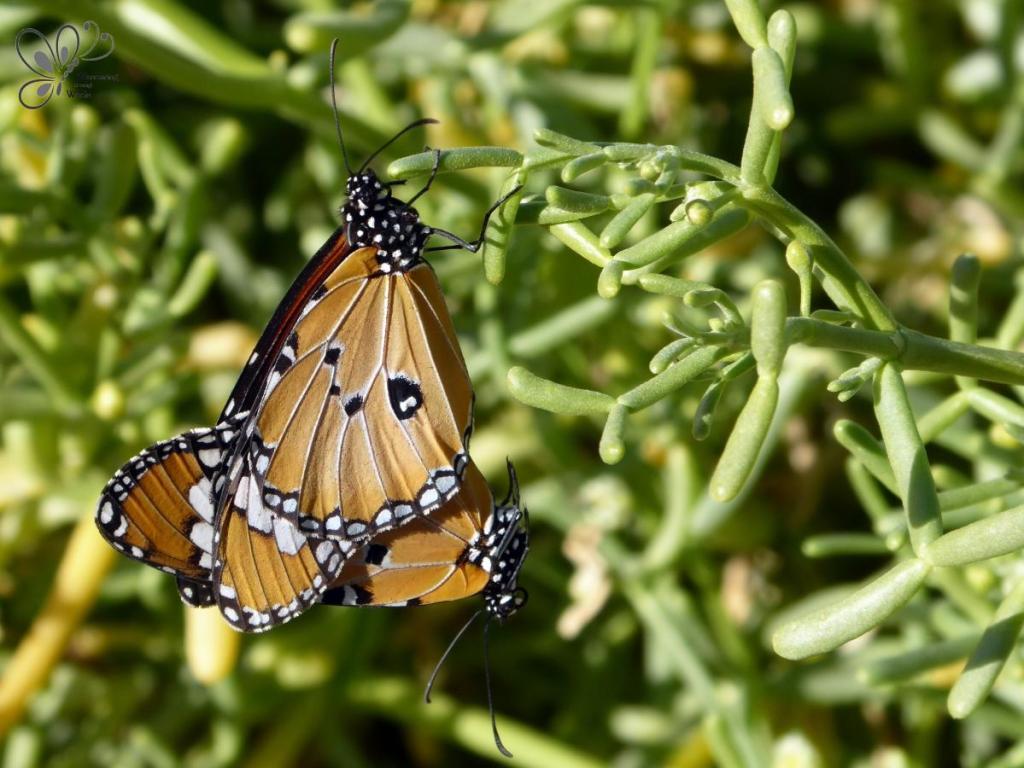
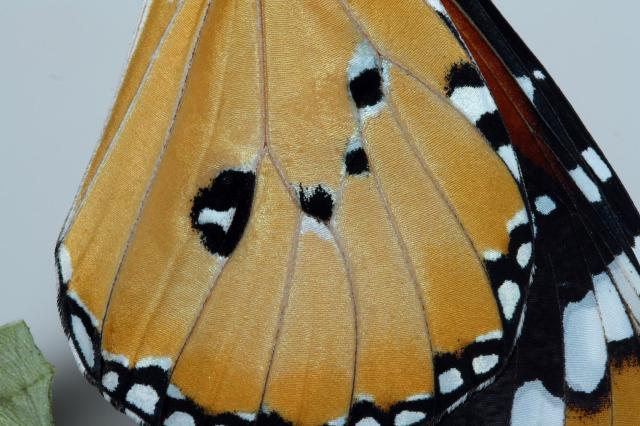
The vibrant coloring of the adult butterflies acts as a warning sign to predators, alerting them to their toxicity. The upperwings are a burnt orange color with black edges and white spots. The underwings are a dull yellow, edged with a fine black line and white dots.
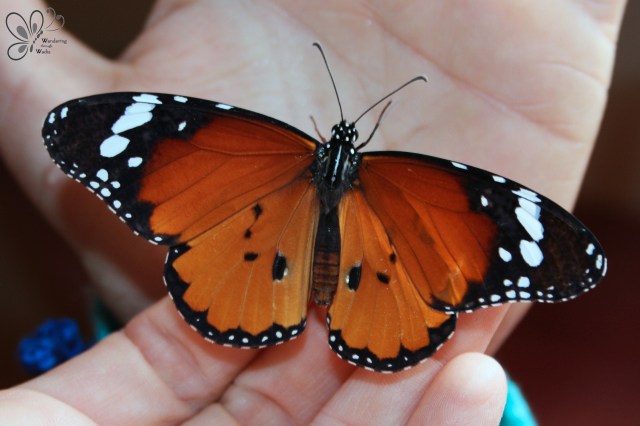
The body of the butterflies are black with many white spots. Females have three black spots on their hindwings, but males have a fourth black spot with a white center, a scent gland. Now that you know that, look back at the pictures in this post and see if you can tell the males from the females.
Adult African Monarchs feed on nectar from a variety of flowering plants and are easy to spot around Dahab. Have you spotted these beauties in town or on your wadi wanders?

Green Drab Moth

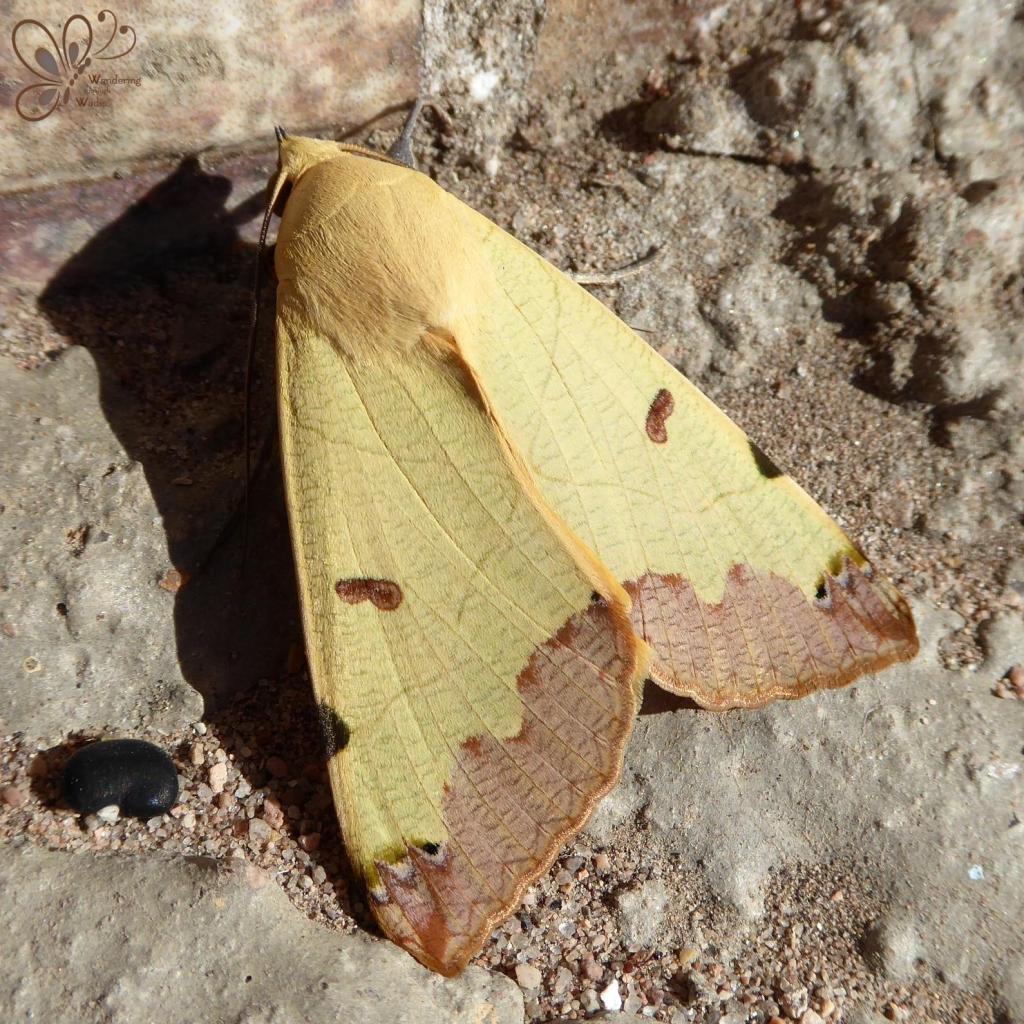
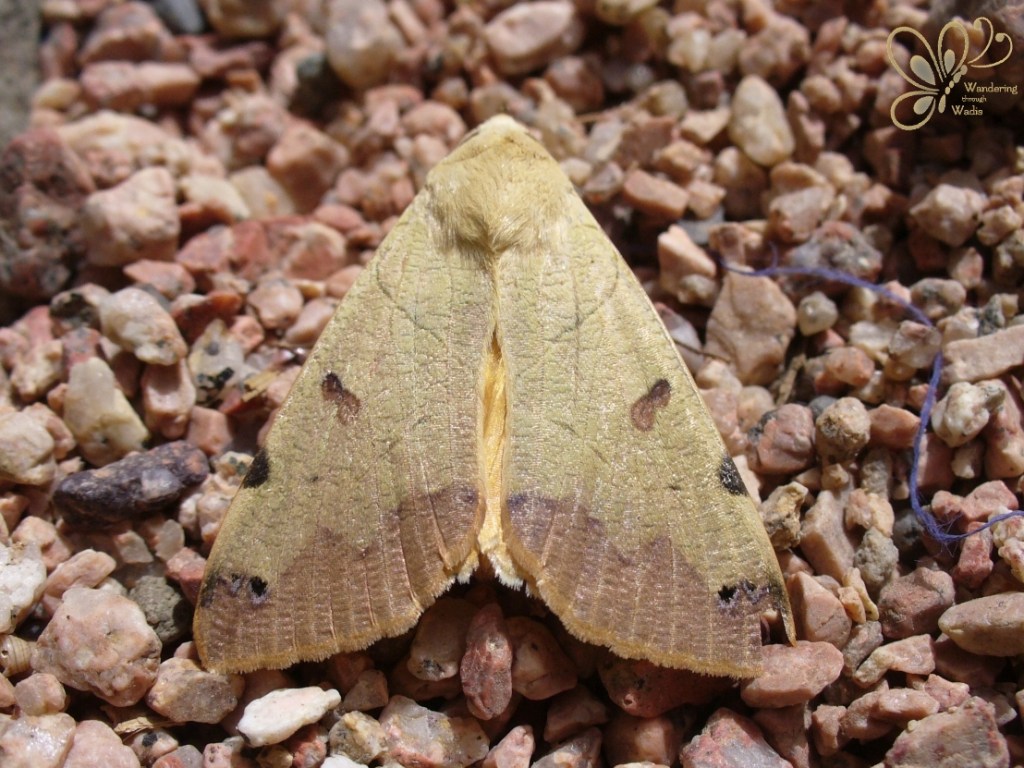
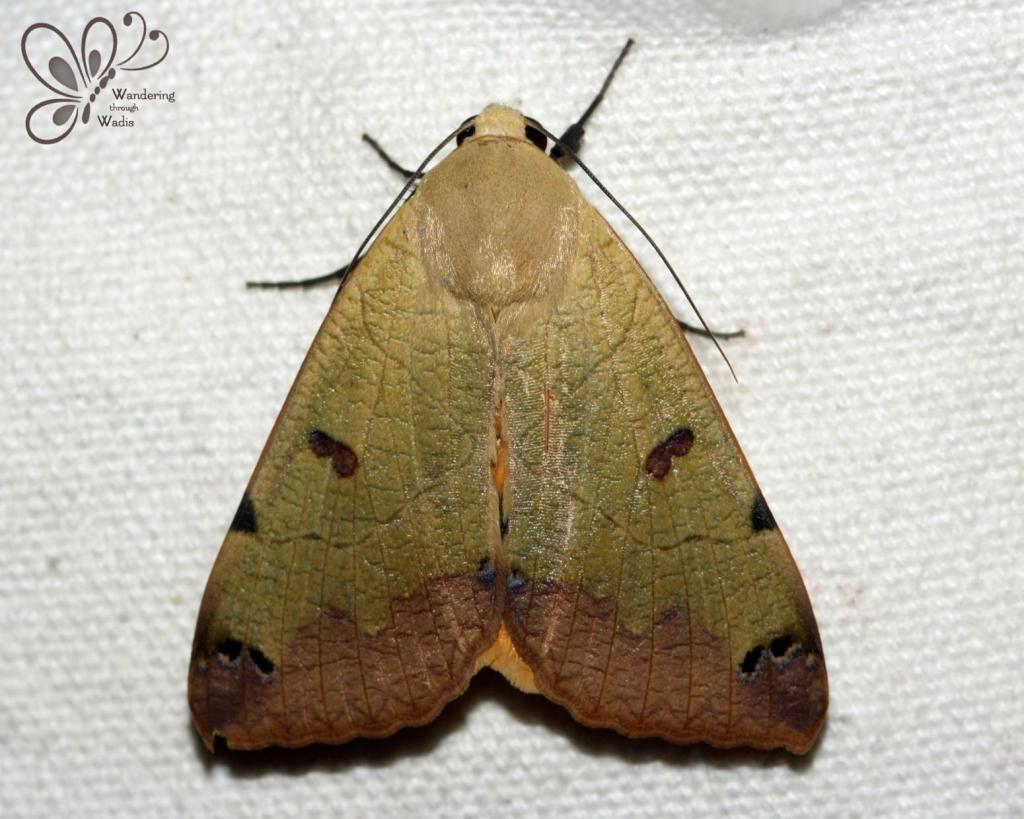
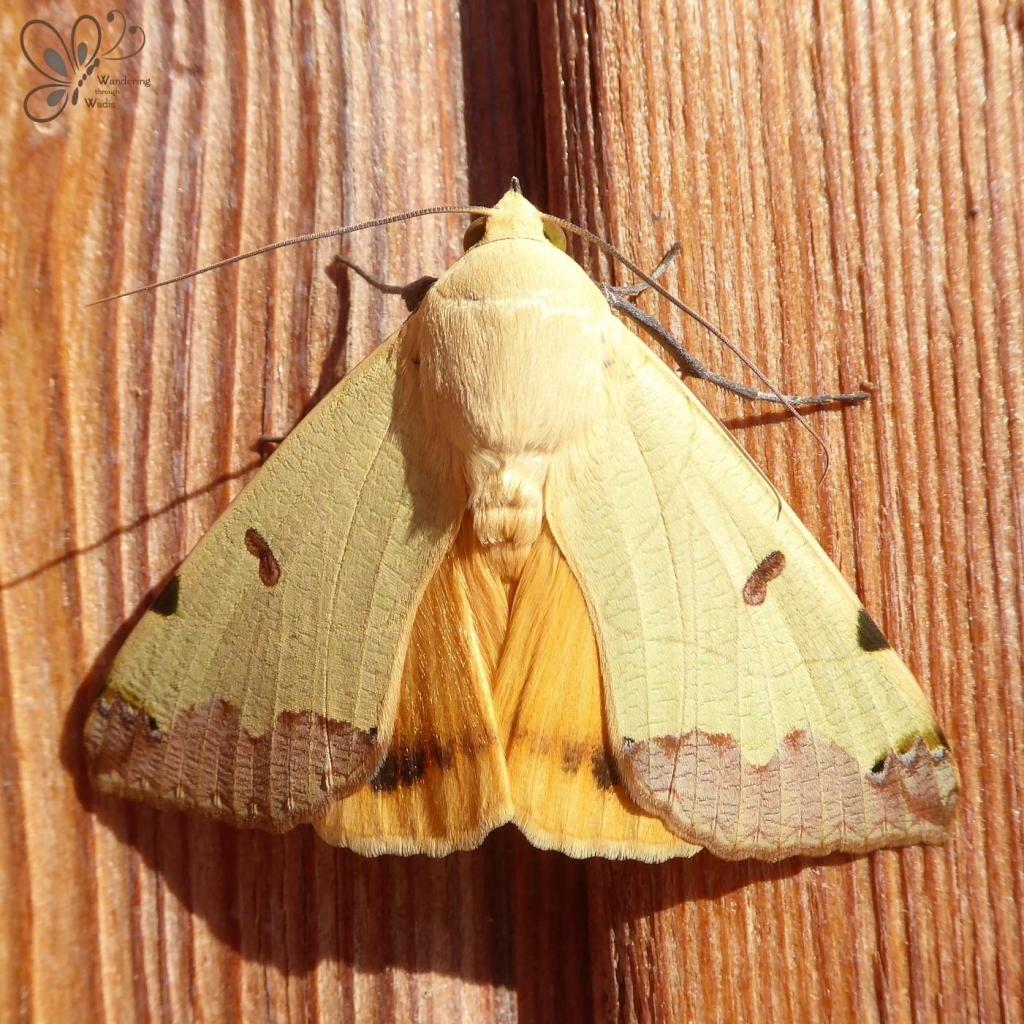
If “drab” can be defined as “not interesting, plain, or dull”, then it seems the wrong adjective to describe this moth, Ophiusa tirhaca, which I find simply stunning in appearance.

But “drab” can also mean “a dull greyish to yellowish or light olive brown”, which I suppose is a more fitting description for the adult females of this species, pictured below.

Green Drabs belong to the Erebidae family of moths and are native to Europe, Africa, Australia, and parts of Asia. The adult female moths have brownish-colored forewings, with a darker, irregular-shaped, broad band along the bottom edge. There is a dark spot near the middle of the wing and a black mark about halfway along the front edge. Males have a similar pattern but the forewings are more greenish, or yellow in several of my observations.

The hindwings of both sexes are yellow with a broad, dark band near the bottom edge.

Ophiusa tirhaca larvae” by Sir Shurf is licensed under CC BY-SA 4.0.

Host plants include pistachio, pomegranate, sumac, and eucalyptus trees. Eggs are laid on trunks or older stems and the young larvae emerge and search for young leaves to feed on. Older caterpillars can be quite cryptic and difficult to see, resembling the branches they are attached to in shape and color.

Although the larvae might be a pest on some fruit trees, the adult moths are always a joy to spot!

Oleander Hawkmoth

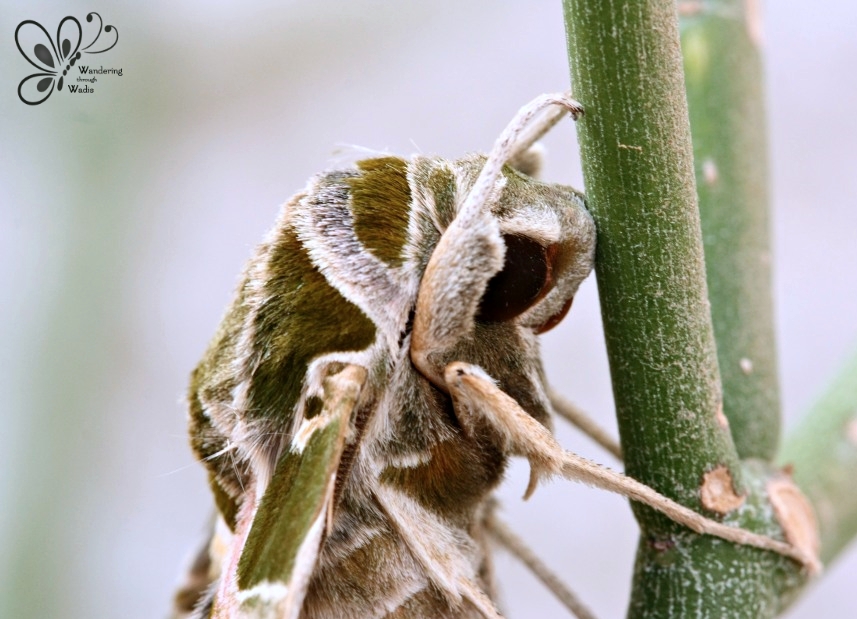
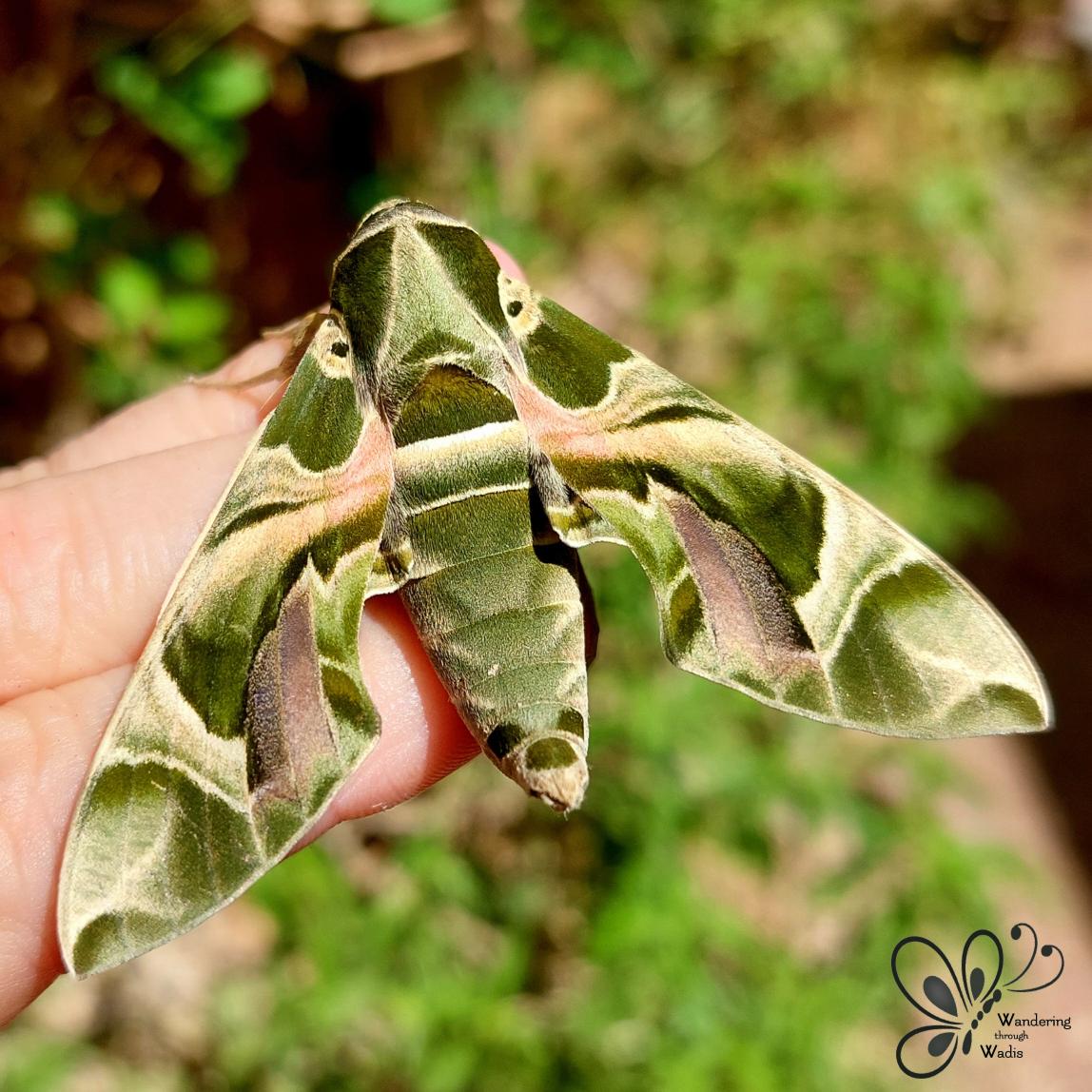
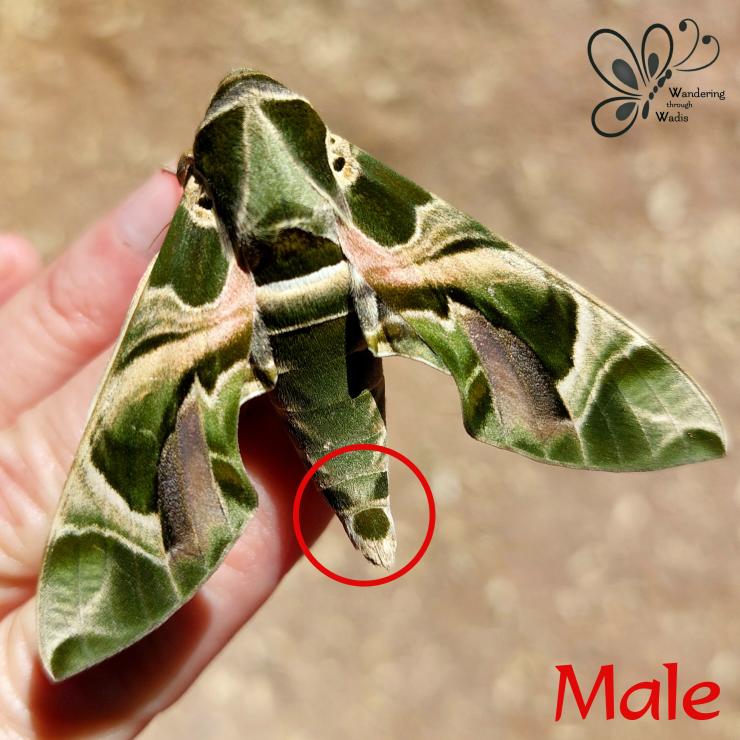
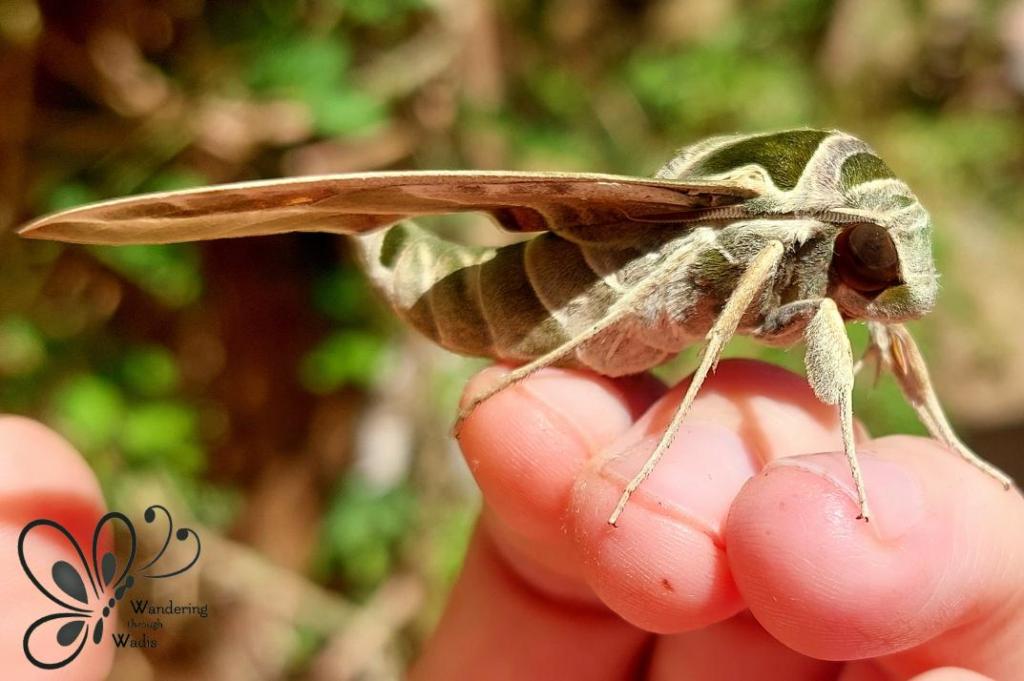
The Oleander Hawkmoth (Daphnis nerii), aka the Army Green Hawkmoth, is the most magnificent moth I have seen in the wild. Look at those wings! The colors and designs are truly stunning. That’s why I was so excited last week when my husband called me over to point out the one he had spotted in our desert garden.

This species of hawkmoth is native to areas of Africa and Asia. They are a migratory species, however, and fly to parts of eastern and southern Europe during the summer months. Oleander Hawkmoths have also been introduced in many places around the world.

The larvae, or caterpillars, feed mainly on oleander bushes (Nerium oleander), which of course explains their common English name, as well as other plants in the dogbane family. These plants are highly toxic, but the caterpillars are immune. Oleander, which is not native to Sinai, is the most popular bush to plant along the streets in Dahab because of it’s toxicity. The goats and sheep roaming the streets of Assala typically won’t eat these bushes, so they one of the few that can survive in this part of town. And so there is plenty of food around in my neighborhood for these caterpillars to munch.

MMB_6870” by mmariomm is licensed under CC BY-NC-SA 2.0.

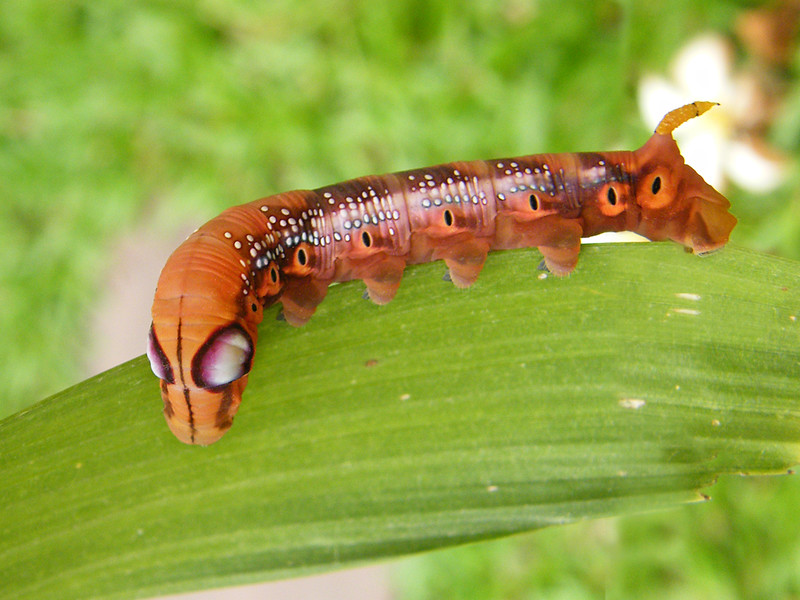
And if you thought the were amazing – check out these larvae! They are yellow when they hatch and turn green as they grow older. Like all hawkmoths, there is a “horn” protruding from the rear end of their body. There are large blue and white eyespots near the head (which are used as part of their defense system), a white band along the side of the body, and white and bluish dots. The caterpillar can grow up to 8.5 cm in length and turns brown shortly before it is ready to pupate.

Daphnis nerii” by acherontyus is licensed under CC BY-NC-ND 2.0.
Hawk moth caterpillar” by DocJ96 is licensed under CC BY-NC 2.0.

Fresh pupa are cream-colored but turn reddish-brown in color and will lie directly on the ground or under leaf litter.

Adult moths have a greenish head with a gray band at the vertex and a green thorax with a black/tan belt across the center. The forewings are patterned with green, whitish, and rosy-colored curved bands. At the base of these wings is a white patch with a black spot.

Adults drink the nectar from a variety of flowers and are especially active at twilight, just after sunset. Oleander Hawkmoths may be important pollinators, and can find themselves prey to birds, lizards, and bats.

Their life cycle, from egg-laying to adulthood, takes between 28 – 30 days.

Read about other hawkmoths in Sinai:

Convolvulus Hawkmoth (Agrius convolvuli)

Eastern Death’s Head Hawkmoth (Acherontia styx)

Striped Hawkmoth (Hyles livornica)

Crimson-speckled Flunkey

I just love the common name of this moth – Crimson-speckled Flunkey is so much fun to say!

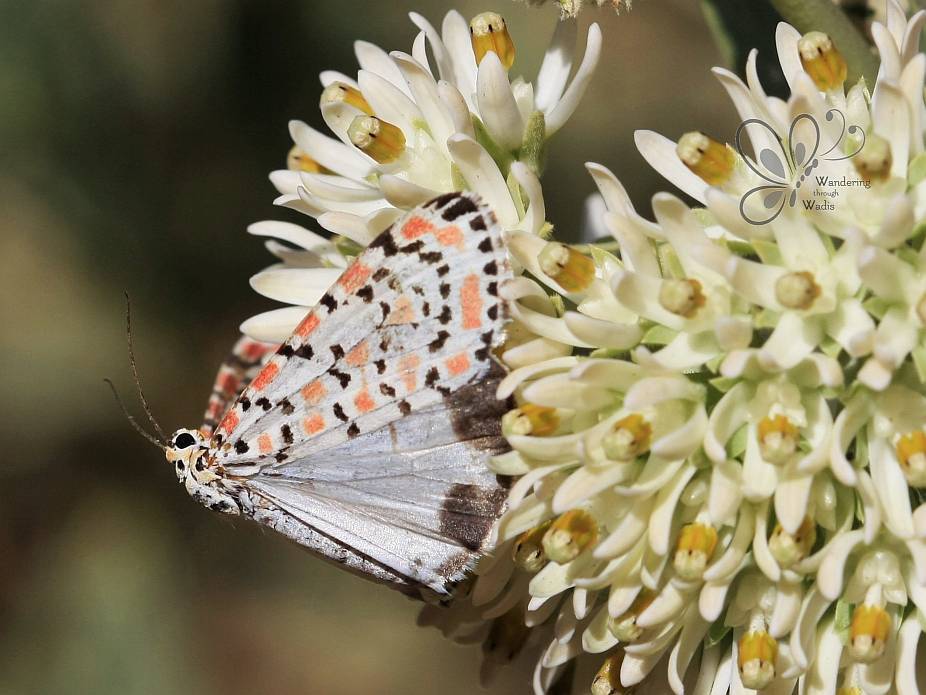
Crimson-speckled Flunkey
On a Trichodesma plant.

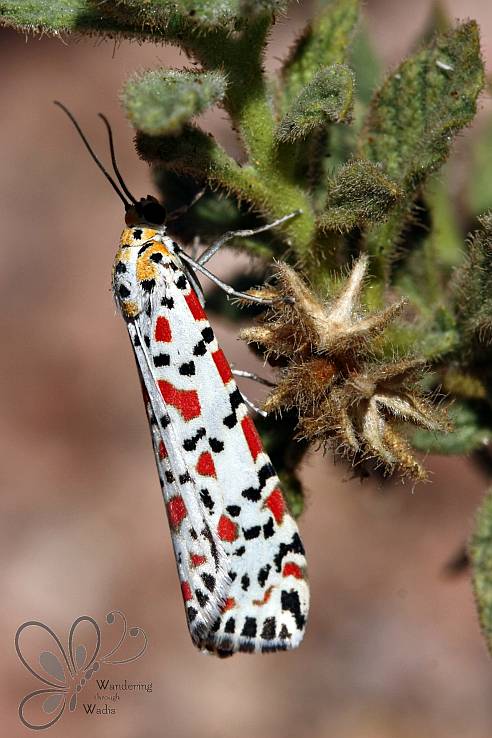
This moth (Utetheisa pulchella) belongs to the Erebidae family and can be found in dry open spaces in the Afrotropical ecozone in North Africa, the Near East, and Central Asia.

Crimson-speckled Flunkey

Their wings are white with small black spots between larger bright red one with an irregular black border. Their heads and thorax areas can be cream- to yellow-colored with the same pattern as the wings.

Crimson-speckled Flunkey
A dead specimen, perhaps a meal for a mantis or a spider.

Crimson-speckled Flunkeys fly during both the day and night, making them easier to spot than only night-flying moths. I have seen them in various locations in South Sinai, on a variety of plants.

Crimson-speckled Flunkey

The larvae, or caterpillars, eat a range of plants. In Sinai they most likely eat the leaves of Trichodesma and Heliotropium plants, as well as others. As they eat, the caterpillars accumulate a large amount of alkaloids in their bodies, making them unpalatable and toxic to birds. Their colors serve as a warning sign: They are dark brown or gray with orange lines across each segment. They have lateral white lines along their bodies and tufts of grayish hairs. I have never seen the caterpillars, at least not that I recall, but I found the image below on Wikipedia.

Have you ever spotted these moths or caterpillars on your wanderings?

Moths in Sinai

Moths in Sinai.jpg

Although most species of moths are nocturnal, I’ve spotted all of these moths in Sinai during the day.

In this sampling of photos, you can see:

Eastern Bordered Straw Moth (Heliothis nubigera)
Egyptian Noctuid/Green Drab (Ophiusa tirhaca)
Convolvulus Hawkmoth (Agrius convolvuli)
Oleander Hawkmoth (Daphnis nerii)
Hawaiian Beet Webworm Moth (Spoladea recurvalis)
Crimson-speckled Flunkey (Utetheisa pulchella)
Striped Hawkmoth (Hyles livornica)