Oriental Hornet

Solar-powered insects? Yes! Read on.

Oriental Hornets (Vespa orientalis) have reddish brown bodies, shiny exoskeletons, and bright yellow bands on their abdomens. These bands contain xanthoperin, the pigment that is not only responsible for their yellow coloring but also has the ability to absorb and convert light into usable energy, similar to a solar cell. This allows the hornets to be more active during the hottest part of the day, when other insects are typically resting. Oriental Hornets thrive in bright conditions, using the boost in energy to dig their nests – underground burrows made in sandy soil.
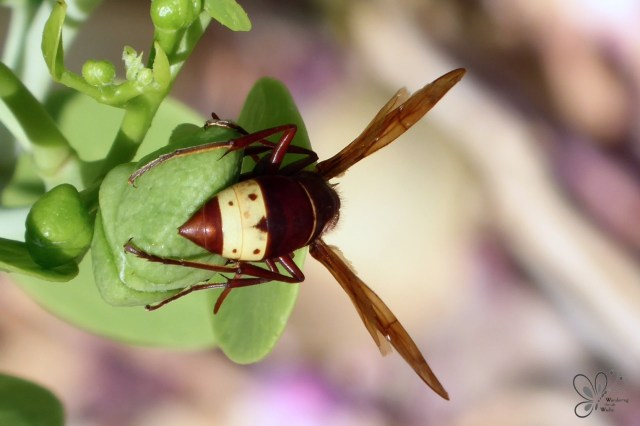
Oriental Hornets are social wasps, living in colonies and employing highly organized and cooperative behavior. The queen hornets are the main reproductive females and are responsible for laying eggs. The workers, all female, are in charge of maintaining the nest, gathering food, and protecting the colony. The job of the male drones is to mate with the new queens.
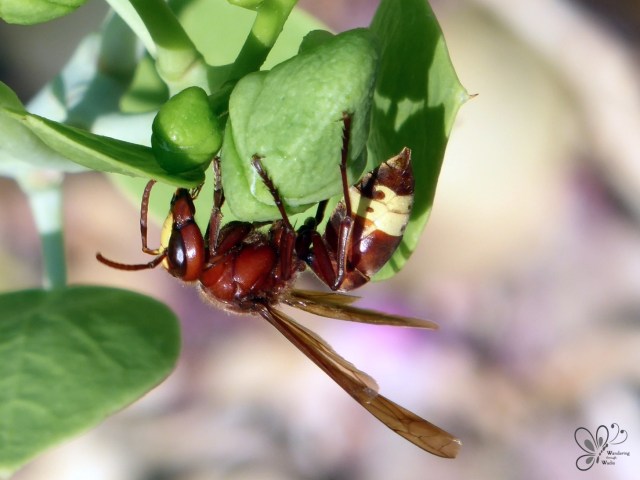
All of these behaviors follow a seasonal pattern. In the spring, the queens emerge from hibernation and search for appropriate nesting sites. In the summer, it’s time for the workers to forage, care for the larvae, and maintain the nest. In autumn, the new queens and drones mate before the queens enter hibernation and the rest of the colony dies off.
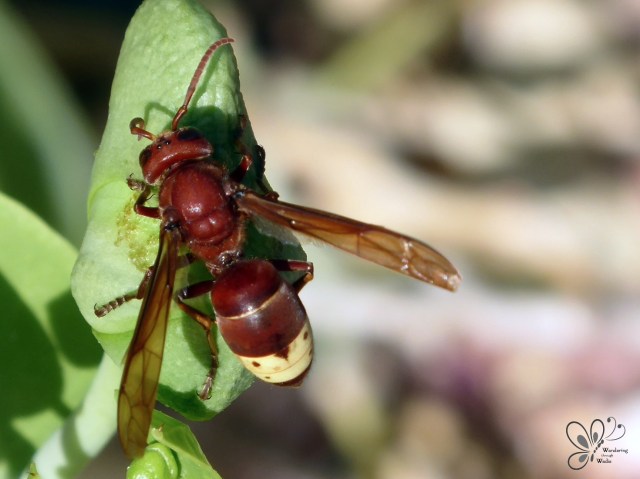
Adult hornets are attracted to sweet food sources – nectar, juice, and the honeydew produced by aphids. But for the larvae, the workers must collect protein – caterpillars, flies, and other insects. The hornets use their strong mandibles to catch and squash their prey, chewing it into a paste before bringing it to the larvae in the nests. Honeybee colonies are a favorite of hornets as they provide both the sweet food source and the protein (in the bee larvae). Hornets are known to attack bee colonies and can quickly annihilate an entire hive.
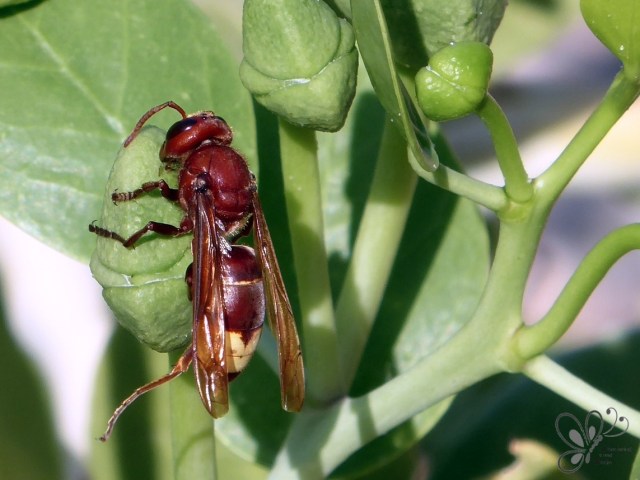
Hornets may get a bad rap for their painful stings, but they aren’t typically aggressive towards humans unless their nest is disturbed and their stings, while painful, aren’t dangerous unless someone is allergic to their venom. Hornets, however, do provide a few beneficial services to humans. They prey on agricultural pests, helping gardeners and farmers keep their crops healthy. And, while foraging for nectar, hornets also help in pollination.

I have seen Oriental Hornets in the wadis, especially in wadis with water sources, around Dahab and also foraging in my desert garden at home. Have you seen them on your wadi wanderings?
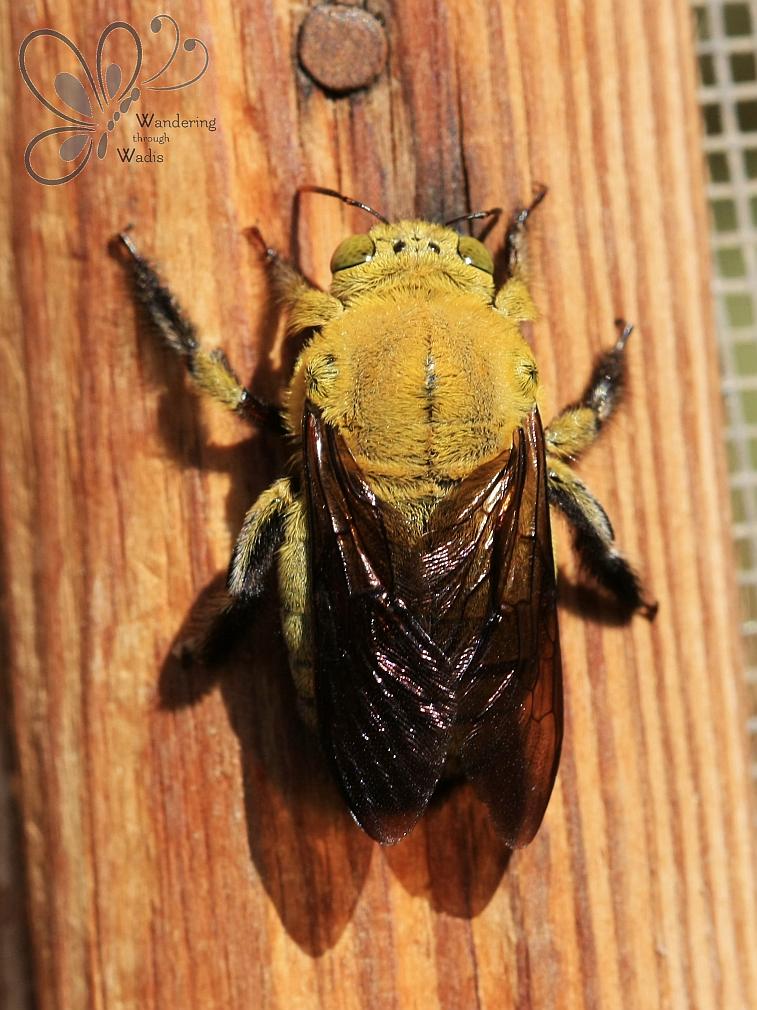
Large Carpenter Bees

If you follow the blog on Facebook, you might recall that a couple of weeks ago I announced the arrival of the bee-eaters, my all-time favorite birds who migrate through Egypt and Sinai in the spring and autumn. After that post, someone asked me what exactly the bee-eaters ate here in Sinai and was surprised to learn about the variety of bees around. I promised I would dedicate my next blog post to one of our local buzzers. So today I am pleased to introduce you to the Large Carpenter Bees (Xylocopa sp.).

Carpenter Bee (4)

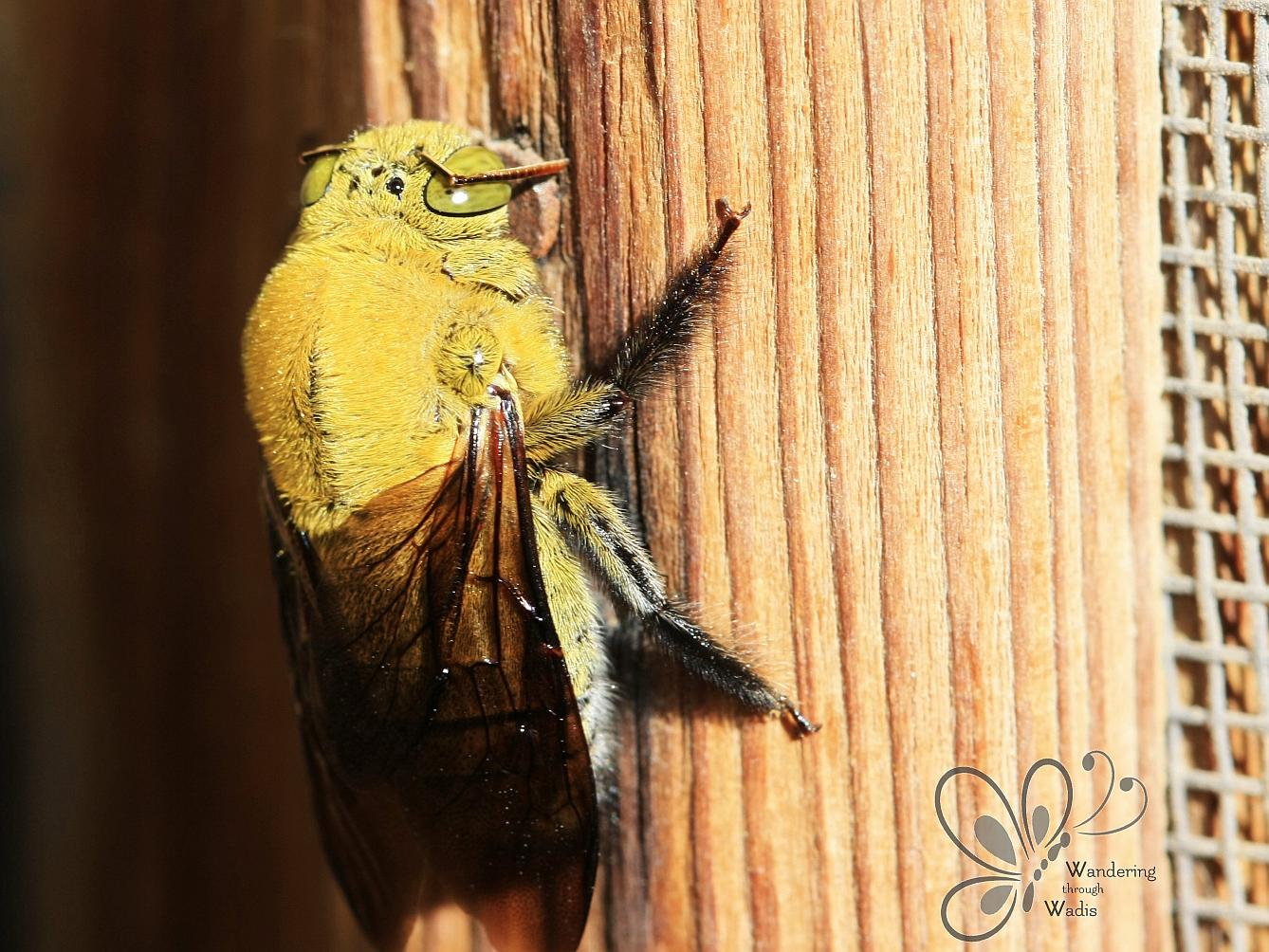
I have a Parkinsonia tree in my garden and it is currently bursting with blooms, which these large buzzers just love! They are usually difficult to catch an image of, but the one pictured above sat on my front door absolutely still for quite some time. Not sure why, but I was happy for the opportunity to get some photos.

According to the authors of Gardens of a Sacred Landscape, “Sinai is one of the very few places in the world (and it may be unique) where no social bees of any kind occur naturally, only solitary bees.” Solitary bees, like the Carpenter Bees, do not build hives and do not produce honey, but they are important pollinators.

Carpenter Bee (1)

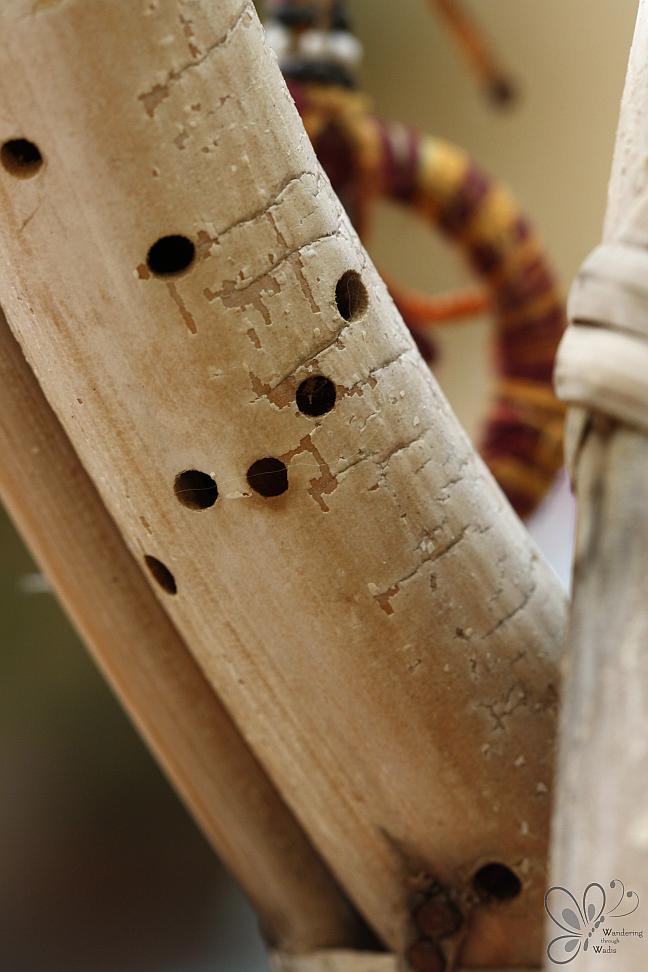
Carpenter Bees are named for their nesting behavior; they burrow into dead wood or other hard plant material, like the old bamboo chair in my garden.

IMG_7167

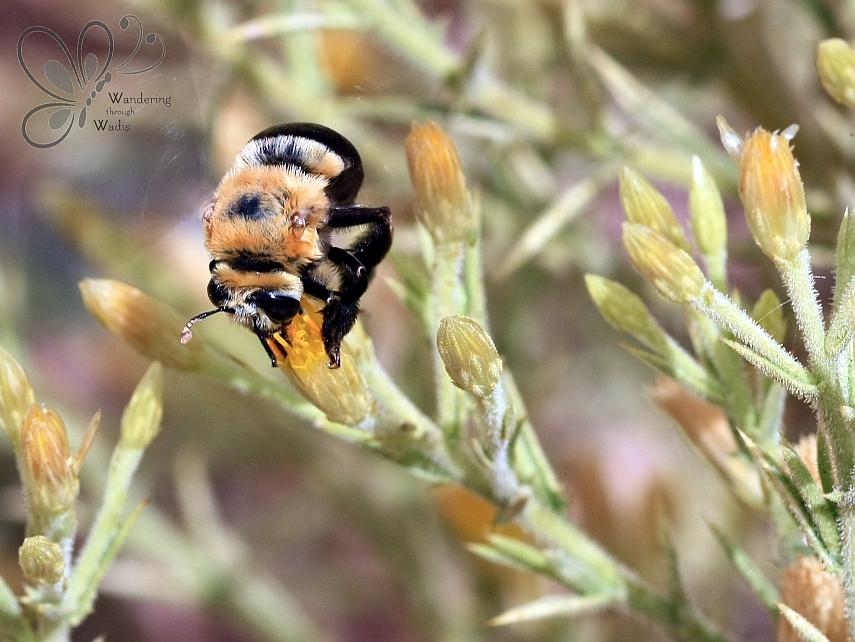
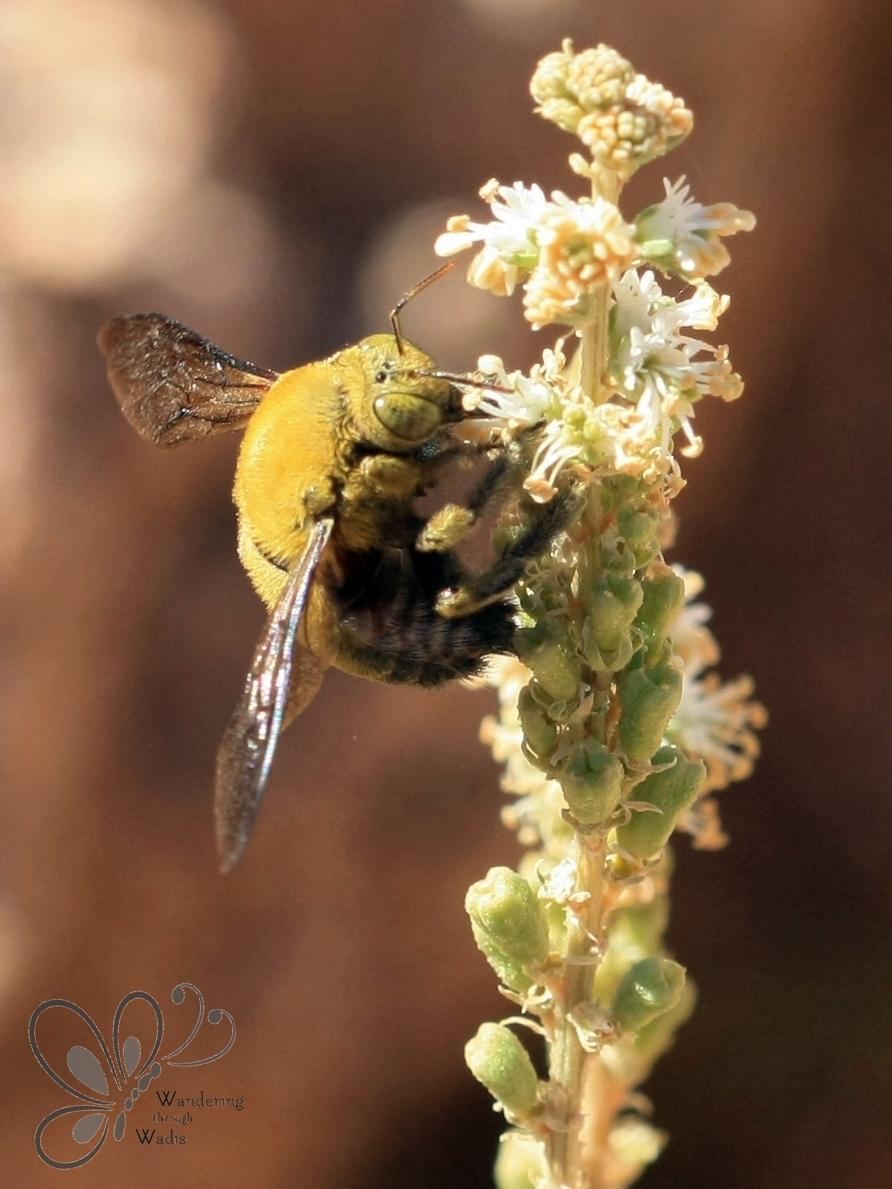
Large Carpenter Bees are – surprise, surprise – large. They are usually 2 cm or longer, whereas Small Carpenter Bees (Ceratina sp.) are often less than .80 cm. Although there is variation between species – and I can find no definitive list on the specific ones found in Sinai – most Carpenter Bees are primarily black, some with white or yellow fuzz. The ones spotted in my garden are quite yellow, but others I’ve seen in the wadis have paler fuzz.

Bee_Wadi Kostya (1)

Their wings produce a loud buzzing sound when they fly and these bees are often confused with bumblebees. To tell the difference, look at the abdomen. Carpenter Bees always have a shiny abdomen while a bumblebee’s will be covered in hair.

Wadi Paradise_Feb14 (21)

Carpenter Bees are indeed part of a bee-eater’s diet. Shrikes will also feed on these large bees. Both birds have ways to deal with the female bee’s stinger. (Males do not have stingers.) Luckily for us humans, the bees are quite docile and rarely sting unless they are directly provoked.

Wadi Paradise_Feb14 (57)

I’ll feature some of Sinai’s other buzzers over the next couple of weeks, as I continue with my attempt (in vain?) to catch some photos of the fabulous bee-eaters. I can hear them calling right now!