European Bee-eaters

Time to finally feature my favorite bird – the European Bee-eater (Merops apiaster)! I fell in love with these birds when I lived in Cairo, where I enjoyed watching them from the balcony of my sixth-floor apartment. These bee-eaters are passage migrants through Egypt in the spring and autumn. They spend winters in tropical Africa and then head north to their breeding grounds in Europe, northern Africa, and western Asia. Their arrival in Egypt in late March or early April marks the official start of Spring for me. When I first spot them, I send a message to my father living in Italy and then, several weeks later, he lets me know when he first sees them there. It’s become a fun tradition!
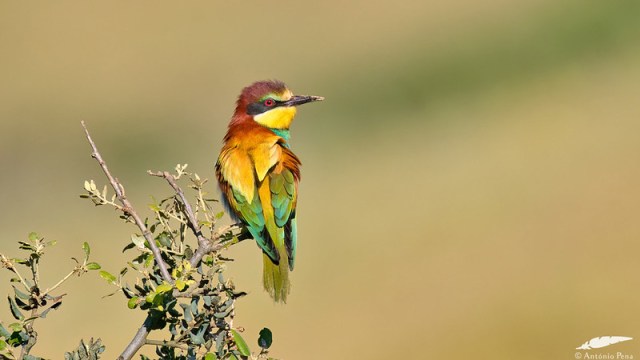
European Bee-eaters are also known as Golden Bee-eaters because of their beautiful coloration. In Sinai, the Jebeliya tribe call them banat barik in Arabic, meaning “sparkling girls”. Bee-eaters are slender birds with chestnut-colored crowns and mantles, bright yellow throats and lower backs, and rich turquoise blue breasts and bellies. They sport a black face mask and breast band that divides their yellow throat from their blue breasts. Males and females look similar, but the females tend to be slightly paler and less colorful. Although quite distinctive, it is possible to confuse these European bee-eaters with their beautiful cousins, the Blue-cheeked Bee-eaters (Merops persicus).
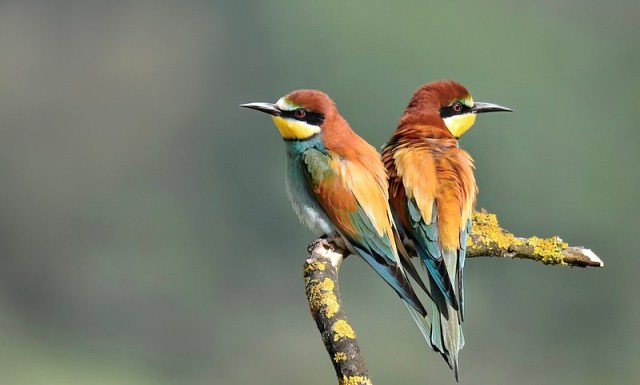
Gregarious, bee-eaters occur in flocks – feeding, roosting, and nesting in groups. Their characteristic flight call, a prroop prroop sound, is what alerts me to their presence overhead. Bee-eaters are graceful fliers, effortlessly gliding and swooping in a manner similar to swallows. They hunt insects on the wing (during flight), typically feeding 1 – 3 hours after sunrise and 2 – 3 hours before sunset, times when you are most likely to hear their calls or spot small groups circling overhead in flight.
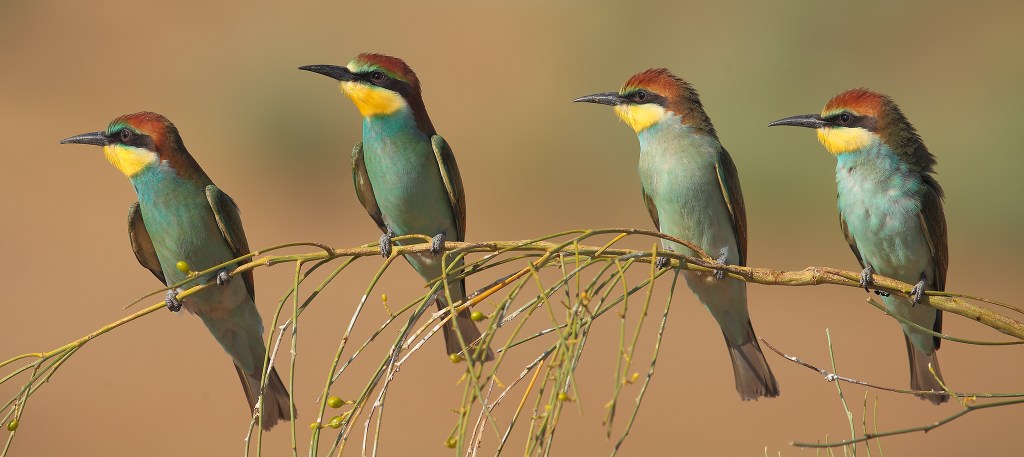
As their name suggests, they feed on bees, but their prey ultimately depends on weather conditions, region, and breeding season. Hundreds of species have been identified as prey, including wasps, hornets, flies, dragonflies, butterflies, moths, bugs, cicadas, water scorpions, mantids, beetles, grasshoppers, locusts, and winged ants and termites. Some smaller insects are eaten in flight, others are brought back to a perch where the bird beats or rubs the insect against the perch to kill it before tossing it up in the air and swallowing it. It has often been assumed that the birds do this to remove stingers and venom, but this has been shown to be incorrect. Stingers are often swallowed and the venom is not removed. Further research is needed to determine if toxins actually enter the birds’ tissues and whether their colorful plummage is therefore acting as a warning coloration.
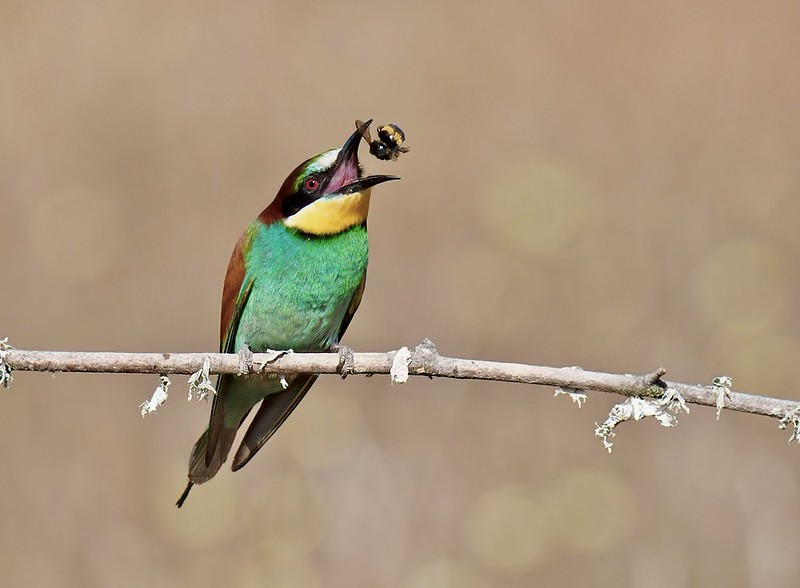
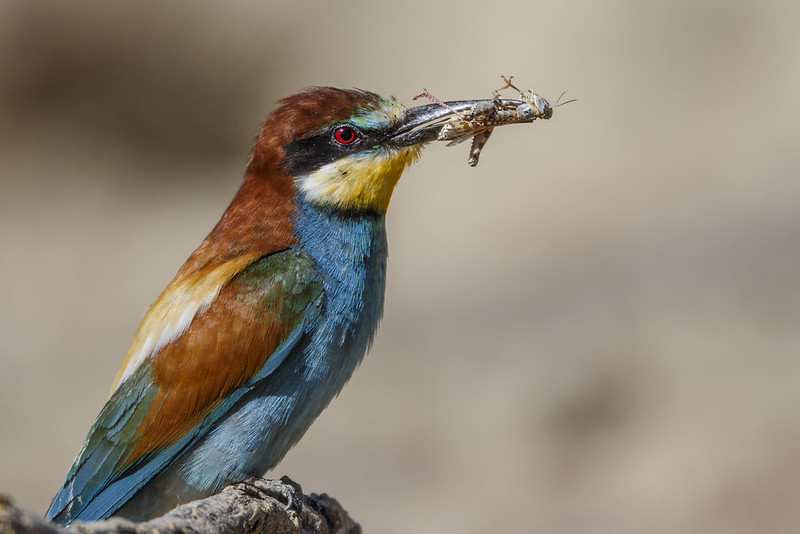
When they aren’t feeding, European bee-eaters spend a lot of their time sunbathing and dustbathing, interspersed with preening, scratching, and stretching.

European bee-eaters are typically monogamous, pair bonds lasting for several years and sometimes for life. Their nests are tunnels dug into steep walls, vertical banks, or trenches. Each tunnel is about 1.5 – 2 m long and are excavated by both sexes. Both males and females care for the eggs.
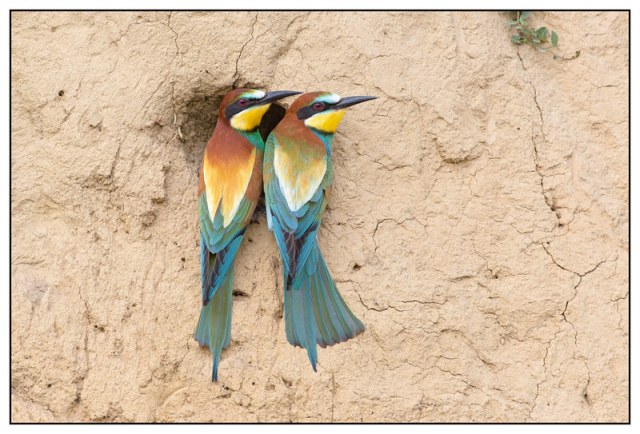
I can hear their calls now as I type this. Have you heard them in Dahab or elsewhere in Sinai?

(If you’re a regular visitor to my blog, Facebook page, or Instagram account, you probably know by now that I am NOT a bird photographer. Many, many thanks to all the talented photographers who share their work with Creative Commons licenses.)

References:

Bastian, H.-V. and A. Bastian (2024). European Bee-eater (Merops apiaster), version 3.0. In Birds of the World (S. M. Billerman and B. K. Keeney, Editors). Cornell Lab of Ornithology, Ithaca, NY, USA. https://doi.org/10.2173/bow.eubeat1.03

Tippett RM 2024. European Bee-eater Merops apiaster. Biodiversity and Development Institute. Available online at https://thebdi.org/2024/07/29/european-bee-eater-merops-apiaster/

Rock Hyrax

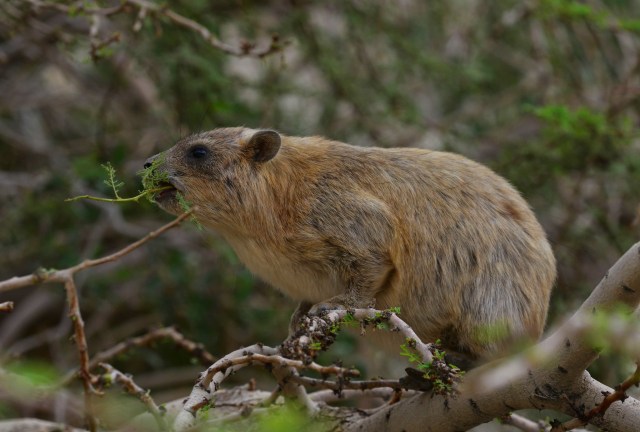
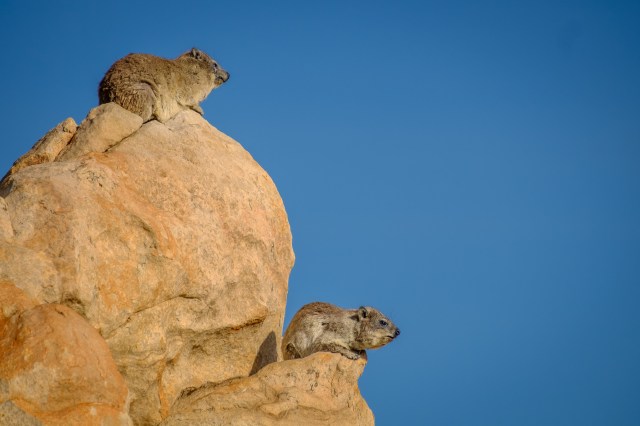
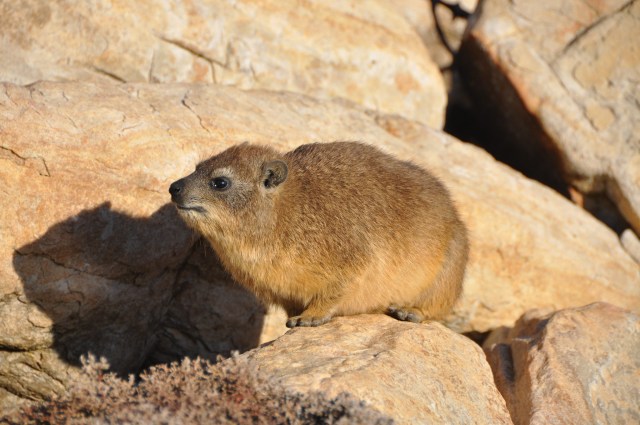
Rock Hyrax (Procavia capensis) are not the most commonly spotted creature in the wadis, but they may be the most fascinating!


Rock Hyraxes, called wabr in Arabic, are tailless and have small, round ears and a very short neck that gives the impression that their heads have been stuck directly on their bodies. Their short snouts are pointed and have black whiskers. Their eyes are large and dark with a pale patch of fur above their them. The coats are short and dense but longer hairs that are sensitive to touch are scattered throughout.

With their stout, rabbit-like bodies, Rock Hyraxes are often mistaken for rodents (order Rodentia) but they actually belong to the order Hyracoidea, and their closest living relatives are elephants, manatees, and dugongs.

One of their most interesting features are their distinctive feet. The forefoot has four short toes. The hindfoot, however, has three short toes and one elongated one that is separated from the others and has a curved claw that is used to grasp⁴. The soles of their feet are rubber-like and kept moist by glandular secretions which allows their feet to act like suction cups. These structures of their feet make them very adept climbers, perfect for scrambling over the rocky areas and cliffs that they call home.

Rock Hyraxes feed mainly on vegetation, predominantly the seeds and leaves of acacia trees, but they may eat a wide range of other food including insects and small reptiles. Juveniles must eat hyrax poop in order to acquire the gut bacteria needed to digest plants. Adults can even eat plants, such as nightshades and spurges, that are poisonous to other animals, and they don’t need to drink water.

While Rock Hyraxes have excellent sight, hearing, and scent, they are not great at regulating their body temperatures. They will, therefore, bask in the sun during the day or heap together to keep warm.

Rock Hyraxes typically live in colonies and can be quite vocal. Several members of the group act as lookouts and use a sharp alarm call to alert others to dangerous predators – birds of prey, jackals, wild cats, foxes, and leopards. Male hyraxes also sing to attract females and apparently those that can keep a more steady beat get more mates.¹

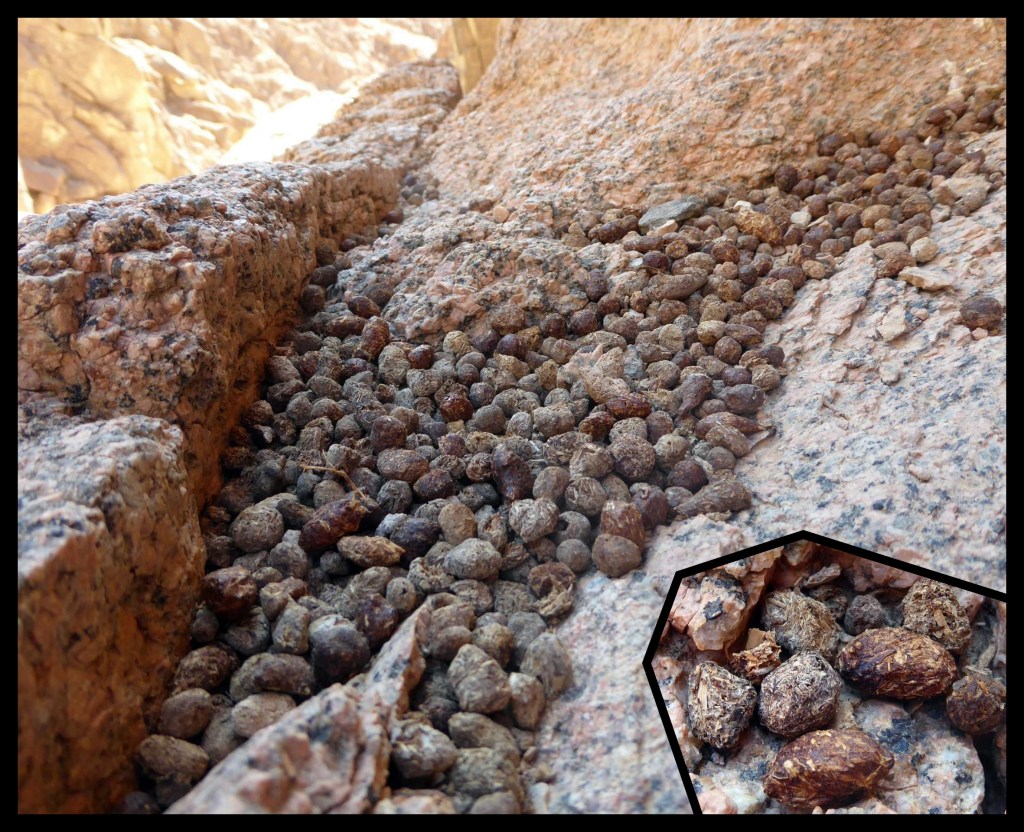
The only Rock Hyraxes I have seen were, many years ago, those kept by Ramadan in his garden in Wadi Arba’een (St. Katherine). I do, however, come across their scat in the wadis around Dahab. Rock Hyraxes use communal latrines, meaning that the waste from all the hyraxes in a colony accumulates in one spot, called a midden. The waste slowly crystallizes into layers, trapping pollen, grains, and other substances similar to amber, fossilized tree resin. For scientists, these Rock Hyrax middens contain evidence of the past that is helping them understand climate change² and possibly even human development³.

The subspecies of Rock Hyrax that lives in South Sinai is Procavia capensis syriaca. Sadly, it’s been reported that their population has been greatly reduced due to hunting and the clearance of acacia trees, their main food source, to make charcoal⁴. However, in the high mountain region of South Sinai, they are likely to consume other vegetation, like the leaves of wild fig trees, and the Jebeliya Bedouin attribute the decline in Rock Hyrax numbers to an increase in Red Fox (Vulpes vulpes), a predator. There have been no studies to confirm this though⁵.

Have you spotted a Rock Hyrax in South Sinai?

1 – Why these furry male mammals sing with humanlike rhythm. (2022, September 16). Animals. https://www.nationalgeographic.com/animals/article/why-these-furry-male-mammals-sing-with-human-like-rhythm

2 – Fuzzy Critters’ Crystallized Pee Changes Climate Record? (2026). Animals. https://www.nationalgeographic.com/animals/article/101015-urine-pee-rock-hyrax-climate-science-ancient-prehistoric

3 – Cutts, E. (2023, April). Stone Age Animal Urine Could Solve a Mystery about Technological Development. Scientific American. https://www.scientificamerican.com/article/stone-age-animal-urine-could-solve-a-mystery-about-technological-development/

4 – Hoath, R. (2003). A Field Guide to the Mammals of Egypt. Amer Univ in Cairo Press.

5 – Coals P, Gilbert F. Notes on hyrax in South Sinai’s highmountains. AFROTHERIAN CONSERVATION. 2015;(11):5-8.

African Monarch Butterfly

Considering how much time I have spent with these beauties over the years, I’m surprised that I haven’t featured them on the blog before now!

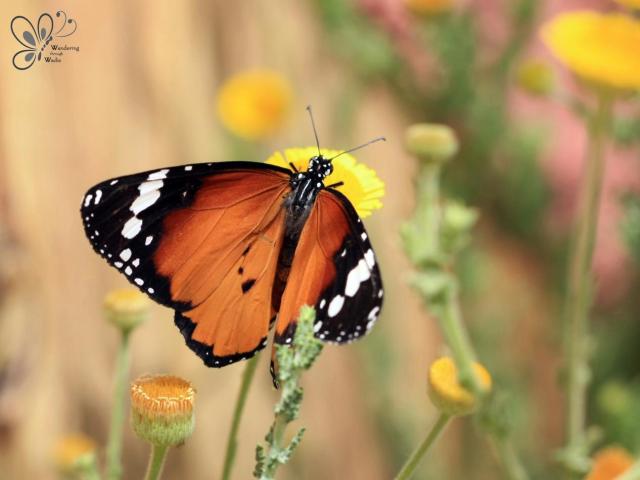
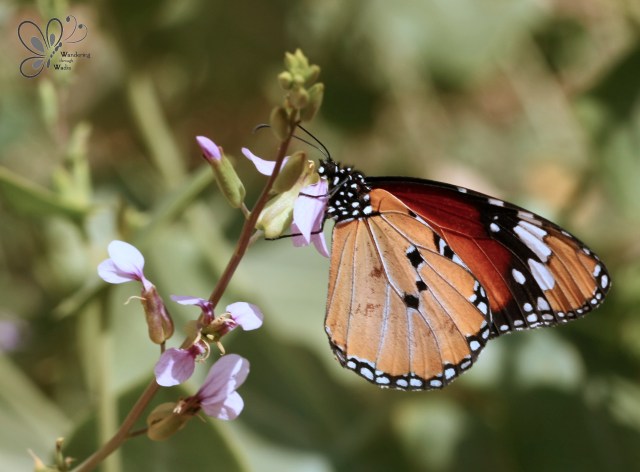
African Monarch butterflies (Danaus chrysippus), also called African Queen or Plain Tiger butterflies, are widespread and abundant in Egypt. In fact, the oldest representation of a butterfly in the world is of an African Monarch and it’s on a pharaonic wall painting in Luxor.

African Monarchs are members of the family Nymphalidae, often called brush-footed butterflies or four-footed butterflies because their first pair of legs are small or reduced. The caterpillars of this family of butterflies all have spiky projections on their heads and their chrysalids have shiny spots.

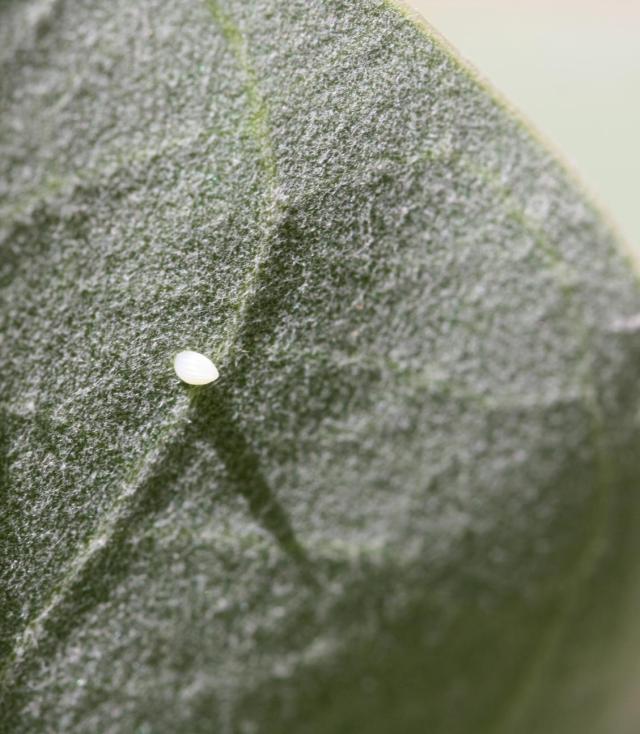
Larvae of African Monarchs prefer to feed on the leaves of Dead Sea Apple Trees (Calotropis procera) but will feed on any Asclepiadaceae, or milkweed plant, so this is where the adult butterflies will lay their eggs. The eggs are dome-shaped and ridged and typically hatch in 3 – 5 days.

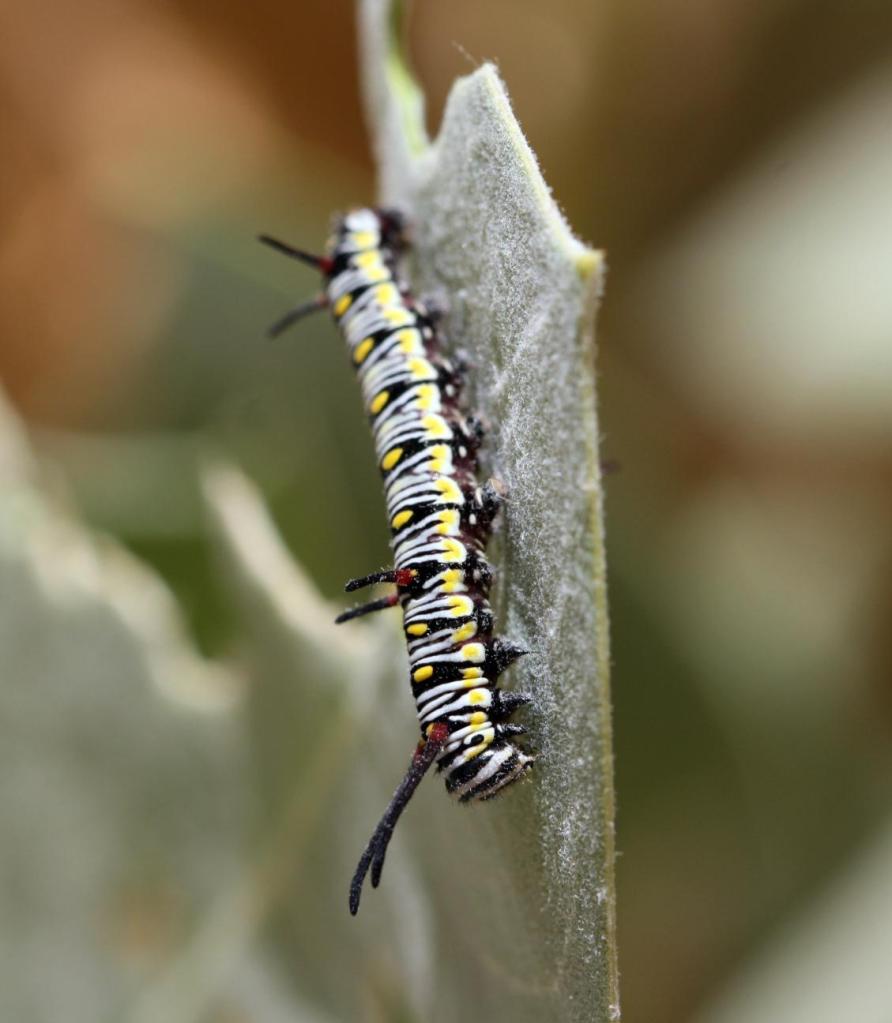
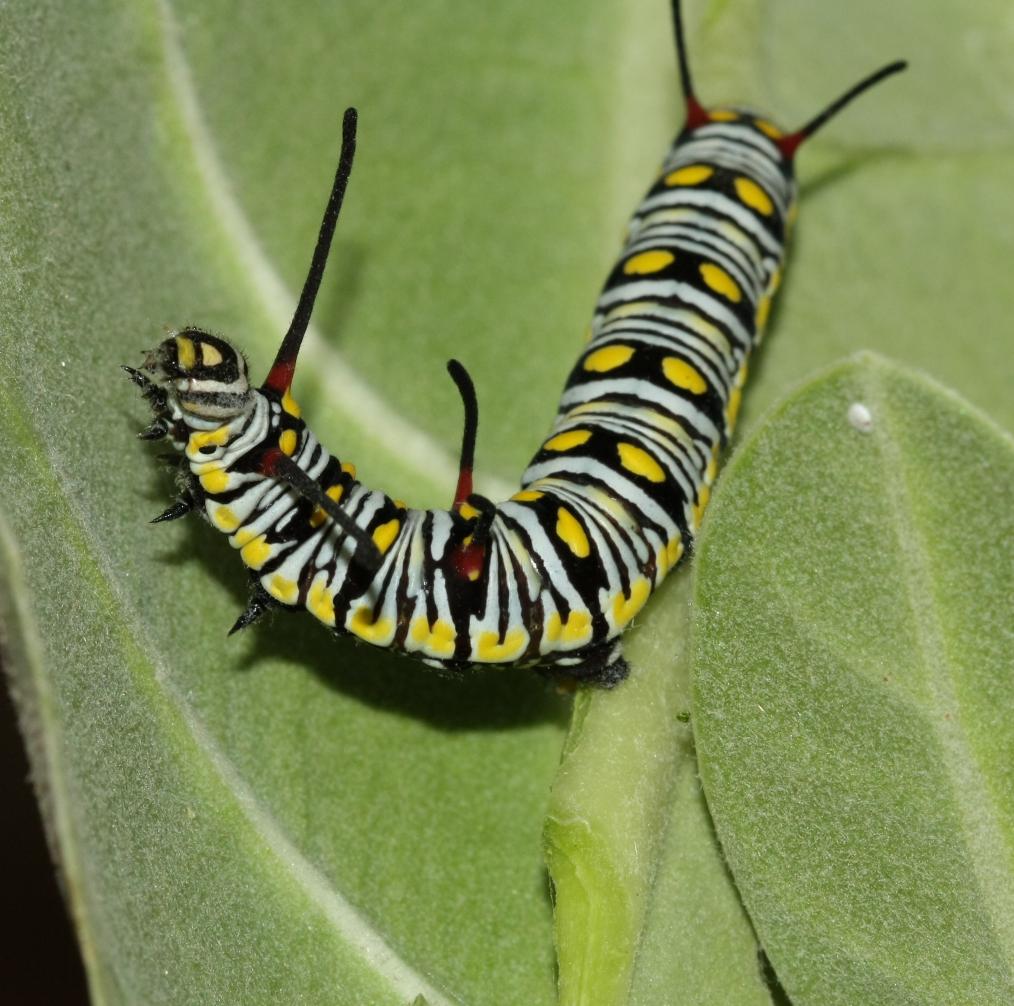
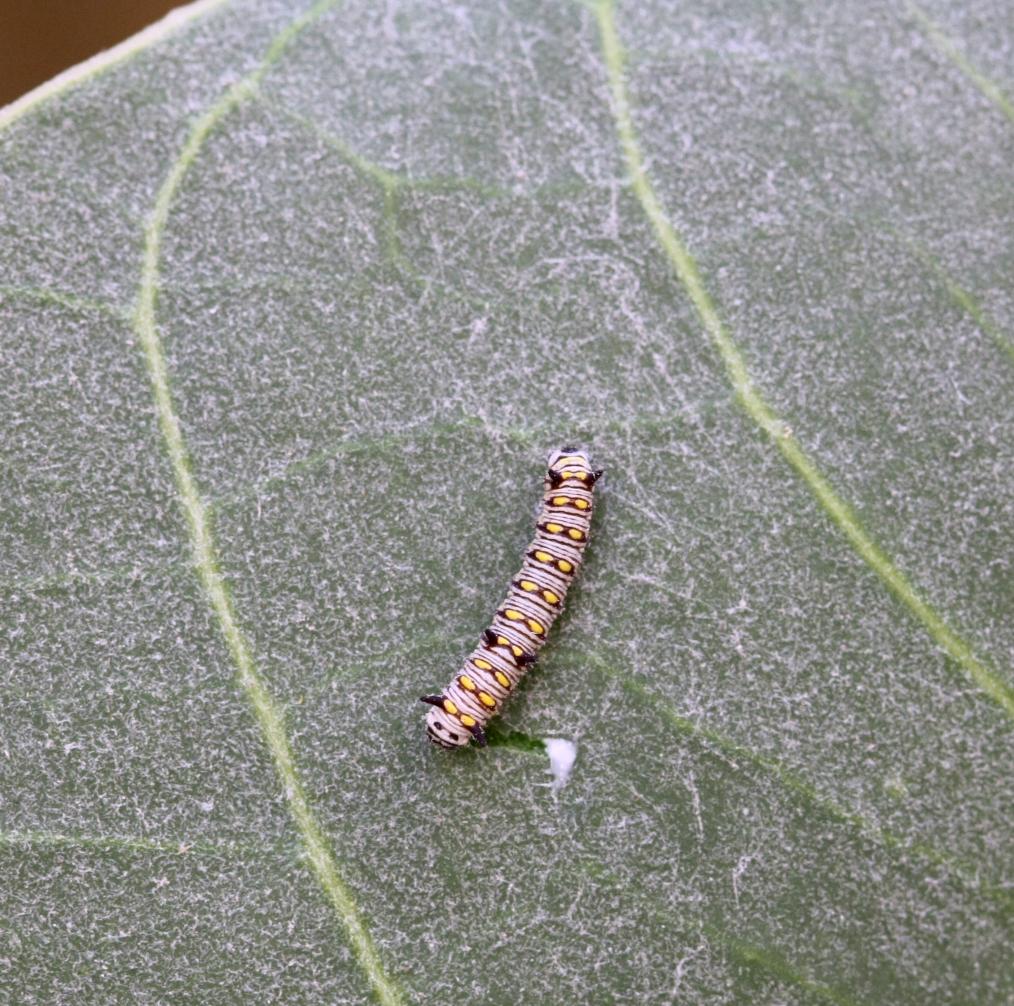
The caterpillars are striped white, yellow, and black and have black spines protruding from their bodies. As you may know, milkweed plants contain toxic compounds. These do not harm the caterpillars. Rather, the larva sequester these toxins, making the adult butterflies inedible/poisonous or distasteful to predators and acting as part of their defense system.

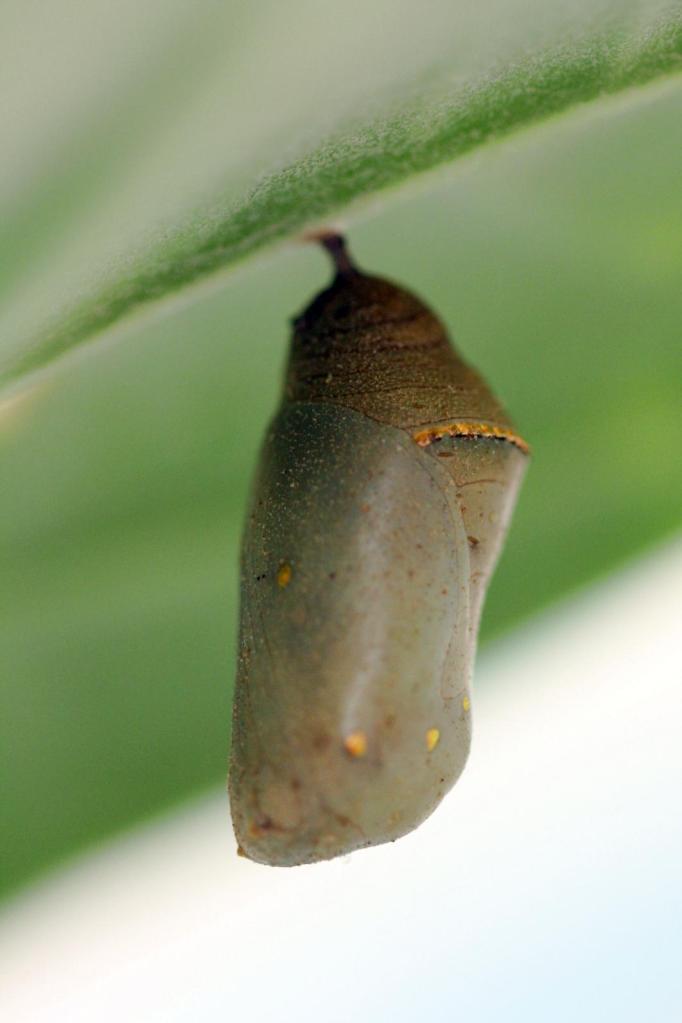
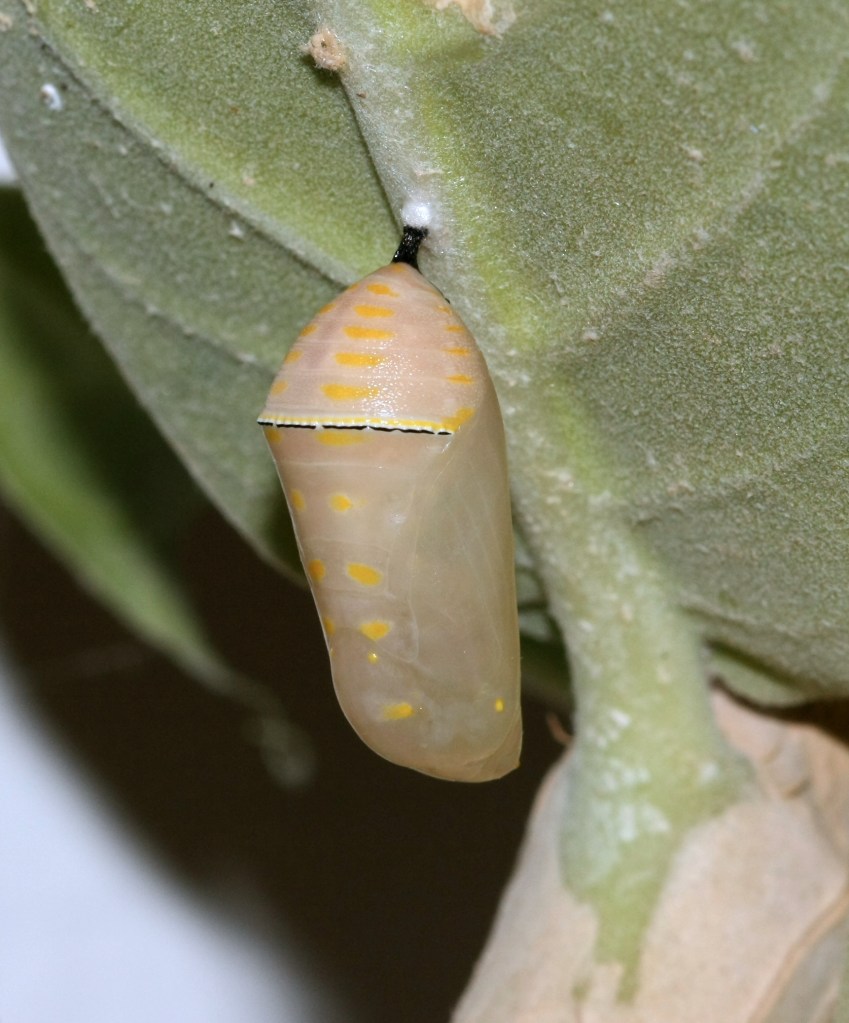
Because these butterflies, and their host plants, are common in Dahab, I have reared many of them indoors with my students. When indoors among inanimate objects, the pupa, or chrysalis, is white or pale colored. Outside in the wild, these chrysalids are bright green. In either situation, the chyrsalis has shiny gold spots, including along a black line near the top which I like to think of as a necklace.

Pupation lasts between 9 and 15 days and then the adults eclose, the verb used to describe when a butterfly emerges or hatches from their chrysalis.

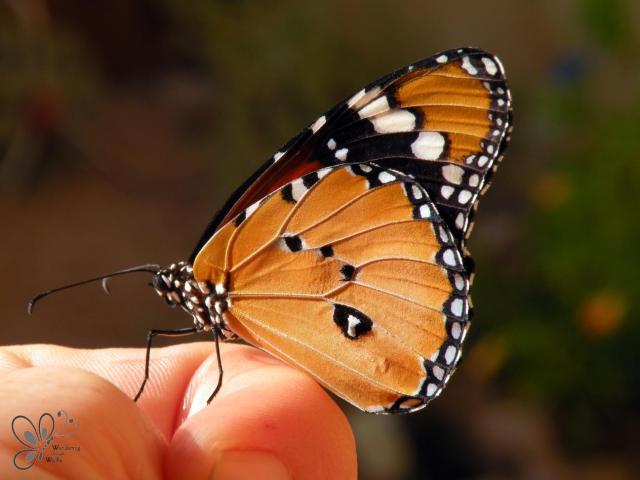
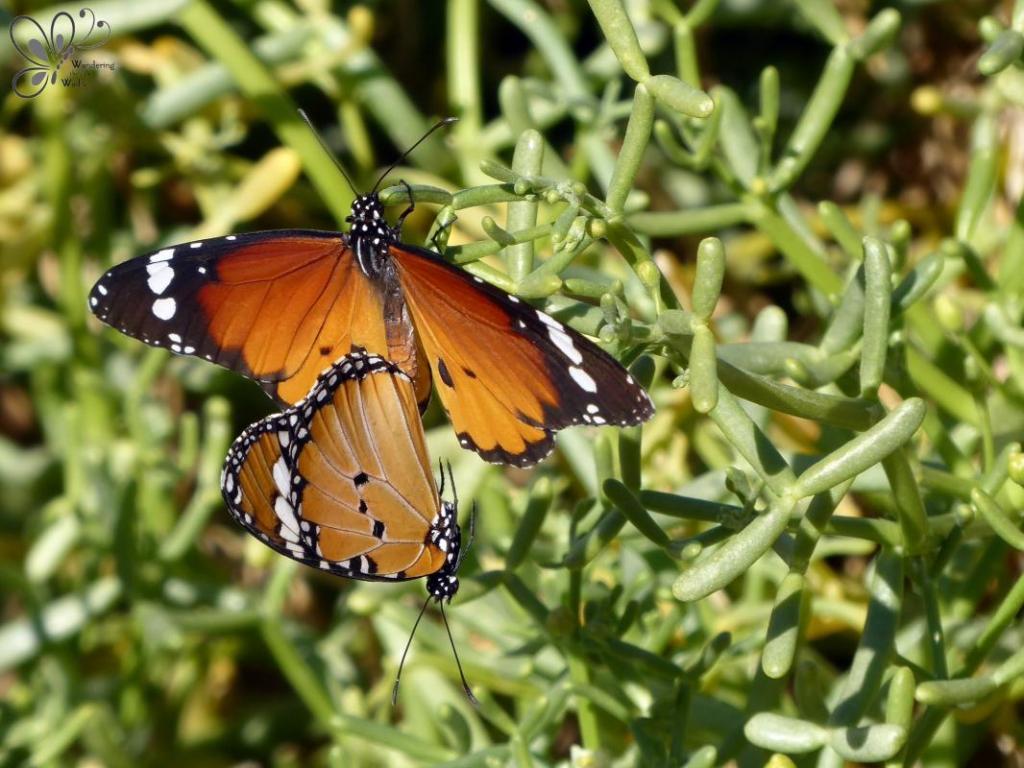
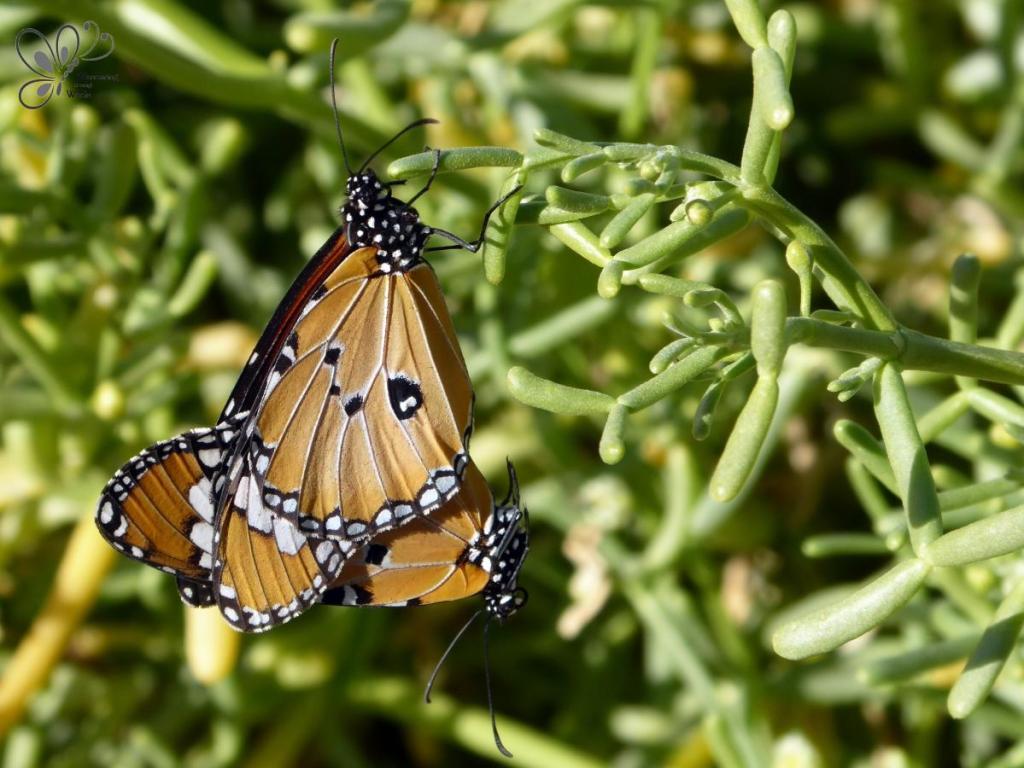
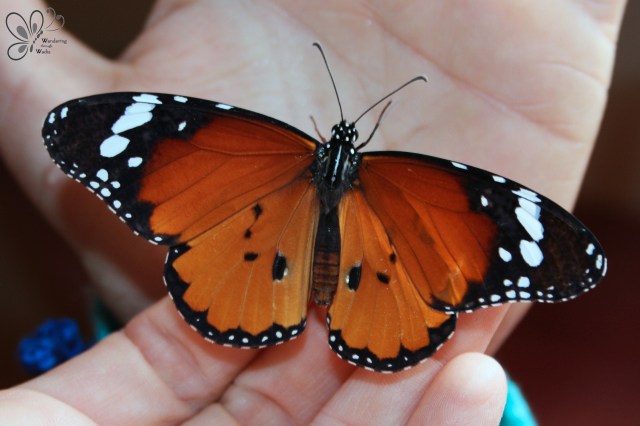
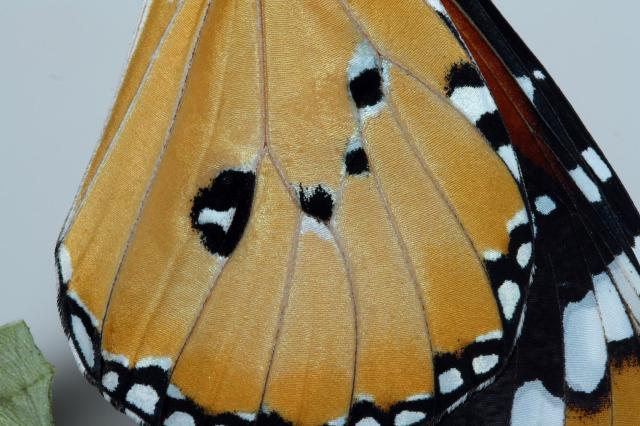
The vibrant coloring of the adult butterflies acts as a warning sign to predators, alerting them to their toxicity. The upperwings are a burnt orange color with black edges and white spots. The underwings are a dull yellow, edged with a fine black line and white dots.

The body of the butterflies are black with many white spots. Females have three black spots on their hindwings, but males have a fourth black spot with a white center, a scent gland. Now that you know that, look back at the pictures in this post and see if you can tell the males from the females.

Adult African Monarchs feed on nectar from a variety of flowering plants and are easy to spot around Dahab. Have you spotted these beauties in town or on your wadi wanders?

More about the Hairy Rose Beetle in Sinai

Wow! It’s been just over a year since I last posted on the blog. Where does the time go? I know that for a good part of last year, I was busy updating and publishing the fourth edition of my guidebook. Now that I’ve finished that, my intention this year is to share one of the many cool plants and animals of Sinai at least once a month. Let’s see how it goes. 🙂

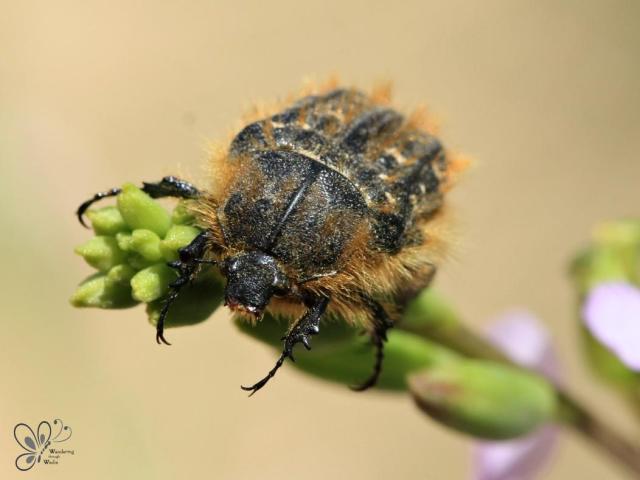
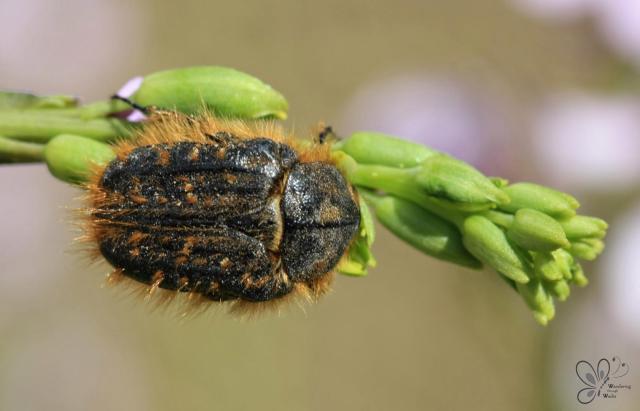
I’m going to start the year off with the Hairy Rose Beetle (Tropinota squalida). I spotted one in my garden last week – a clear indication of our recent warm weather and the winter that hasn’t really come to Dahab yet.

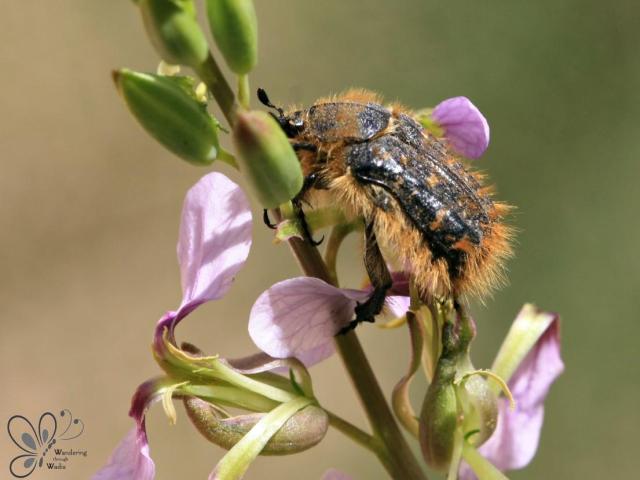
Hairy Rose Beetles are a type of scarab beetle, a member of the Scarabaeidae Family of insects. If you’ve also spotted them in your garden, you probably know that these beetles can be an agricultural pest. That’s because the adult beetles feed on flower buds and all parts of the mature flowers – the pistils, stamens, and petals – making the production of fruit by that flower impossible. These beetles really liked the nimnam plant (Schouwia purpurea) that used to grow in my garden, and I was often alerted to their presence by the debris left behind. (See photo below.)

The beetles, both larvae and adults, live primarily underground and have legs adapted to digging. The adults emerge from the ground to eat and then return to the soil, only to come out again in a few days to continue eating. The larvae feed on roots and rotting plant material, playing an important ecological role in the recycling of decomposing vegetable matter into the soil.

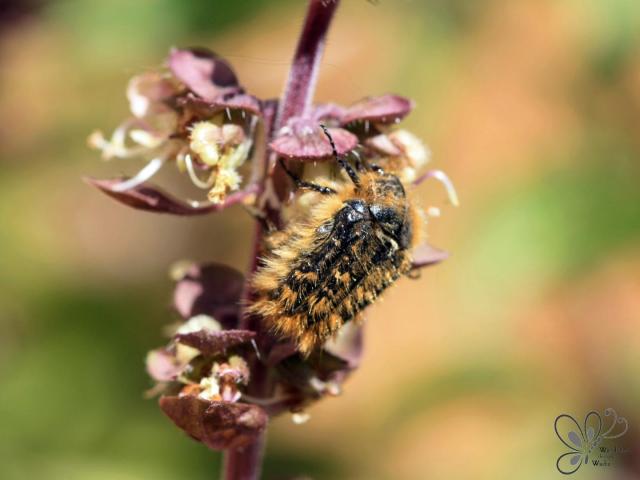
Hairy Rose Beetles are just that – hairy! Their dark brown bodies, 1 – 1 ½ cm long, are covered with thick tawny-colored hair on their elytra and abdomens. (Elytra are the hardened forewings that protect the hindwings that are used in flight.) This hair wears off with age. The elytra are also covered with small yellowish flecks.

These beetles are sun seekers and are typically found in bright, open areas. They are energetic but clumsy fliers. In fact, you can often catch them easily with your hands.

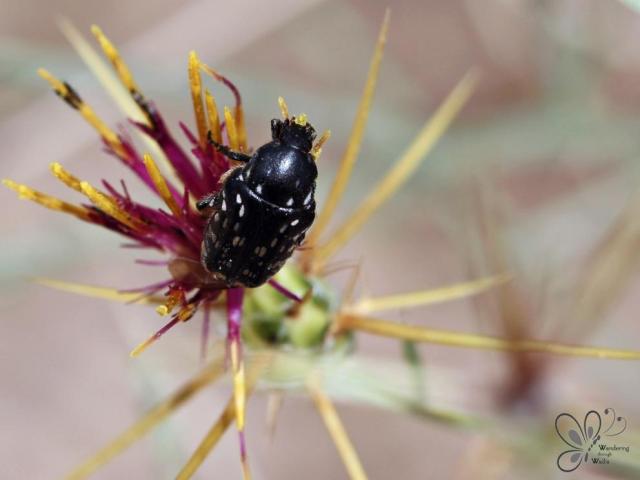
I can’t say for sure if I’ve seen Hairy Rose Beetles in the wadis, but I have spotted other closely-related chafer beetles, like the one pictured below – an Oxythyrea species (maybe O.noemi) feeding on a starthistle (Centaurea scoparia).

Have you seen Hairy Rose Beetles in your garden? Are they pests?