
Solar-powered insects? Yes! Read on.
Oriental Hornets (Vespa orientalis) have reddish brown bodies, shiny exoskeletons, and bright yellow bands on their abdomens. These bands contain xanthoperin, the pigment that is not only responsible for their yellow coloring but also has the ability to absorb and convert light into usable energy, similar to a solar cell. This allows the hornets to be more active during the hottest part of the day, when other insects are typically resting. Oriental Hornets thrive in bright conditions, using the boost in energy to dig their nests – underground burrows made in sandy soil.
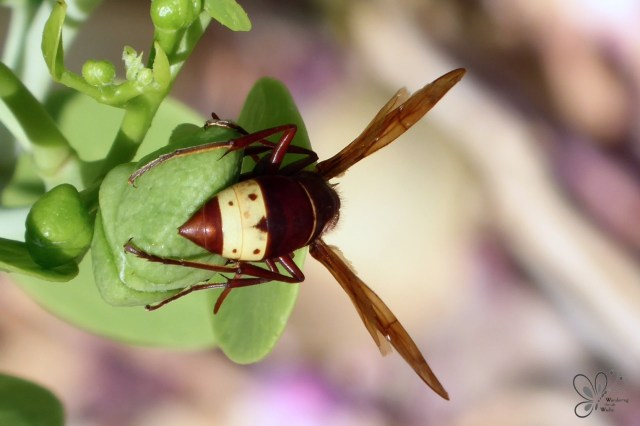
Oriental Hornets are social wasps, living in colonies and employing highly organized and cooperative behavior. The queen hornets are the main reproductive females and are responsible for laying eggs. The workers, all female, are in charge of maintaining the nest, gathering food, and protecting the colony. The job of the male drones is to mate with the new queens.
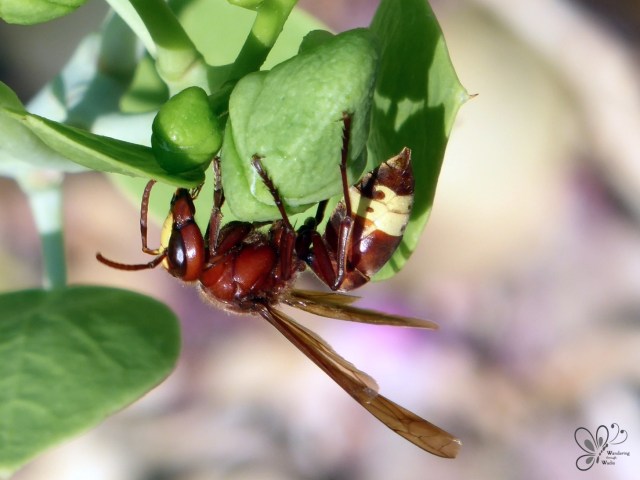
All of these behaviors follow a seasonal pattern. In the spring, the queens emerge from hibernation and search for appropriate nesting sites. In the summer, it’s time for the workers to forage, care for the larvae, and maintain the nest. In autumn, the new queens and drones mate before the queens enter hibernation and the rest of the colony dies off.
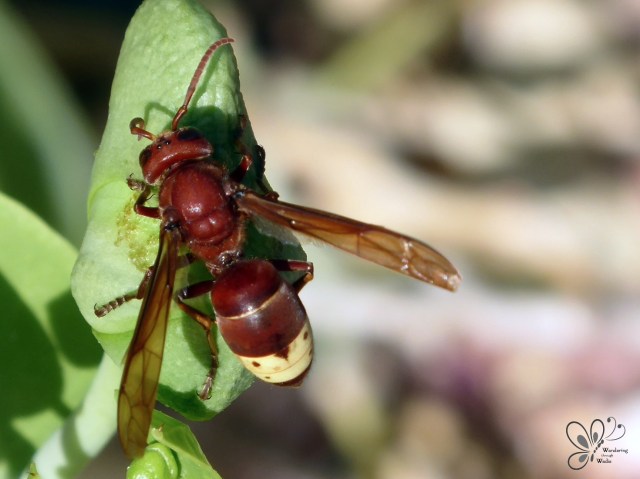
Adult hornets are attracted to sweet food sources – nectar, juice, and the honeydew produced by aphids. But for the larvae, the workers must collect protein – caterpillars, flies, and other insects. The hornets use their strong mandibles to catch and squash their prey, chewing it into a paste before bringing it to the larvae in the nests. Honeybee colonies are a favorite of hornets as they provide both the sweet food source and the protein (in the bee larvae). Hornets are known to attack bee colonies and can quickly annihilate an entire hive.
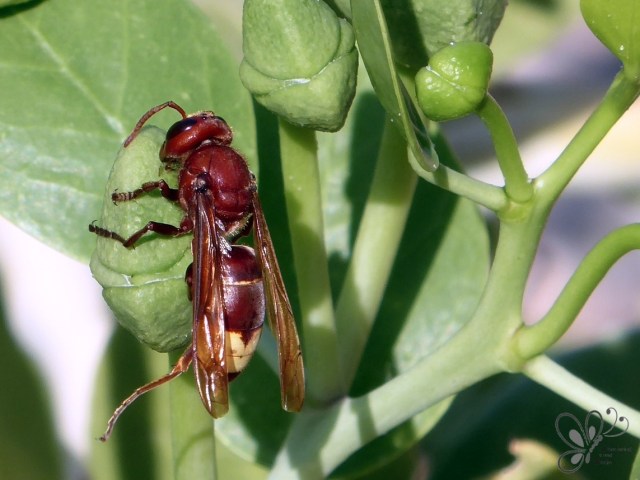
Hornets may get a bad rap for their painful stings, but they aren’t typically aggressive towards humans unless their nest is disturbed and their stings, while painful, aren’t dangerous unless someone is allergic to their venom. Hornets, however, do provide a few beneficial services to humans. They prey on agricultural pests, helping gardeners and farmers keep their crops healthy. And, while foraging for nectar, hornets also help in pollination.
I have seen Oriental Hornets in the wadis, especially in wadis with water sources, around Dahab and also foraging in my desert garden at home. Have you seen them on your wadi wanderings?


You always know such interesting facts about all kinds of animals. I love it, thanks a million. :)And yes, I saw those hornets in the Sinai Desert. They look a bit scary, but they’re absolutely beautiful.
LikeLike